How Gratiot began
Gratiot straddles the Licking-Muskingum county line directly on the National Road, laid out by Adam Smith around 1829-30, soon after the road's route through the area was fixed, and named for Brigadier General Charles Gratiot, who had just been appointed Chief Engineer of the United States Army Corps of Engineers in 1828 and was overseeing the nation's expanding program of federal road, river and harbor construction. The Licking County half of the village sits in Hopewell Township, a name it shares, by coincidence of township naming rather than any shared history, with the separate Hopewell Township across the line in Muskingum County; both halves of the township border the Flint Ridge, a quarried-out landscape of ancient stone pits that supplied Mound Builder and, later, Indian toolmakers with high-quality flint for thousands of years. Gratiot's own Baptist church, organized in 1821 half a mile northwest of the town, predates the village's own platting by close to a decade, making it one of the pioneer congregations of Licking County's eastern townships.
Platted c. 1829 (Wikipedia); "about fifty years" before 1880, per the 1881 county history, likely 1830-31, by Adam Smith.
Where the name comes from
"Gratiot is situated on the National pike, immediately on the county line between Muskingum and Licking," the 1881 county history records. "It was laid out by Adam Smith, about fifty years ago, very soon after the permanent location of the National road, and named in honor of General Gratiot, then in active service in the regular army." That officer, Charles Gratiot, had been appointed colonel of engineers, brevet brigadier general and Chief Engineer of the U.S. Army Corps of Engineers on May 24, 1828, a position from which he oversaw federal road, river, harbor and fortification construction nationwide, including, in all likelihood, the National Road extension the new village sat astride.
Before the town
No source found records a Native village, camp or named site inside Gratiot itself. The village sits within Hopewell Township, which the 1881 county history says holds "much interesting and valuable history" concerning the Mound Builders, chiefly through the Flint Ridge, an eight-mile-long, quarried ridge of chert straddling the Licking-Muskingum county line, worked so extensively in ancient times that hundreds of pits, some twenty feet deep and covering more than a hundred acres, still pockmarked its surface in 1880. Colonel Charles Whittlesey and other nineteenth-century investigators concluded the ridge's flint, prized for its clarity and workability, was quarried, roughly shaped and traded over long distances by the Mound Builders and, in the county history's judgment, used even more heavily afterward by "the Red men," who had greater occasion for arrow, spear and knife points as hunters and warriors. Eight to ten mounds are recorded on the ridge itself, mostly sepulchral, one built of flint stone rather than earth and found to contain two skeletons along with shell beads and sheet mica traced to sources as far away as the Gulf of Mexico. None of this material is tied to the village site of Gratiot specifically, and no county-level file yet exists for Licking to point to for the wider regional and treaty history.
- Flint Ridge quarry pits (other) — Hopewell Township, Licking and Muskingum counties, astride the county line, worked over an extended pre-contact period by Mound Builder and later Indian toolmakers (archive.org)
- Flint-stone sepulchral mound, Flint Ridge (mound) — Flint Ridge, Hopewell Township, unspecified Mound Builder era; contained two skeletons, shell beads and sheet mica (archive.org)
Timeline
- — Hopewell Township is organized.
- — The township's first Methodist society is organized a mile or more north of Brownsville by pioneer preacher Rev. James Quinn; the log church it builds in 1818 is heated by burning charcoal in a stone-lined wooden box.
- — A Baptist church is organized half a mile northwest of the future village site, one of the pioneer congregations of the township; its founding members include Adam Smith, who will later plat Gratiot itself.
- — Charles Gratiot is appointed colonel of engineers, brevet brigadier general, and Chief Engineer of the U.S. Army Corps of Engineers on May 24, taking charge of the nation's expanding federal road, river and harbor construction program.
- — Adam Smith lays out the village of Gratiot on the National Road, naming it for General Gratiot.
- — An Episcopal Methodist congregation is organized in Gratiot by Rev. Robert McCracken, meeting in a school-house until it builds its own church in 1836; the same year, the first Sabbath-school in the township is organized in this church, with Lewis Ijams as superintendent.
- — The Gratiot Farmers' Club, an agricultural society, is organized, generally meeting at members' homes.
Stories
A Village Named for the Army's Chief Engineer
When Adam Smith platted his new village directly on the freshly located National Road, straddling the line between Licking and Muskingum counties, he reached not for a local name but for a national one: General Charles Gratiot, who only a year or two earlier, in May 1828, had been made Chief Engineer of the entire United States Army Corps of Engineers. It was a title with unusually direct relevance to a National Road town, since Gratiot's new office put him in charge of the government's expanding program of road, river, harbor and fortification building nationwide, work that plausibly included the very road Smith's village now fronted. Gratiot would go on to hold the Chief Engineer's post for a decade before a financial scandal forced his removal from the Army in 1838; his Ohio namesake, meanwhile, quietly outlasted the scandal, going on being simply the post town on the pike, of about three hundred people, that the 1881 county history described.
A Baptist Church Older Than the Town It Sits Near
By the time Adam Smith laid out Gratiot's lots around 1830, the Baptist congregation half a mile northwest of the site was already respectably established, having organized in 1821 under early ministers Thomas Snelson and a Rev. Mr. Caves. Its founding members included Adam Smith himself, alongside Daniel Drumm, Samuel and Margaret Winegarner, James Redman, Thomas White, Isaac Smith and Henry Claybaugh, with Smith and Redman serving as the original deacons. The congregation built its first church in 1823, seven years before the village existed at all, and by 1880 had replaced it with the "great, substantial building" the county history describes as still in use. Few Licking County villages can claim a congregation that predates their own founding by the better part of a decade, and fewer still can claim that the man who eventually laid out the town had already spent nine years worshipping on its outskirts.
Photographs
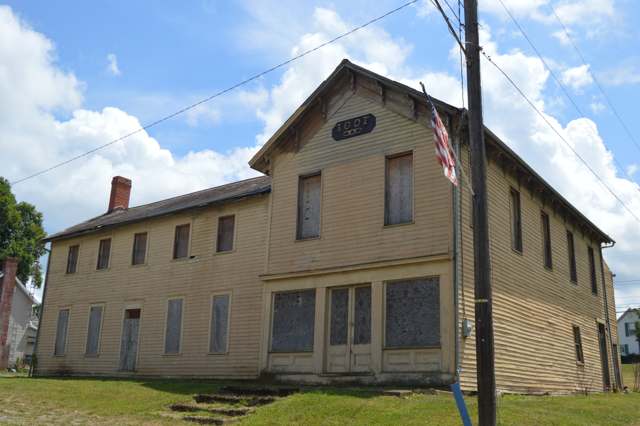
Photo: Nyttend, via Wikimedia Commons, public domain · Wikimedia Commons
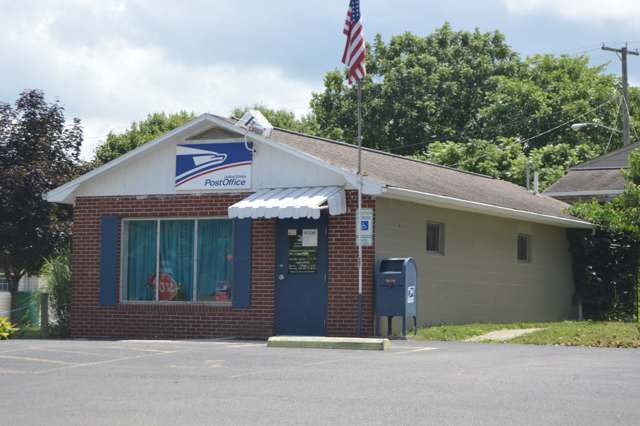
Photo: Nyttend, via Wikimedia Commons, public domain · Wikimedia Commons
Local history sources: archive.org · en.wikipedia.org · en.wikipedia.org · en.wikipedia.org · commons.wikimedia.org · commons.wikimedia.org
Water
Wells in a buried-valley sand-and-gravel aquifer in the Muskingum River floodplain, about one mile north of Duncan Falls along State Route 60 The water here
- Muskingum County Water - Se100% of residentsMuskingum River buried valley aquifer (wells near Duncan Falls)
Its ZIP codes
Each ZIP code that touches Gratiot, with the share of its residents who live here and the same headline figures as the ZIP page.
| ZIP | Share | Water | Radon | Home value | Schools | Flood |
|---|---|---|---|---|---|---|
| 43740 Gratiot | 97% | Wells in a buried-valley sand-and-gravel aquifer in the Muskingum River floodplain, about one mile north of Duncan Falls along State Route 60 | Too few radon tests | Median year built 1942 | West Muskingum Local · 3.5 stars overall | 0.0% of residents in the 1% floodplain |
The county
Licking County: 17 ZIP codes, 38 cities, villages and townships, 160,939 people.
Nearby places
Cite this page
Cite this page as:
Cracked Buckeye (Open Shower Co), "Gratiot, Licking County", https://crackedbuckeye.com/place/gratiot/, built 2026-09-16, accessed [date].
Machine-readable: /api/place/gratiot.json (open JSON, CC BY 4.0 for the compilation; the underlying records keep their own terms) · How to cite · Report a correction · Built 2026-09-16