Notable people · Womens Rights · Abolition · Oratory · Journalism · Education
Lucy Stone
Abolitionist and suffrage orator who graduated from Oberlin College in 1847, the first Massachusetts woman to earn a college degree, and who did much of her early organizing in Ohio.
Born August 13, 1818, Coy's Hill, West Brookfield, Massachusetts
Died October 18, 1893, Dorchester, Boston, Massachusetts
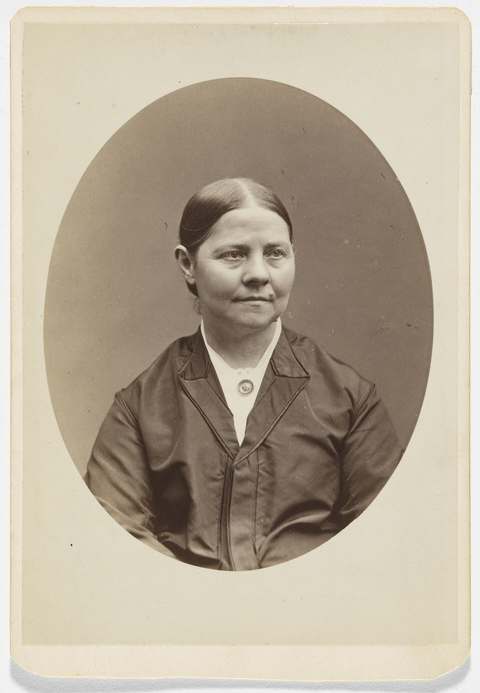
At a glance
- Born
- August 13, 1818, Coy's Hill, West Brookfield, Massachusetts source
- Died
- October 18, 1893, Dorchester, Boston, Massachusetts source
- Buried
- Forest Hills Cemetery, Jamaica Plain, Boston (ashes in the lower columbarium of the crematory building) source
- Also known as
- Lucy Stone Blackwell
- Known as
- Womens Rights, Abolition, Oratory, Journalism, Education
Life story
Lucy Stone was a Massachusetts farm daughter who travelled to Oberlin in August 1843, at 25, because it was the only college in the country admitting women. There she won equal pay for women student teachers, practised public speaking with Antoinette Brown in an off-campus debating club, and refused to write a commencement essay that a man would have had to read for her. She graduated on 25 August 1847. As a lecturer for abolition and women's rights she returned often to Ohio. In October 1853, after the national convention in Cleveland, she and Lucretia Mott addressed Cincinnati's first women's rights meeting, arranged by Henry Blackwell, whom she married in 1855 while keeping her own name. At the 1855 national convention in Cincinnati she gave her 'disappointed woman' speech, and in 1856 she testified in Cincinnati in the Margaret Garner fugitive slave case. She later founded the Woman's Journal and the American Woman Suffrage Association, and died in 1893.
Ohio ties
- Oberlin (1843-1847)
Oberlin Collegiate Institute student and student teacher; B.A. 25 August 1847 Lorain County · source - Salem (1850)
sent a letter of support to the April 1850 Ohio Women's Convention Columbiana County · source - Cleveland (1853)
National Woman's Rights Convention, October 1853; recruited petition workers there Cuyahoga County · source - Cincinnati (1853-1856)
with Lucretia Mott addressed the city's first women's rights meeting (1853); 'disappointed woman' speech at the 1855 national convention; witness in the 1856 Margaret Garner case; ran the Ohio petition drive from what Wikipedia calls her new home state Hamilton County · source
Timeline
- 1818 Born on 13 August on her family's farm at Coy's Hill, West Brookfield, Massachusetts. source
- 1843 In August, just after turning 25, travelled by train, steamboat and stagecoach to Oberlin. source
- 1845 In February resigned her student teaching post in Oberlin's Ladies Department rather than accept lower pay than male student teachers. After three months the faculty rehired her and paid women student teachers at the men's rate. source
- 1846 Gave her first public speech, at Oberlin's 1 August commemoration of emancipation in the British West Indies. source
- 1846 Began the correspondence with her Oberlin classmate Antoinette Brown that was later published as Soul Mates: The Oberlin Correspondence of Lucy Stone and Antoinette Brown, 1846-1850. source
- 1847 Graduated from Oberlin on 25 August, the first Massachusetts woman to earn a college degree, after refusing to write a commencement essay that a male professor would have read for her. source
- 1848 Became a paid lecturer for the Massachusetts Anti-Slavery Society. source
- 1850 Sent a letter of praise to the Ohio Women's Convention at Salem, which petitioned Ohio's constitutional convention for equal rights. source
- 1850 Helped organize the first National Woman's Rights Convention at Worcester, Massachusetts. source
- 1853 On 14 October, after the national convention in Cleveland, she and Lucretia Mott addressed Cincinnati's first women's rights meeting, arranged by Henry Blackwell. He then organized her western lecture tour. source
- 1855 Married Henry Blackwell on 1 May at West Brookfield. They read a joint protest against marriage laws, and she kept her own name. source
- 1855 At the National Woman's Rights Convention in Cincinnati on 17-18 October, answered a heckler with her 'disappointed woman' speech. source
- 1856 Testified in Cincinnati on the closing day of Margaret Garner's fugitive slave hearing, speaking about the sexual exploitation behind the case. source
- 1856 Assured by Cincinnati lawyer Salmon P. Chase that no law required a wife to take her husband's name, announced on 7 May that she remained Lucy Stone. source
- 1858 Let her household goods be auctioned in Orange, New Jersey, rather than pay taxes while women could not vote. source
- 1893 Died on 18 October in Dorchester and became the first person cremated in Massachusetts. source
- 1968 The U.S. Postal Service issued a 50-cent Lucy Stone stamp on the 150th anniversary of her birth. source
- 1986 Inducted into the National Women's Hall of Fame. source
Stories
Three cents an hour
Stone paid her way through Oberlin with college housework, at three cents an hour, less than half what male students earned. She cooked her own meals in her room and often rose at 2 a.m. to fit in work and study. In 1844 she was given a post teaching arithmetic in the Ladies Department, but again at a woman's reduced rate. In February 1845 she asked the faculty board for the pay given to two less experienced men, was refused, and resigned. Her pupils offered to pay her 'what was right' themselves. After three months the faculty gave in, rehiring her and paying all women student teachers the men's rate.
The essay she would not write
Oberlin let women study the men's course, but not speak in front of men. When Stone and Antoinette Brown debated each other before Stone's rhetoric class, the faculty board banned women's oral exercises in mixed classes. Stone then petitioned, with most of her graduating class, for women chosen to write commencement essays to read them themselves, as the men did, rather than have a professor read them. The board refused. When the class elected her to write an essay, she declined, saying she could not support a rule that denied women 'the privilege of being co-laborers with men'. She graduated on 25 August 1847 without it.
A disappointed woman in Cincinnati
At the national women's rights convention in Cincinnati in October 1855, a speaker dismissed the movement as the work of 'a few disappointed women'. Stone took the floor: 'From the first years to which my memory stretches, I have been a disappointed woman.' She recalled being told learning 'isn't fit for you'. She said the only college open to women had seemed to be in Brazil until 'one was opened in the young State of Ohio', and that every profession but teaching, sewing and housekeeping was closed to her. She vowed to deepen that disappointment in every woman's heart until women would bow to it no longer.
Witness for Margaret Garner
In January 1856 Margaret Garner escaped across the frozen Ohio River to Cincinnati with her family. When marshals and slave catchers trapped them, she killed her young daughter rather than see her returned to slavery. Her fugitive slave hearing drew more than a thousand onlookers a day. On its closing day Stone took the stand to defend her earlier conversations with Garner, which the prosecution had complained about. She pointed to the light-skinned faces of Garner's children as evidence of what enslaved women were forced to submit to. The court still sent the family back to Kentucky.
Named for Lucy Stone
Sites to know
Homes, graves, markers, museums and monuments; the numbered ones are on the map.
- 1 Oberlin College (Oberlin Collegiate Institute in her day)
Oberlin Lorain County · source - Lucy Stone columbarium niche, Forest Hills Cemetery crematory (a chapel there bears her name)
Jamaica Plain, Boston, Massachusetts source
Ohio places
Where Lucy Stone was born, lived, worked and is remembered, with the ZIP code, town and county pages for each.
- Connected: Oberlin, Lorain County Oberlin · Lorain County
- Connected: Salem, Columbiana County Salem · Columbiana County
- Connected: Cleveland, Cuyahoga County Cleveland · Cuyahoga County
- Connected: Cincinnati, Hamilton County Cincinnati · Hamilton County
Myths and corrections
Things often said about Lucy Stone, and what the record shows.
Often said Lucy Stone was the first woman in the United States to earn a college degree.
The record Oberlin had already awarded bachelor's degrees to three women in 1841, before Stone arrived in 1843. Her 1847 degree made her the first woman from Massachusetts to earn one. source
Often said Oberlin barred Lucy Stone from speaking at her own graduation.
The record Women could be elected to write commencement essays, but a male professor read them aloud. Stone petitioned for women to read their own essays. When the faculty refused, she declined the honour and wrote no essay, so there was no speech to bar. source
Often said Stone testified for Margaret Garner in January 1856 (as Wikipedia's Lucy Stone article says).
The record The Garners crossed the frozen river on 28 January 1856. The hearing that followed lasted two weeks, with another two weeks of deliberation, and Stone took the stand on its closing day, so her testimony came in February 1856 or later. source
Documents
Primary records: patents, letters, court and government files, nominations and old county histories, each at the archive that holds it.
- Soul Mates: The Oberlin Correspondence of Lucy Stone and Antoinette Brown, 1846-1850 (letters only; editorial matter removed) 1846-1850, Wikimedia Commons (scan from Internet Archive soulmatesoberlin0000ston)
- History of Woman Suffrage, vol. 1, with the proceedings of the 1855 Cincinnati convention and Stone's 'disappointed woman' remarks 1881, Project Gutenberg
- Petition of E. Cady Stanton, Susan B. Anthony, Lucy Stone and others to Congress for woman suffrage c. 1865, U.S. National Archives (via Wikimedia Commons)
- Form letter from E. Cady Stanton, Susan B. Anthony and Lucy Stone asking friends to send petitions for woman suffrage 1865, U.S. National Archives, NAID 306686 (via Wikimedia Commons)
Pictures
Free to use with the credit shown. Select a picture for the original and its license.
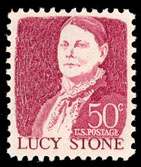
US stamp honoring Lucy Stone
Public domain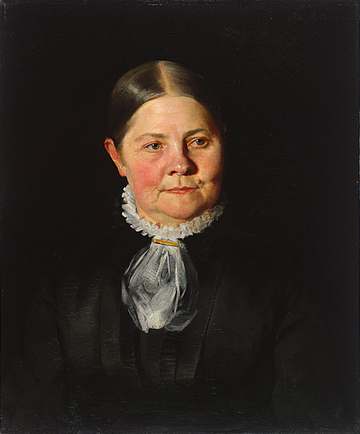
Portrait of Lucy Stone
Public domain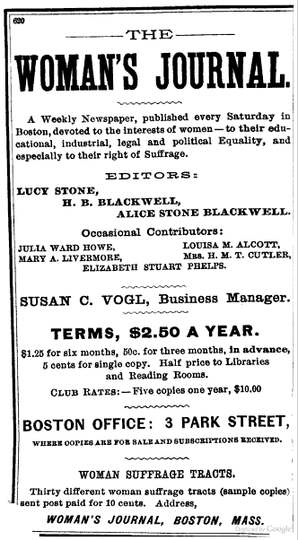
Ad for Womens Journal, published in Park St., Boston
Public domain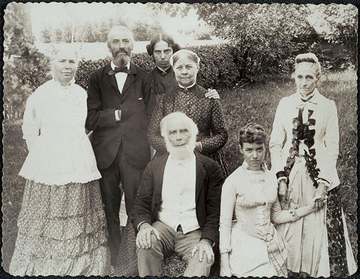
Alice Stone Blackwell's family with the Spoffords. From left, Dr. Elizabeth Blackwell, Henry Spofford (Librari...
Public domain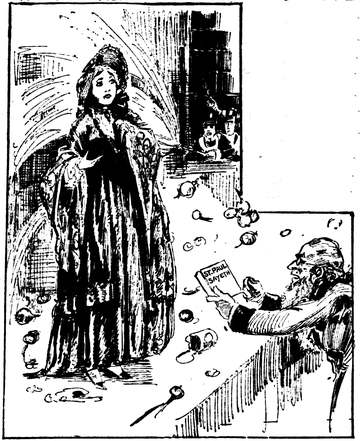
Fanciful drawing by Marguerite Martyn of Lucy Stone as a young lecturer being pelted with vegetables and other...
Public domain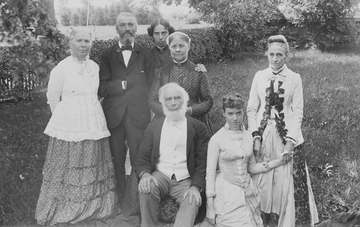
Title: Group portrait of members of the Blackwell and Spofford families outside on a lawn. Photograph probably...
Public domain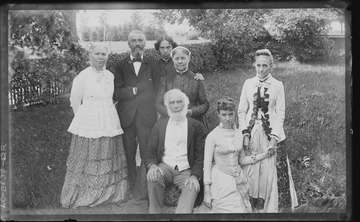
Title: Group portrait of members of the Blackwell and Spofford families outside on a lawn. Photograph probably...
Public domain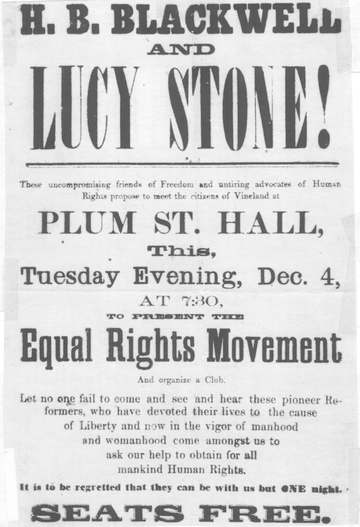
Broadside announcement inviting readers to see Henry Browne Blackwell and his more famous wife Lucy Stone spea...
Public domain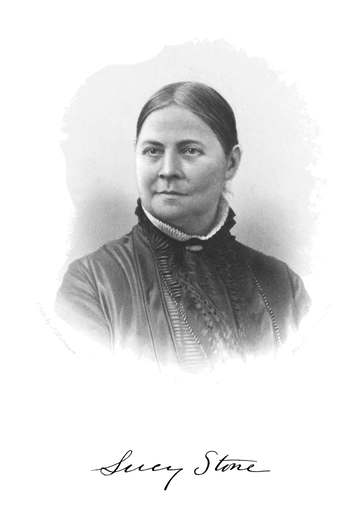
Lucy Stone
Public domain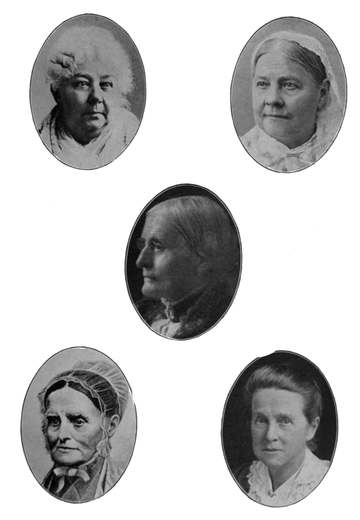
Pioneer Women of Suffrage
Public domain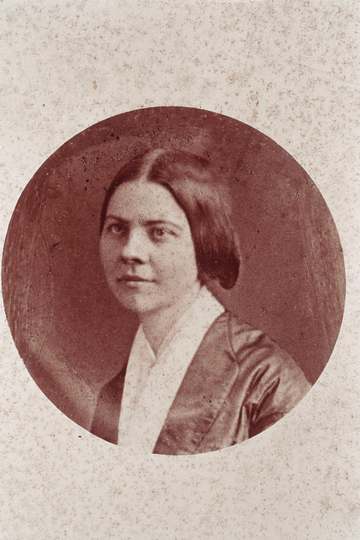
Head and shoulders portrait of Lucy Stone (Blackwell). Photographer: Notman Photographic Co., Boston View cata...
No known restrictions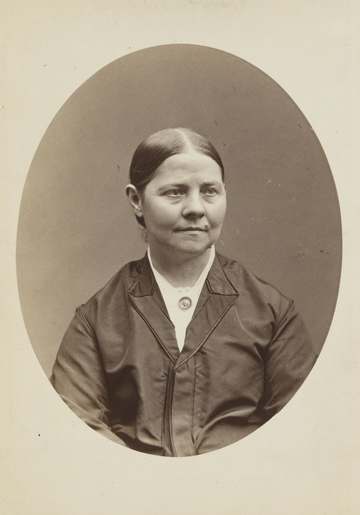
Lucy Stone, circa 1866date QS:P,+1866-00-00T00:00:00Z/9,P1480,Q5727902
Public domain


Sources
Confidence. High: the main facts were confirmed in sources we opened.
- https://en.wikipedia.org/wiki/Lucy_Stone
- https://www.nps.gov/people/lucy-stone.htm
- https://www.womenofthehall.org/inductee/lucy-stone/
- https://www.findagrave.com/memorial/991/lucy-stone
- https://www.gutenberg.org/ebooks/28020
- https://en.wikipedia.org/wiki/Margaret_Garner
- https://en.wikipedia.org/wiki/Oberlin_College
- https://www2.oberlin.edu/alummag/spring2004/feat_lucy_02.html
- https://www2.oberlin.edu/external/EOG/OYTT/ch10.html
- https://commons.wikimedia.org/wiki/File:Soul_Mates_-_The_Oberlin_Correspondence_of_Lucy_Stone_and_Antoinette_Brown,_1846%E2%80%931850_(front_and_back_matter_removed).pdf
- https://commons.wikimedia.org/wiki/File:Lucy_Stone_by_Sumner_Bradley_Heald,_c._1866,_albumen_silver_print,_from_the_National_Portrait_Gallery_-_NPG-7700662C_1.jpg
- https://commons.wikimedia.org/wiki/File:Lucy_Stone,_head-and-shoulders_portrait,_facing_right_LCCN97500092.jpg
- https://commons.wikimedia.org/wiki/File:Sm_lucy_stone_3d02055r.jpg
- https://commons.wikimedia.org/wiki/File:Lucy_Stone_with_daughter_Alice_Stone_Blackwell,_half-length_studio_portrait,_sitting,_facing_front_LCCN2005677274.jpg
- https://commons.wikimedia.org/wiki/File:Lucy_Stone_1887.jpg
- https://commons.wikimedia.org/wiki/File:LUCY_STONE_A_woman_of_the_century_(page_704_crop).jpg
- https://commons.wikimedia.org/wiki/File:Petition_of_E._Cady_Stanton,_Susan_B._Anthony,_Lucy_Stone,_and_others_(1865).jpg
- https://commons.wikimedia.org/wiki/File:Form_Letter_from_E._Cady_Stanton,_Susan_B._Anthony,_and_Lucy_Stone_Asking_Friends_to_Send_Petitions_for_Woman..._-_NARA_-_306686.jpg


Every link goes to the original source. Profile researched 2026-10-15.