Notable people · Inventor · Business
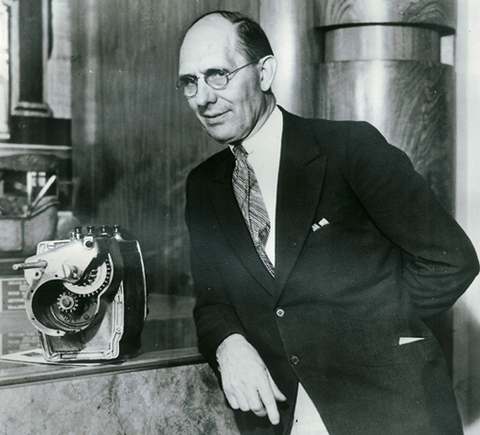
Charles F. Kettering
Dayton inventor of the electric automobile self-starter, co-founder of Delco, and head of General Motors research for 27 years.
Born August 29, 1876, farm about three miles north of Loudonville
Died November 25, 1958, Dayton (his home)
At a glance
- Born
- August 29, 1876, farm about three miles north of Loudonville (Ashland County) source
- Died
- November 25, 1958, Dayton (his home) (Montgomery County) source
- Buried
- Woodland Cemetery, Dayton (mausoleum) (Montgomery County) source
- Also known as
- Charles F. Kettering, Boss Ket
- Education
- Ohio State University, Columbus, OH, to 1904, Electrical engineering
- Known as
- Inventor, Business
- Organizations
- NCR, Delco, General Motors Research
Life story
Charles Kettering was born near Loudonville in 1876, fourth of five children, and graduated in electrical engineering from Ohio State in 1904.
He led the research laboratory at National Cash Register in Dayton, then worked with Edward Deeds on car electrical systems. They founded Delco in 1909, and Kettering's electric self-starter first appeared on Cadillacs in 1912.
General Motors bought Delco in 1918 and he ran its research arm for 27 years. His labs found tetraethyl lead as a fuel additive, which later became a health and environmental problem, and he also worked on Duco paints and the Kettering Bug aerial torpedo.
He founded the Kettering Foundation in 1927 and died in Dayton in 1958. A Dayton suburb, a university and a hospital network carry his name.
Ohio ties
- near Loudonville (1876-1895)
birthplace farm; Loudonville High School, class of 1895 Ashland County · source - Wooster (College of Wooster) (1896)
student; left because of eye strain Wayne County · source - Columbus (Ohio State University) (1898-1904)
engineering student; B.S. in electrical engineering 1904 Franklin County · source - Dayton (National Cash Register) (1904-1909)
head of NCR's inventions/research work; electric cash register Montgomery County · source - Dayton (Deeds Barn, 319 Central Avenue) (1907-1909)
'Barn Gang' workshop where ignition and self-starter were developed Montgomery County · source - Dayton (Delco; GM Research) (1909-1925)
co-founder of Delco; GM research headquartered in Dayton until the labs moved to Detroit in 1925 Montgomery County · source - Kettering (Ridgeleigh Terrace) (1914-1958)
home Montgomery County · source
Timeline
- 1876 Born August 29 on a farm near Loudonville, Ohio. source
- 1896 Entered the College of Wooster but left because of eye strain. source
- 1898 Entered Ohio State's engineering school, then dropped out in his freshman year because of his eyesight and spent two years on a telephone line crew. source
- 1904 Graduated from Ohio State in electrical engineering and joined National Cash Register in Dayton. source
- 1906 NCR introduced his electric cash register. source
- 1909 Left NCR and formed the Dayton Engineering Laboratories Company (Delco) with Edward A. Deeds; in July Cadillac bought 8,000 Delco ignition units. source
- 1911 Delco produced a practical electric self-starter by February for Cadillac's Henry Leland, who ordered 12,000 for the 1912 models. source
- 1914 Completed his home, Ridgeleigh Terrace, designed by Dayton's Schenck & Williams; co-founded the Engineers Club of Dayton with Deeds. source
- 1917 Co-founded the Dayton-Wright Company with Deeds, with Orville Wright as consultant. source
- 1920 Became vice president of General Motors Research Corporation, a post he held until 1947. source
- 1921 His team, with Thomas Midgley Jr., identified tetraethyllead as an anti-knock additive in December; he became first president of Ethyl Corporation in 1923. source
- 1952 Van Buren Township voters approved incorporating as the Village of Kettering, named for him. source
- 1955 Kettering became a city on June 24. source
- 1958 Died November 25 at his home in Dayton; he lay in honor at the Engineers Club before burial at Woodland Cemetery. source
- 2014 A bronze statue of the young Kettering by John A. Ranally Jr. was dedicated in June in Loudonville's Central Park. source
What Charles is known for
- Electric self-starter, first used in 1912 Cadillac
- Founded Delco (Dayton Engineering Laboratories) 1909 with Deeds
- Headed GM Research 1920-1947
- Leaded gasoline (tetraethyl lead) with Midgley
- 186 US patents
- 186 US patents
- Delco (1909)
- Self-starter (1911-1912)
- Kettering Bug
- Ethyl Corporation (1923)
- Kettering Foundation (1927)
Stories
The barn that would not stay put
The self-starter was worked out in a barn built in 1904 behind Edward and Edith Deeds's house at 319 Central Avenue in Dayton View. In 1962 the barn stood in the way of a planned apartment house and was set for demolition; a Kettering historical society campaign got it deeded to the society. It was cut into three pieces and moved to Prugh Park in Kettering, where vandals damaged it and money ran out for years. In 1972 the Kettering Jaycees gave $6,094 to repair it and move it to the Kettering-Moraine museum at 35 Moraine Circle, where it was dedicated on August 29, 1976, Kettering's birthday. In 2009 it moved again, to Dayton History's Carillon Historical Park, which had built a three-quarter-scale replica back in 1949. The Central Avenue site is now an empty lot.
Loudonville's boy with a book
Kettering's hometown remembers him as a student rather than a tycoon. In June 2014 Loudonville dedicated a life-size bronze by John A. Ranally Jr. in Central Park at East Main and South Market streets, showing Kettering as a young man walking while reading, with more books slung over his shoulder. Etchings on the granite base by Perrysville artist Christine A. Patton-Snyder are labeled 'Loudonville High School Class of 1895' and 'Boss Ket - 1956.' Local groups including the alumni association, Rotary, American Legion Post 257 and the Mohican Historical Society paid for it. It stands beside an Ohio historical marker west of the public library.
Eyes that kept failing him
Kettering's path to engineering was slow. After high school he taught in a one-room rural school, then entered the College of Wooster in 1896 and left because of eye strain. He entered Ohio State in 1898 and dropped out again in his freshman year for the same reason. He spent two years as a telephone line crew foreman before going back and finishing his electrical engineering degree in 1904, at age 27. That year he joined NCR in Dayton.
Inventions and firsts
Honors and things named for them
- Franklin Medal (1936)
- Hoover Medal (1955)
- IEEE Edison Medal (1958)
- City of Kettering, Ohio
- Kettering University
- Kettering Field, Dayton
Named for Charles F. Kettering
- City of Kettering (village 1952, city 1955) (Kettering, Montgomery County) source
- Kettering Health (Kettering Health Network) (Dayton area, Montgomery County) source
- Kettering Labs, University of Dayton (Dayton, Montgomery County) source
- Kettering Foundation (founded 1927) (Dayton, Montgomery County) source
Family
- spouse: Olive Williams Kettering
- son: Eugene Williams Kettering
Sites to know
Homes, graves, markers, museums and monuments; the numbered ones are on the map.
- 1 Charles F. Kettering House (Ridgeleigh Terrace), National Historic Landmark (private)
Kettering, Ridgeleigh Road Montgomery County · source - 2 Deeds Barn (original), Carillon Historical Park
Dayton Montgomery County · source - Charles Kettering statue and Ohio historical marker 3-3, Central Park
Loudonville, E. Main St. and S. Market St. Ashland County · source - 3 Kettering mausoleum, Woodland Cemetery
Dayton, 118 Woodland Avenue Montgomery County · source
Places in Ohio to see
- Carillon Historical Park (museum)
1000 Carillon Blvd, Dayton, Montgomery County ZIP 45409 · Dayton · Montgomery County · official page - Kettering Field (former McCook Field) (park)
Dayton, Montgomery County Dayton · Montgomery County · official page
Ohio places
Where Charles F. Kettering was born, lived, worked and is remembered, with the ZIP code, town and county pages for each.
- Born: Loudonville, Ashland County ZIP 44842 · Loudonville · Ashland County
- Worked: Dayton, Montgomery County ZIP 45402 · Dayton · Montgomery County
- Lived: Kettering (Ridgeleigh Terrace), Montgomery County ZIP 45429 · Kettering · Montgomery County
- Buried: Woodland Cemetery, Dayton, Montgomery County (118 Woodland Ave) ZIP 45409 · Montgomery County
Myths and corrections
Things often said about Charles F. Kettering, and what the record shows.
Often said Ridgeleigh Terrace was the first house in the United States with air conditioning.
The record The claim is local tradition: Wikipedia's Kettering article attributes it to local sources, describing it as the first U.S. house with electric air conditioning using Freon. No primary source confirming the 'first' was found. source
Often said Kettering was born in 1877.
The record The Loudonville marker's text, as transcribed, gives 1877, but biographies including the Kettering family site and ETHW give August 29, 1876. source
- Disputed: The discovery of tetraethyl lead as a gasoline additive is usually credited to Thomas Midgley Jr., although one source lists Kettering's role as having identified it.
Pictures
Free to use with the credit shown. Select a picture for the original and its license.
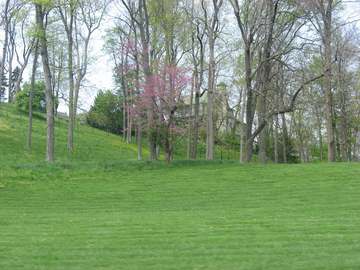
View through the trees of the rebuilt Charles F. Kettering House, located off Southern Boulevard in Kettering,...
Public domain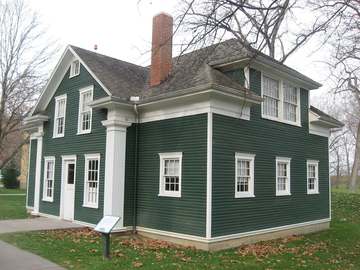
Front and eastern side of the Deeds' Barn, located at Carillon Historical Park in Dayton, Ohio, United States....
Public domain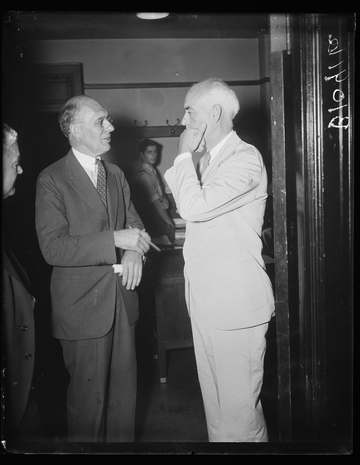
Title: General Motors Executive testifies before SEC. Washington, D.C., Aug. 12. Charles F. Kettering, (left,)...
Public domain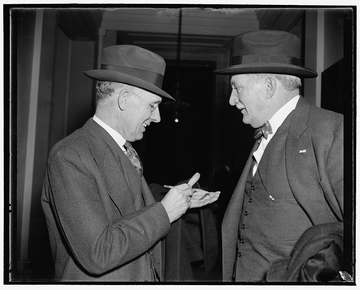
Title: Knudson and Kettering after. Washington, D.C., Dec. 6. William S. Knudsen, right, President, and Charle...
Public domain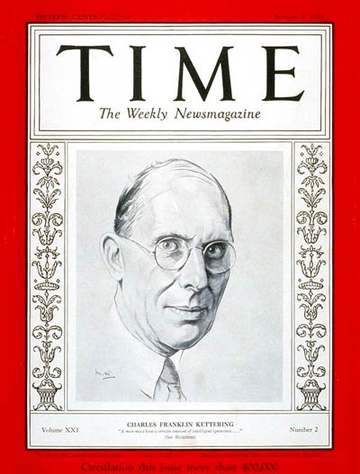
Time magazine cover 9 January 1933. Title: "Charles Franklin Kettering".
Public domain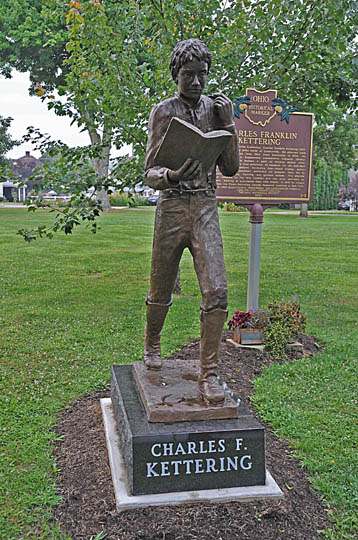
KETTERING STATUE AS A YOUTH BECAUSE AT AN EARLY AGE HE DEMONSTRATED HIS INVENTIVE GENIUS. KETTERING WAS A GRAD...
Jerrye & Roy Klotz, MD / CC BY-SA 4.0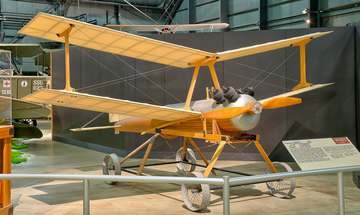
Kettering Aerial Torpedo, nicknamed the "Bug." (1917)
CC0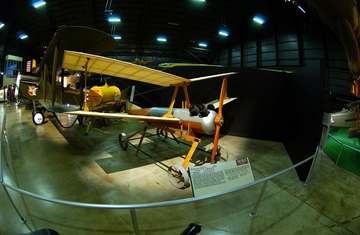
Public domain 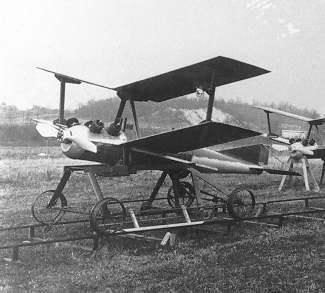
Public domain 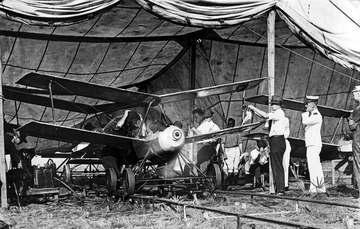
Photograph of prototype Kettering Bug.
Public domain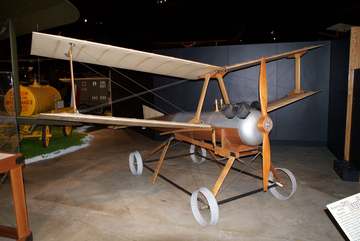
SONY DSC
Valder137 / CC BY 2.0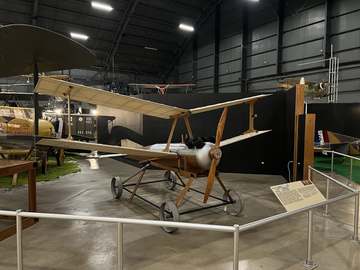
Dayton-Wright Kettering Aerial Torpedo replica at the National Museum of the United States Air Force.
ZLEA / CC BY-SA 4.0


Further reading
Sources
Confidence. Medium: the main facts were confirmed, but some details (often an address or ZIP code) were not.
- Charles F. Kettering (Wikipedia) dates, Loudonville, NCR 1904-09, Delco 1909, GM 1920-47, 186 patents, Ridgeleigh Terrace 1914, Woodland mausoleum
- Wikipedia: Charles F. Kettering early life, timeline, family, honors, works
- cfketteringfamilies.com: charles f kettering
- ethw.org: Charles F. Kettering
- Wikipedia: Ridgeleigh Terrace
- Wikipedia: Kettering, Ohio
- Wikipedia: Dayton Wright Company
- Wikipedia: Edward Andrew Deeds
- Wikipedia: Woodland Cemetery and Arboretum
- daytonvistas.com: history of the deeds barn
- sculpturecenter.org
- daytonunknown.com: this day in history august 29th 1876
- Wikimedia Commons: Charles F. Kettering House
Every link goes to the original source. Profile researched 2026-10-14.