Notable people · Senator · Abolitionist
Benjamin Wade
Jefferson lawyer and Radical Republican senator from Ohio (1851-1869) who co-wrote the Wade-Davis Bill and, as Senate president pro tempore, stood next in line for the presidency during Andrew Johnson's impeachment trial.
Born October 27, 1800, Feeding Hills (then part of West Springfield, now Agawam), Massachusetts
Died March 2, 1878, Jefferson
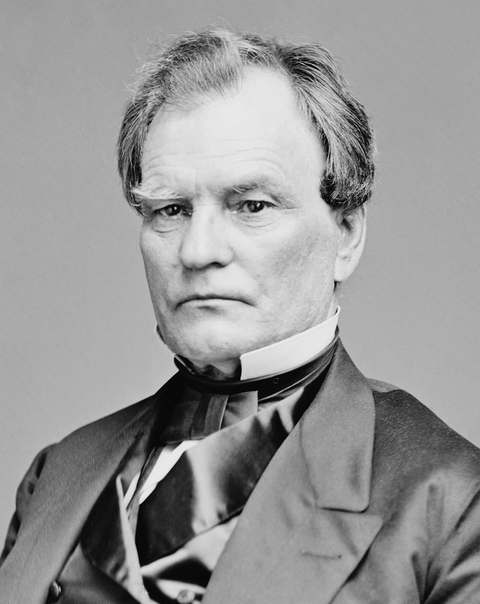
At a glance
- Born
- October 27, 1800, Feeding Hills (then part of West Springfield, now Agawam), Massachusetts source
- Died
- March 2, 1878, Jefferson (Ashtabula County) source
- Buried
- Oakdale Cemetery, Jefferson (within sight of Joshua Giddings's grave) (Ashtabula County) source
- Also known as
- Benjamin Wade, Ben Wade, Bluff Ben Wade, B. F. Wade
- Education
- Read law under Elisha Whittlesey, Canfield, OH, admitted to bar 1828
- Known as
- Senator, Abolitionist
Life story
Benjamin Wade was born in Massachusetts in 1800 and came to Ohio's Western Reserve as a young man after working as a laborer, including on the Erie Canal, and teaching school.
He read law with Elisha Whittlesey and was admitted to the bar in 1828. In 1831 he became law partner of Joshua Giddings in Jefferson, Ohio, the start of a long antislavery alliance.
He served as Ashtabula County prosecutor, as a state senator, and as a common pleas judge before the legislature sent him to the U.S. Senate in 1851.
During the Civil War he chaired the Joint Committee on the Conduct of the War. After Lincoln's death he was a leading Radical Republican and served as Senate president pro tempore from 1867 to 1869.
He lost his Senate seat in 1868 and died in Jefferson in 1878.
Ohio ties
- Andover (1821-c. 1825)
family's pioneer farm after leaving Massachusetts; worked as a farm hand and cattle drover Ashtabula County · source - Canfield (1825-1827)
read law in the office of Whittlesey & Newton (Elisha Whittlesey) Mahoning County · source - Jefferson (1827-1878)
admitted to the bar here in 1827; law partner of Joshua Giddings (1831-1837) and Rufus P. Ranney; county prosecutor; home until his death Ashtabula County · source - Columbus (1837-1842)
member of the Ohio Senate Franklin County · source - Akron (1847-1851)
presiding judge of common pleas for the third circuit, sitting at Akron Summit County · source - Oakdale Cemetery, Jefferson (1878)
grave Ashtabula County · source
Timeline
- 1800 Born on 27 October at Feeding Hills, Massachusetts, the tenth of eleven children of James and Mary (Upham) Wade. source
- 1821 His parents brought the family to Ashtabula County, Ohio, where older siblings had settled at Andover in 1820. source
- 1823 In the autumn hired on with a drover and helped drive a herd of cattle over the mountains to Philadelphia. source
- 1824 While living near his brother James in the Albany area, worked as a pick-and-shovel labourer on the Erie Canal. source
- 1827 Admitted to the bar, with his brother Edward, at a term of the Ohio Supreme Court in Jefferson after reading law at Canfield with Elisha Whittlesey. source
- 1831 Formed the law firm of Giddings & Wade with Joshua R. Giddings in Jefferson. source
- 1836 Was prosecuting attorney of Ashtabula County by this year. source
- 1837 Giddings retired from the firm in the spring and Wade formed Wade & Ranney with Rufus P. Ranney; in October he was elected to the Ohio Senate as a Whig. source
- 1839 Nominated again for the Ohio Senate and defeated; re-elected in 1841. source
- 1847 Elected presiding judge of the third judicial circuit, sitting at Akron until 1851. source
- 1851 Elected to the U.S. Senate by the Ohio legislature; took his seat on 15 March. source
- 1854 Left the Whigs over the Kansas-Nebraska Act and helped organize the Republican Party in Ohio. source
- 1859 On 14 December spoke in the Senate on John Brown's raid ('Invasion of Harper's Ferry'), published as a pamphlet. source
- 1860 On 17 December, as Southern states prepared to secede, told the Senate that silence about threats of disunion 'seems to me akin to treason itself'. source
- 1861 Watched the Union defeat at First Bull Run in July and was nearly captured; became chairman of the Joint Committee on the Conduct of the War. source
- 1862 As chairman of the Senate Committee on Territories helped abolish slavery in the federal territories, and backed the Homestead and Morrill Land-Grant acts. source
- 1864 The Senate passed the Wade-Davis Bill on 2 July; Lincoln pocket-vetoed it on 8 July, and on 4 August Wade and Davis issued their manifesto attacking him. source
- 1866 Proposed that cavalry regiments of Black enlisted men be added to the peacetime army; the act of 28 July created the 9th and 10th Cavalry and four infantry regiments. source
- 1867 Elected president pro tempore of the Senate on 2 March, putting him next in line to the presidency. source
- 1868 Sworn by Chief Justice Salmon P. Chase as a juror in Andrew Johnson's impeachment trial; voted to convict on 16 May, but the Senate fell one vote short. source
- 1869 Left the Senate on 3 March after Democrats won the Ohio legislature, and returned to his law practice in Jefferson. source
- 1871 Served on the commission studying the purchase of Santo Domingo (the Dominican Republic). source
- 1876 Served as a presidential elector for Rutherford B. Hayes, then broke with him in 1877 over the withdrawal of federal troops from the South. source
- 1878 Died in Jefferson on 2 March; the village closed its businesses for his funeral at the Wade home, and Zachariah Chandler and Rufus Ranney were among the pallbearers. source
- 1965 His Jefferson home was designated a National Historic Landmark on 21 December. source
- 1968 The Historic American Buildings Survey photographed the house in February; it was demolished that summer and its lot became a bank parking lot. source
What Benjamin is known for
- US Senator 1851-1869
- President pro tem 1867-1869
- Joint Committee on the Conduct of the War
Stories
Drover and canal digger
In the autumn of 1823 the 23-year-old Wade hired himself to a drover and helped walk a herd of Western Reserve cattle 'over the mountains' to Philadelphia, a trip of five or six weeks, for perhaps ten dollars and his expenses. General Brisbin later told his biographer that Wade's job was to lead a bullock at the front of the herd, and that once, on a long high bridge, the herd stampeded behind him and he was found hanging from the bridge's upper frame. From Philadelphia he went to his brother James near Albany and worked for a time with pick, shovel and barrow on the Erie Canal for perhaps 50 cents a day. Albert G. Riddle, his biographer, notes that years later William H. Seward told the incident on the floor of the U.S. Senate, with Wade sitting there as a senator.
A landmark nobody would move
In 1965 the National Park Service designated Wade's two-storey, mansard-roofed clapboard house in Jefferson a National Historic Landmark. By then the Jefferson Savings and Loan Company owned it, and it offered the house to a local historical society, which turned it down because it could not pay to move it. In January 1968 the company told the Ohio Historical Society the house would be demolished unless a rescue plan came together quickly. None did. The Historic American Buildings Survey photographed it in February, it came down that summer, and its lot became the bank's parking lot. Its landmark status was simply dropped, since a formal de-designation process did not exist until 1980.
Giddings & Wade
In 1831 Wade joined Joshua R. Giddings, who had been admitted to the bar in 1821, in a law firm in Jefferson, the Ashtabula County seat. Giddings & Wade became the leading firm in the neighbourhood. Riddle says Wade was so bashful as a young man that he forced himself into a gruff, self-possessed manner by sheer will, which became the 'Bluff Ben' of later years. Giddings left the firm in the spring of 1837, and Wade formed a new partnership with Rufus P. Ranney. When the two old partners died, they were buried in the same Jefferson cemetery so close together that, as Riddle put it, each man's monument can be seen from the other's grave.
Why Ohio's radical was not president
When the 40th Congress opened in March 1867, Wade was elected president pro tempore of the Senate. With no vice president in office, that made him next in line if Andrew Johnson were removed. In March 1868 Chief Justice Salmon P. Chase, another Ohioan, swore Wade in as one of the senators who would judge Johnson, and critics said Wade had an unseemly interest in the outcome. Many moderate Republicans, including William P. Fessenden of Maine, distrusted his support for labour unions, a soft currency and full Black civil rights, and Northern business interests disliked him too. Johnson was acquitted by one vote, and one newspaper wrote that 'Andrew Johnson is innocent because Ben Wade is guilty of being his successor.'
Honors and things named for them
- New York Times obituary called him 'the last of the Congressional champions of freedom'
Family
- wife: Caroline Rosekrans Wade
- law partner: Joshua Reed Giddings
Sites to know
Homes, graves, markers, museums and monuments; the numbered ones are on the map.
- 1 Site of the Benjamin F. Wade House (National Historic Landmark 1965; demolished 1968), 22 Jefferson Street (demolished)
22 Jefferson Street, Jefferson Ashtabula County · source - Wade grave, Oakdale Cemetery
Oakdale Cemetery, Jefferson Ashtabula County · source - 2 Joshua Reed Giddings Law Office (1823), 102 East Jefferson Street, Jefferson; the office of Wade's first law partner, used by Giddings from 1838
102 East Jefferson Street, Jefferson Ashtabula County · source
Places in Ohio to see
- Oakdale Cemetery (burial) (grave)
Jefferson, Ashtabula County ZIP 44047 (approximate) · Jefferson · Ashtabula County
Ohio places
Where Benjamin Wade was born, lived, worked and is remembered, with the ZIP code, town and county pages for each.
- Lived: Jefferson, Ashtabula County ZIP 44047 · Jefferson · Ashtabula County
- Buried: Jefferson, Ashtabula County (Oakdale Cemetery) ZIP 44047 · Jefferson · Ashtabula County
Myths and corrections
Things often said about Benjamin Wade, and what the record shows.
Often said Wade was admitted to the bar in 1828 (Wikipedia).
The record His biographer A. G. Riddle says he and his brother Edward were admitted late in the summer of 1827 at a term of the Ohio Supreme Court held in Jefferson. The National Park Service gives '1827 or 1828'. source
Often said Wade practised law with Giddings in the restored Giddings Law Office in Jefferson.
The record The 1823 building served as Giddings's law office from 1838 to 1859, after Giddings & Wade had been dissolved in the spring of 1837. source
Documents
Primary records: patents, letters, court and government files, nominations and old county histories, each at the archive that holds it.
- A. G. Riddle, The Life of Benjamin F. Wade (Cleveland: Williams Publishing, 1888) 1888, Wellesley College Library (Internet Archive)
- Invasion of Harper's Ferry: speech of Hon. Benjamin F. Wade, of Ohio, U.S. Senate, 14 December 1859 1859, Johns Hopkins University Sheridan Libraries (Internet Archive)
- Property in the territories: speech of Hon. Benjamin F. Wade, of Ohio, U.S. Senate, March 1860 1860, Lincoln Financial Foundation Collection (Internet Archive)
- Speech of Hon. B. F. Wade, of Ohio, on the state of the Union, U.S. Senate, 17 December 1860 1860, Johns Hopkins University Sheridan Libraries (Internet Archive)
- Biographical History of Northeastern Ohio, embracing the counties of Ashtabula, Trumbull and Mahoning (Lewis Publishing, 1893), Wade sketch from p. 139 1893, Cornell University Library (Internet Archive)
- National Park Service, Benjamin F. Wade Home (former National Historic Landmark) summary 2018, National Park Service
Pictures
Free to use with the credit shown. Select a picture for the original and its license.
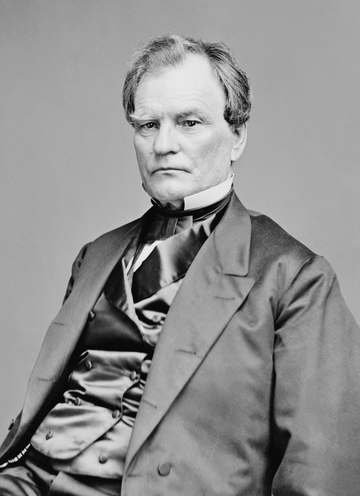
Benjamin Wade. Library of Congress description: "Hon. Ben. F. Wade of Ohio"
Public domain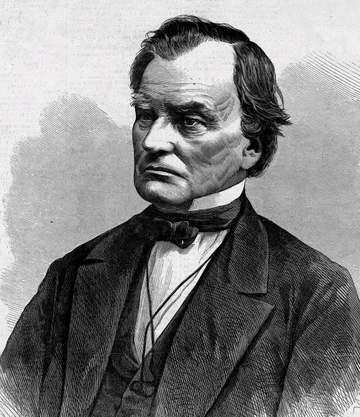
Drawing of Benjamin F. Wade, US Senator 1867 First published in en:Harper's Weekly, en:March 23, en:1867.
Public domain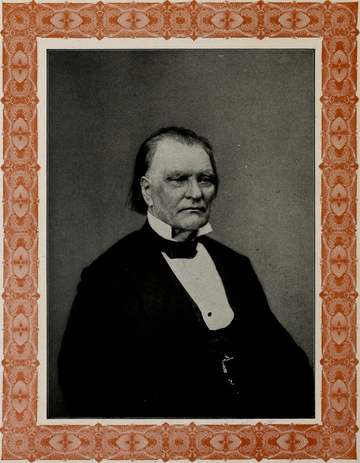
No known restrictions 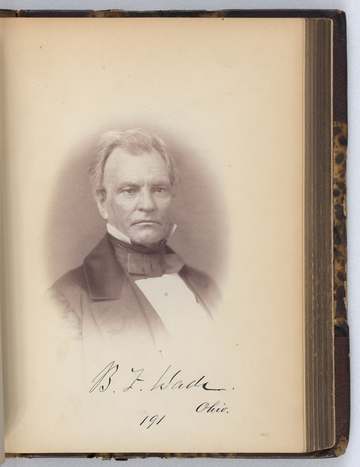
Title: Benjamin F. Wade, Senator from Ohio, Thirty-fifth Congress, half-length portrait Abstract/medium: 1 pho...
Public domain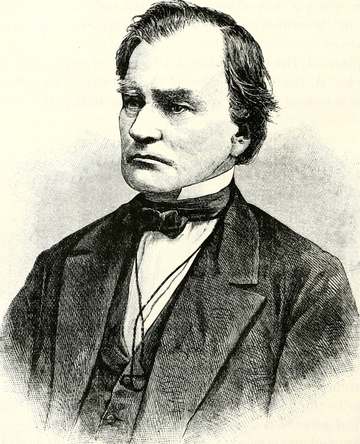
Benjamin F. Wade Identifier: abrahamlincol1479coff (find matches) Title: Abraham Lincoln Year: 1897 (1890s) Au...
No known restrictions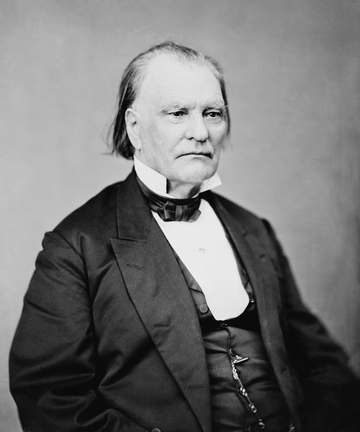
Benjamin Wade. Library of Congress description: "Hon. Benj. Franklin Wade of Ohio"
Public domain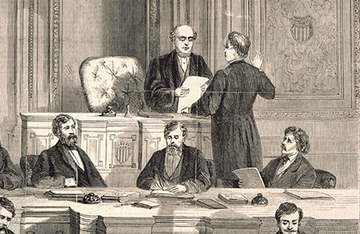
by Unidentified after James E. Taylor Frank Leslie's Illustrated Newspaper Wood engraving, black and white, 18...
Public domain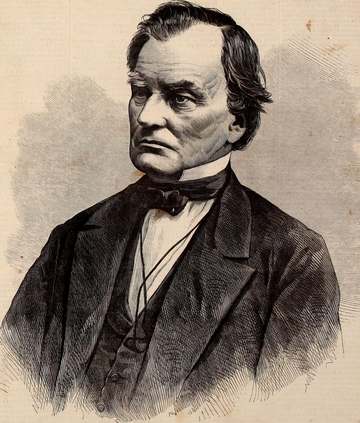
No known restrictions 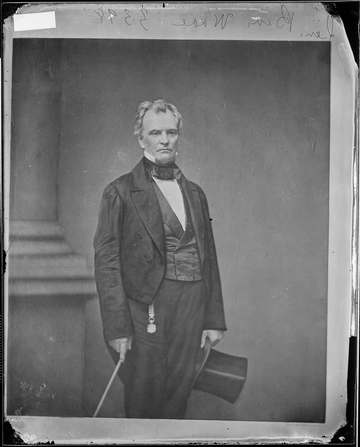
Public domain 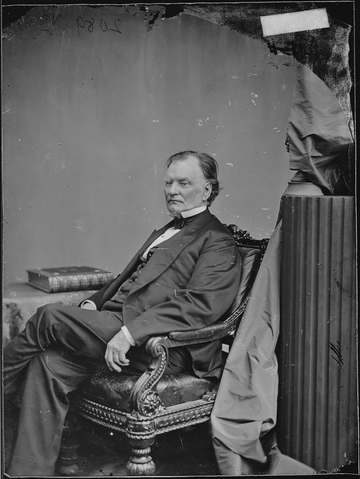
Public domain 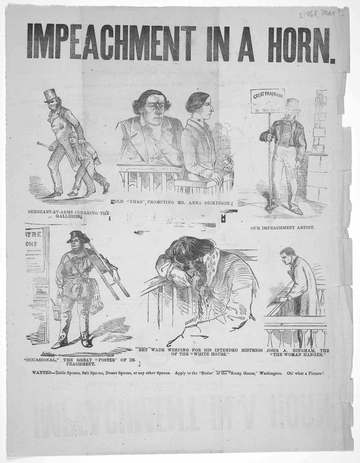
Political illustration of the impeachment trial of Andrew Johnson
Public domain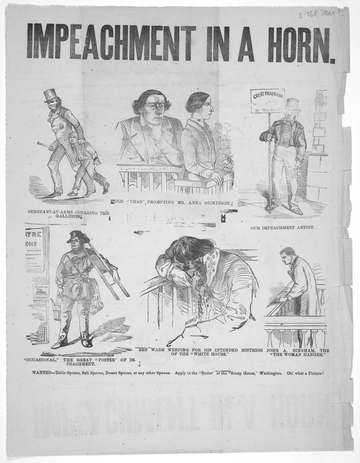
Political illustration of the impeachment trial of Andrew Johnson
Public domain


Further reading
Sources
Confidence. Medium: the main facts were confirmed, but some details (often an address or ZIP code) were not.
- Wikipedia: Benjamin Wade dates, offices, death in Jefferson
- Wikipedia: Benjamin F. Wade House
- Wikipedia: Jefferson, Ohio
- Wikipedia: Wade–Davis Bill
- Wikipedia: Joshua Reed Giddings Law Office
- nps.gov: benjamin f wade home
- findagrave.com: benjamin franklin wade
- archive.org: lifeofbenjaminfw00ridd 0
- archive.org: cu31924011504432
- archive.org: invasionofharper00wade
- archive.org: propertyinterrit00wade
- archive.org: speechofhonbfwad00wade
- Wikimedia Commons: Category:Benjamin F. Wade
- Wikimedia Commons: Category:Benjamin Wade House
- Wikimedia Commons: Benjamin F Wade Brady Handy
- Wikimedia Commons: Benjamin F. Wade, Senator from Ohio, Thirty fifth Congress, half length portrait
- Wikimedia Commons: Hon. Benjamin F. Wade, Ohio NARA 525426
- Wikimedia Commons: Chief Justice Chase, as President of the Court of Impeachment, Administering the
- Wikimedia Commons: EXTERIOR, GENERAL VIEW FROM NORTHEAST Benjamin Wade House, 22 Jefferson Street,
- Wikimedia Commons: Senator Benjamin F. Wade, Ohio (1)


Every link goes to the original source. Profile researched 2026-10-15.