Notable people · Governor · Military
Arthur St. Clair
First governor of the Northwest Territory (1788-1802), who named Cincinnati and led the army routed at St. Clair's Defeat in present-day Mercer County in 1791.
Born March 23, 1737, Thurso, Caithness, Scotland (recorded as 23 March 1736 Old Style)
Died August 31, 1818, Greensburg, Pennsylvania
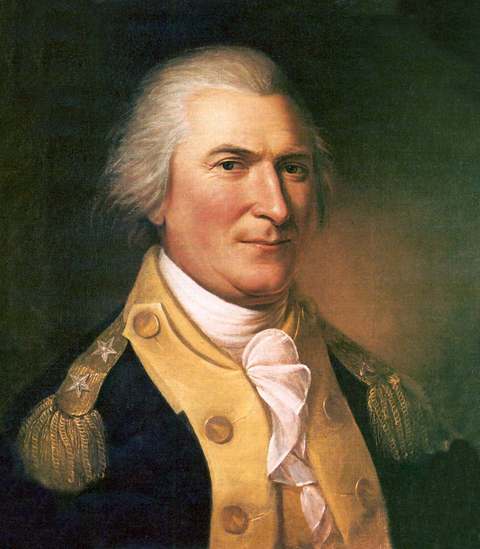
At a glance
- Born
- March 23, 1737, Thurso, Caithness, Scotland (recorded as 23 March 1736 Old Style) source
- Died
- August 31, 1818, Greensburg, Pennsylvania source
- Buried
- St. Clair Park (under a Masonic monument), Greensburg source
- Also known as
- Arthur Saint Clair, General St. Clair
- Education
- University of Edinburgh, Edinburgh, Scotland
- Known as
- Governor, Military
Life story
Arthur St. Clair was born in Thurso, Scotland, in 1737. He studied at the University of Edinburgh and trained under the physician William Hunter before buying a British Army commission in 1757.
He fought at Louisbourg and Quebec, left the Army in 1762, and settled in the Ligonier Valley of Pennsylvania in 1764. In the Revolution he became a Continental general, and in 1787 he was elected president of the Continental Congress.
In 1788 he became first governor of the Northwest Territory. Cincinnati got its name from the Society of the Cincinnati, of which he was a member.
His army was routed by the Native confederacy on the Wabash on November 4, 1791. Jefferson removed him as governor in 1802. He died poor in Greensburg, Pennsylvania, in 1818.
Ohio ties
- Marietta (1788)
arrived at Fort Harmar July 9 and was installed as territorial governor July 15 Washington County · source - Cincinnati (1790-1802)
renamed Losantiville as Cincinnati and organized Hamilton County; later relocated his home there Hamilton County · source - Fort Recovery (1791)
site of St. Clair's Defeat Mercer County · source - St. Clairsville (late 1790s)
Newellstown renamed in his honour Belmont County · source
Timeline
- 1757 Joined the British army after briefly studying medicine at Edinburgh; he served in America in the French and Indian War. source
- 1777 Evacuated Fort Ticonderoga under British bombardment and was later acquitted at court-martial. source
- 1787 Elected president of the Confederation Congress on February 2; Congress passed the Northwest Ordinance during his term. source
- 1788 Reached Fort Harmar on July 9 and, after his commission was read on July 15, addressed the settlers at Marietta as governor. source
- 1789 Negotiated the Treaty of Fort Harmar, which the western nations rejected. source
- 1790 Arrived at Losantiville on January 2, organized Hamilton County and had the town renamed Cincinnati. source
- 1791 Marched from Fort Washington; his army was routed on November 4 near present-day Fort Recovery. source
- 1792 The House opened its first special committee investigation, into the defeat, and St. Clair was pushed to resign his army command. source
- 1802 Removed as governor by Jefferson after saying settlers were no more bound by an act of Congress than by an edict of the First Consul of France. source
- 1818 Died in poverty in Greensburg, Pennsylvania, on August 31. source
- 1913 The 101-foot Fort Recovery monument over the remains of the battle dead was dedicated on July 1. source
What Arthur is known for
- First Governor of the Northwest Territory
- Defeat at the Wabash, 1791
Stories
The governor's first speech at Marietta
St. Clair landed at Fort Harmar, across the Muskingum from the new Ohio Company settlement, on July 9, 1788. On July 15 the Northwest Ordinance and the officers' commissions were read to the settlers at Marietta, and he addressed them. He told them the government was temporary, meant only for the territory's infant stage, with judges borrowing laws from the codes of the original states and Congress able to annul anything passed locally. He urged them to keep peace with neighbouring Native nations through kindness and justice. The journal of his proceedings is held by the National Archives in the State Department's territorial papers.
Half of Cincinnati marched with him
When St. Clair's army set out from Fort Washington in 1791, about half the people of the young town of Cincinnati were attached to it in some way. Many of them died in the defeat that November, and Henry Howe's Historical Collections of Ohio records that the town barely grew that year as a result. After he returned, St. Clair handed command of Fort Washington to Major Zeigler and left for Philadelphia; Colonel James Wilkinson soon took over.
Bones under the monument
The Legion of the United States built Fort Recovery on the battlefield in 1793, and its soldiers had to move bones to make room for their beds. Later townspeople gathered remains from the field for reburial. In 1908 President Taft signed the bill for a monument, and the granite shaft at Ohio 49 and Ohio 119 was dedicated on July 1, 1913. The remains lie beneath its base, and thirty-two medallions around it carry the names of officers killed in the battles under St. Clair and Anthony Wayne.
Honors and things named for them
- Cincinnati, OH named for the Society of the Cincinnati
- St. Clair townships and counties in several states
- USS St. Clair
Named for Arthur St. Clair
- St. Clairsville (St. Clairsville, Belmont County) source
- St. Clair Township source
Family
- wife: Phoebe Bayard St. Clair
- daughter: Louisa St. Clair
Sites to know
Homes, graves, markers, museums and monuments; the numbered ones are on the map.
- 1 Fort Recovery State Museum and Memorial (battlefield)
Fort Recovery Mercer County · source - Fort Recovery Monument, Monument Park
Fort Recovery Mercer County · source - St. Clair grave, St. Clair Park
Greensburg, Pennsylvania source
Ohio places
Where Arthur St. Clair was born, lived, worked and is remembered, with the ZIP code, town and county pages for each.
- Lived: Cincinnati, Hamilton County (Territorial seat after 1790) ZIP 45202 · Cincinnati · Hamilton County
Myths and corrections
Things often said about Arthur St. Clair, and what the record shows.
Often said St. Clair was the only foreign-born President of the United States.
The record He was president of the Confederation Congress in 1787, a presiding officer of the legislature. Historians describe the office as largely ceremonial, with no power to set the agenda or appoint committees, and Edmund Burnett called its holders almost solely presiding officers. It was not the executive presidency created by the Constitution in 1789. Wikipedia repeats the claim in quotation marks for that reason. source
Often said St. Clair helped found the state of Ohio.
The record He opposed the statehood drive led by the Chillicothe Republicans and was removed as governor by Jefferson in 1802. Wikipedia states he played no part in organizing the state in 1803. source
- Cincinnati is sometimes said to be named for the Roman Cincinnatus directly; sources say it was named for the Society of the Cincinnati.
Pictures
Free to use with the credit shown. Select a picture for the original and its license.
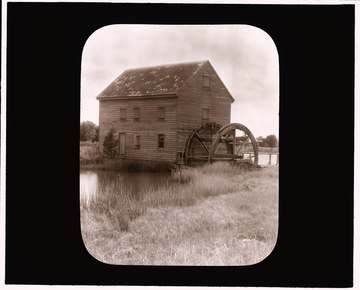
Title: "Poplar Grove," Arthur Saint Clair Butler house, Williams, Mathews County, Virginia. Tide mill Abstract...
Public domain
Title: "Poplar Grove," Arthur Saint Clair Butler house, Williams, Mathews County, Virginia. Tide mill Abstract...
Public domain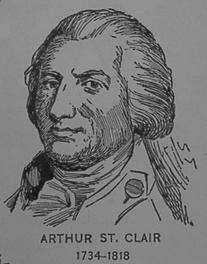
From A History of the United States page 175 by Alma Holman Burton copyright 1899
Public domain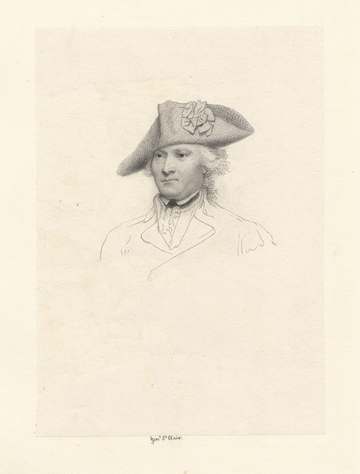
* Printmakers include William Birch, R.W. Dodson, H.B. Hall, J.B. Longacre, Albert Rosenthal, Max Rosenthal an...
Public domain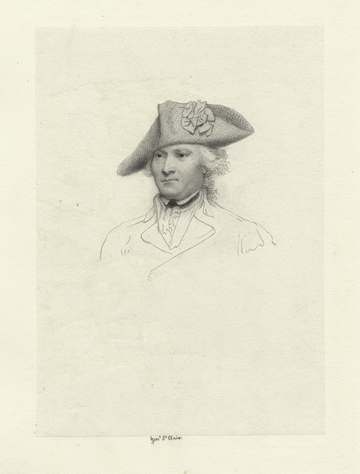
* Printmakers include William Birch, R.W. Dodson, H.B. Hall, J.B. Longacre, Albert Rosenthal, Max Rosenthal an...
Public domain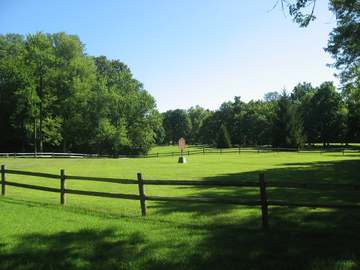
Fields at the site of Fort St. Clair, located on the western edge of Eaton, Ohio, United States. Built in 1792...
Public domain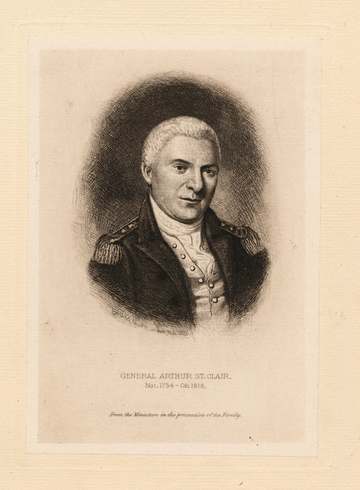
* Printmakers include William Birch, R.W. Dodson, H.B. Hall, J.B. Longacre, Albert Rosenthal, Max Rosenthal an...
Public domain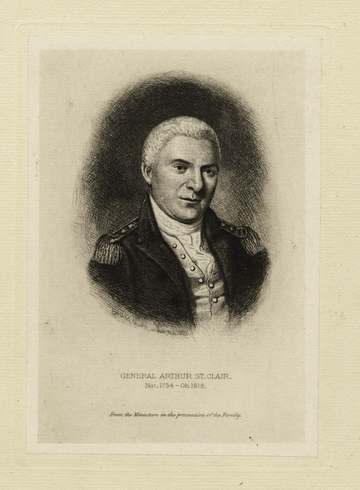
* Printmakers include William Birch, R.W. Dodson, H.B. Hall, J.B. Longacre, Albert Rosenthal, Max Rosenthal an...
Public domain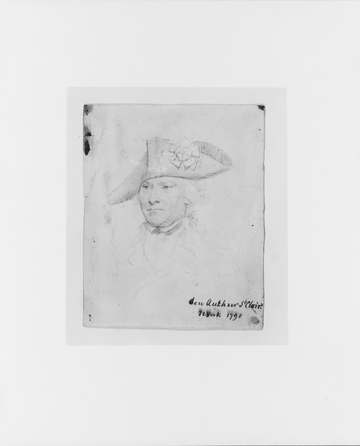
Drawing; Drawings
CC0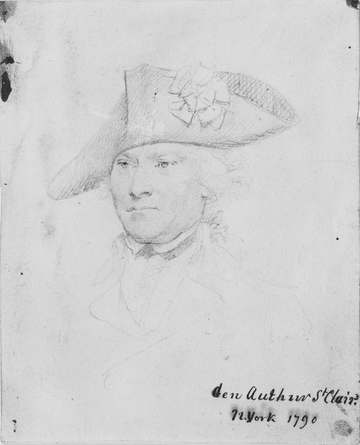
Drawing; Drawings
CC0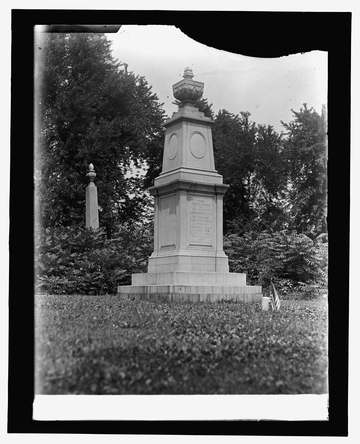
Title: Grave of Gen. Arthur St. Clair, Greensburg, Pa. Abstract/medium: 1 negative : glass ; 4 x 5 in. or smal...
Public domain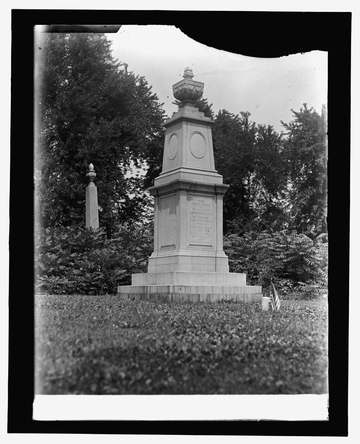
Title: Grave of Gen. Arthur St. Clair, Greensburg, Pa. Abstract/medium: 1 negative : glass ; 4 x 5 in. or smal...
Public domain


Further reading
Sources
Confidence. Medium: the main facts were confirmed, but some details (often an address or ZIP code) were not.
- Wikipedia: Arthur St. Clair born Thurso Scotland, governor July 15 1788 to Nov 22 1802, named Cincinnati, died Greensburg PA
- Wikipedia: St. Clair's defeat
- docsteach.org: stclair inaugural
- hamilton.ohgenweb.org
- battlefields.org: arthur st clair
- Wikipedia: Fort Recovery
- fortrecoveryohio.gov: monument park
- Wikipedia: St. Clairsville, Ohio
- Wikipedia: President of the Continental Congress
- Wikimedia Commons: ArthurStClairOfficialPortrait restored

Every link goes to the original source. Profile researched 2026-10-14.