Notable people · Abolitionist · Clergy
John Rankin
Presbyterian minister whose hilltop house above Ripley was one of the busiest Underground Railroad stations on the Ohio River.
Born February 4, 1793, Dandridge, Jefferson County, Tennessee
Died March 18, 1886, Ironton
At a glance
- Born
- February 4, 1793, Dandridge, Jefferson County, Tennessee source
- Died
- March 18, 1886, Ironton (Lawrence County) source
- Buried
- Maplewood Cemetery, 700 Catherine Street, Ripley (Brown County) source
- Also known as
- Rev. John Rankin
- Education
- Washington College Academy (under Samuel Doak), Tennessee, to 1816
- Known as
- Abolitionist, Clergy
- Organizations
- Ohio History Connection
Life story
John Rankin was born in Tennessee in 1793 to a strict Presbyterian family; his mother opposed slavery. He studied under the abolitionist minister Samuel Doak and graduated in 1816.
He co-founded the Tennessee Manumission Society, then left the South because of opposition, pastoring in Carlisle, Kentucky, where he opened a school for enslaved people.
In 1822 the family crossed the frozen Ohio River to Ripley, Ohio. In 1826 he published Letters on Slavery, which influenced William Lloyd Garrison and Harriet Beecher Stowe.
His hilltop house in Ripley, built in 1829, became an Underground Railroad stop, and he joined the antislavery speakers known as 'the Seventy' in 1836. He resigned from the Ripley church in 1846 and died in 1886.
Ohio ties
- Ripley (1822-1870s)
minister of the Ripley Presbyterian Church (1822-1846), school founder and Underground Railroad conductor; lived in Ripley until after his wife died in 1878 Brown County · source - Rankin House, Liberty Hill, Ripley (1829 onward)
family home and Underground Railroad station Brown County · source - Ironton (after 1878-1886)
lived his last years at the Gray house with his granddaughter Elizabeth Gray, and died there Lawrence County · source
Timeline
- 1818 Formed an anti-slavery society in Carlisle, Kentucky, where slavery was legal. source
- 1822 Moved his family across the Ohio River to Ripley in the winter of 1821-22 and took up the pulpit of the Ripley Presbyterian Church. source
- 1826 Letters on American Slavery, written to his slaveholding brother Thomas in Virginia, was published as a book. source
- 1828 The brick house on the hill above Ripley was built. source
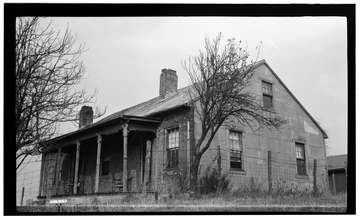
- 1829 The family, with nine of his children at home, moved into the hilltop house overlooking Ripley and the Kentucky shore. source
- 1831 Ripley College, founded in 1829, enrolled its first African American student. source
- 1835 Helped form the Ohio Anti-Slavery Society. source
- 1838 A woman carrying her child crossed the Ohio River ice and was sheltered by the Rankins. Harriet Beecher Stowe later based Eliza in Uncle Tom's Cabin on her. source
- 1838 Young Ulysses S. Grant attended Rankin's academy in Ripley. source
- 1846 Resigned from the Ripley Presbyterian Church after 24 years. Over a third of the congregation left with him, helping establish the Free Presbyterian Church. source
- 1878 His wife Jean Lowrey Rankin died. source
- 1886 Died on 18 March at his home in Ironton's Rankin district. source
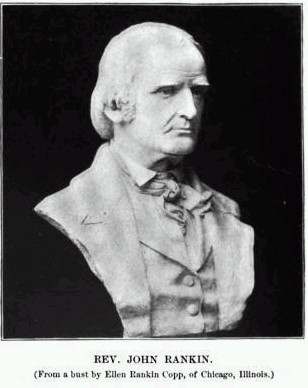
- 1892 A bronze bust of Rankin by his granddaughter Ella Rankin Copp was set on the couple's granite grave marker, inscribed 'Freedom's heroes', in Maplewood Cemetery. source
- 1938 The State of Ohio acquired the Rankin House. source
- 1997 The Rankin House was designated a National Historic Landmark on 18 February. source
What John is known for
- Rankin House, National Historic Landmark 1997
- Wrote 'Letters on American Slavery'
- Letters on Slavery (1826)
Stories
Letters to a slaveholding brother
Rankin's brother Thomas was a slaveholder in Virginia. From Ripley, Rankin wrote him a series of letters setting out the case against slavery, and in 1826 they were published as a book, Letters on American Slavery. William Lloyd Garrison later reprinted them in his newspaper The Liberator, carrying a Brown County minister's arguments to a national abolitionist readership. The letters also seem to have reached their first reader: Thomas Rankin later moved to Ohio and freed the people he had enslaved.
The split in Ripley's church
Rankin served the Ripley Presbyterian Church for 24 years before resigning in 1846. More than a third of the congregation left with him, and they helped establish what became the Free Presbyterian Church, an anti-slavery denomination that may have had as many as 72 congregations before the Civil War. Rankin also founded a Presbyterian academy for boys in Ripley, and the young Ulysses S. Grant attended it in 1838.
Honors and things named for them
- National Abolition Hall of Fame (2013)
- 'Freedom's Heroes' monument, Maplewood Cemetery, Ripley (1892)
- Rankin House is a National Historic Landmark
Family
- father: Richard Rankin
- mother: Jane Steele Rankin
Sites to know
Homes, graves, markers, museums and monuments; the numbered ones are on the map.
- 1 John Rankin House (NRHP 70000485, National Historic Landmark)
6152 Rankin Hill Road, Ripley Brown County · source - Rankin grave and 'Freedom's Heroes' bust, Maplewood Cemetery
700 Catherine Street, Ripley Brown County · source - Gray house (Lawrence County Historical Society museum), where Rankin spent his last years
Ironton Lawrence County · source
Places in Ohio to see
- John Rankin House (home)
6152 Rankin Hill Rd, Ripley, Brown County ZIP 45167 · Ripley · Brown County - Maplewood Cemetery (grave)
Ripley, Brown County ZIP 45167 (approximate) · Ripley · Brown County
Ohio places
Where John Rankin was born, lived, worked and is remembered, with the ZIP code, town and county pages for each.
- Lived: Ripley, Brown County (John Rankin House, 6152 Rankin Hill Rd) ZIP 45167 · Ripley · Brown County
- Buried: Ripley, Brown County (Maplewood Cemetery) ZIP 45167 · Ripley · Brown County
Myths and corrections
Things often said about John Rankin, and what the record shows.
Often said Rankin hung a lantern in his front window each night to tell freedom seekers in Kentucky that it was safe to cross.
The record This is folklore. A formerly enslaved person's narrative instead recalls a light on a pole, which Wikipedia calls more plausible given where the house stands. The Clio entry, drawing on Ohio History Connection material, describes a 30-foot candle-tipped pole in town that 'may have served as a beacon' on some occasions. It notes that secrecy was the norm, because a visible signal would also have drawn slave catchers. source
Often said Rankin died in 1886 from injuries suffered in a mob attack.
The record This is unproven. It is repeated on Clio and in blog posts, but the Ironton Tribune's local history of his last years says only that he died on 18 March 1886 at his Ironton home, aged 93, where he lived with his granddaughter. No source I opened gives a cause of death or describes any attack in his last years. source
Often said Rankin personally sheltered 2,000 freedom seekers.
The record 'About 2,000' is a modern estimate for all the people helped through Ripley, which Ohio History Connection and the Ripley tourism site repeat. Rankin's own documented statement was that he had sheltered as many as twelve fugitives at a time, sometimes whole families. source
- Disputed: Tradition says he helped about 2,000 people escape slavery. The number is a traditional claim, not a documented count.
Pictures
Free to use with the credit shown. Select a picture for the original and its license.
Public domain 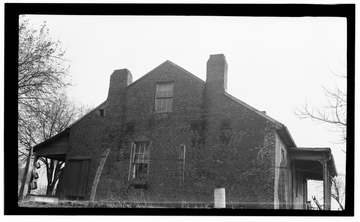
Public domain 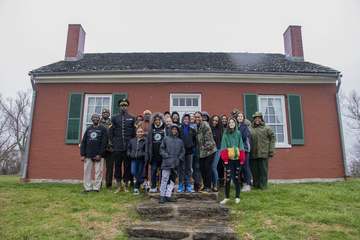
Several children and adults stand in front of a red brick home with two chimneys and a staircase in the center...
Public domain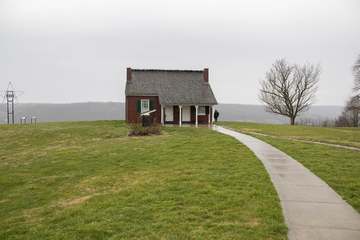
A red brick house with gray shingle roof and green yard with sidewalk leading to the house. The John Rankin ho...
Public domain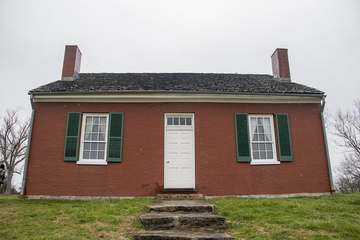
A red brick house with gray shingle roof and green yard with sidewalk leading down to the bottom. The John Ran...
Public domain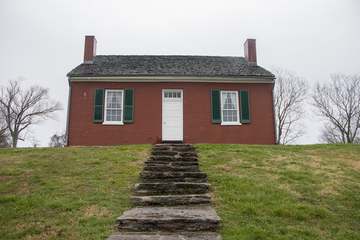
A red brick house with gray shingle roof and green yard with sidewalk leading down to the bottom. The John Ran...
Public domain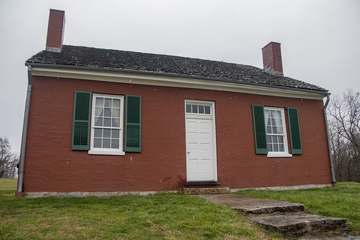
A red brick house with gray shingle roof and green yard with sidewalk leading down to the bottom right. The Jo...
Public domain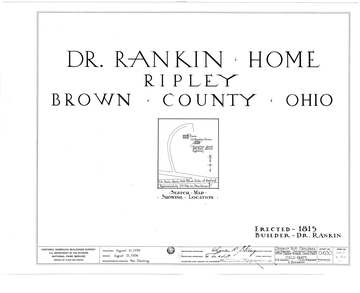
Public domain 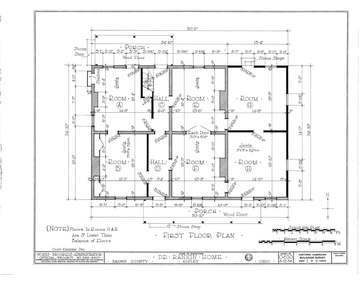
Public domain 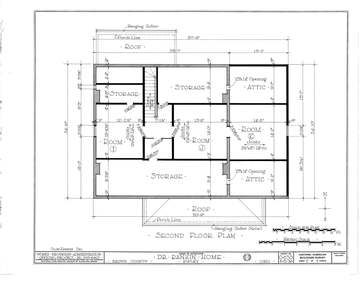
Public domain 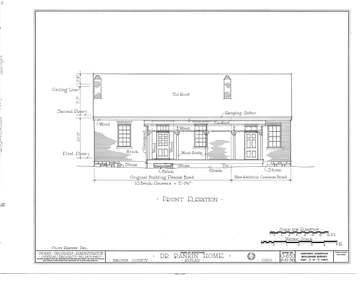
Public domain 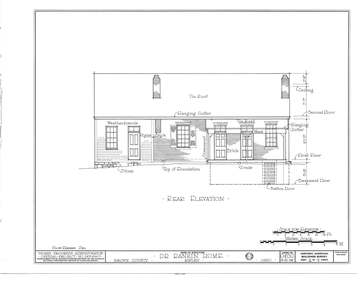
Public domain


Further reading
Sources
Confidence. Medium: the main facts were confirmed, but some details (often an address or ZIP code) were not.
- Wikipedia: John Rankin dates, Tennessee birth, Ripley, burial (Wikipedia, opened; pointer-level source)
- Wikipedia: John Rankin House (Ripley, Ohio)
- theclio.com
- ripleyohio.net: john rankin house
- nationalabolitionhalloffameandmuseum.org: john rankin
- richlandsource.com: uncle toms cabin immortalized ohios john rankin his underground railroad depot
- irontontribune.com
- sculpturecenter.org
- Wikimedia Commons: John Rankin abolitionist
- Wikimedia Commons: Historic American Buildings Survey, E.F. Schrand, A. Hofmann, Photographers Nove
- Wikimedia Commons: John Rankin Grave
Every link goes to the original source. Profile researched 2026-10-14.


