Notable people · Entertainment · Music · African American History
Art Tatum
Toledo-born jazz pianist, nearly blind from infancy, whose speed, harmony and invention made him the benchmark for jazz piano technique.
Born October 13, 1909, Toledo
Died November 5, 1956, Queen of Angels Medical Center, Los Angeles
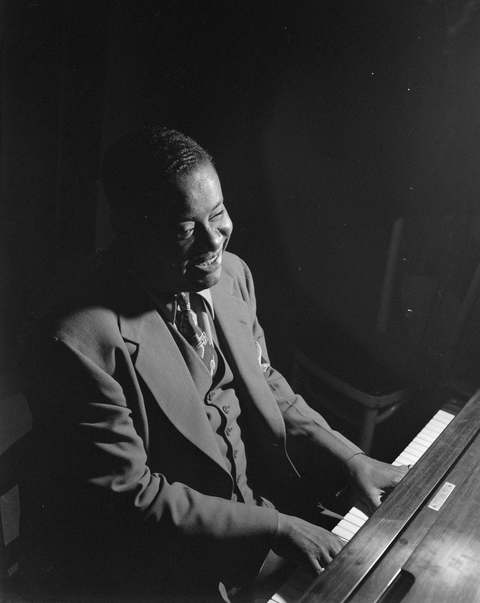
At a glance
- Born
- October 13, 1909, Toledo (Lucas County) source
- Died
- November 5, 1956, Queen of Angels Medical Center, Los Angeles source
- Buried
- Forest Lawn Memorial Park, Glendale (moved in 1992 from Rosedale Cemetery, Los Angeles, where a cenotaph remains) source
- Also known as
- Art Tatum
- Known as
- Entertainment, Music, African American History
Life story
Art Tatum was born in Toledo in 1909 to parents who had come from North Carolina that year, and had badly impaired sight from infancy. He studied briefly at the state School for the Blind in Columbus and at the Toledo School of Music, but was largely self-taught, and by his mid-teens was playing in Toledo clubs. From 1927 he had his own program on Toledo's WSPD, rebroadcast nationally in 1928-29, and visiting stars such as Duke Ellington and Fletcher Henderson came to hear him. In 1932 singer Adelaide Hall heard him in Toledo and took him to New York, where his recordings and cutting-contest victories over the stride masters made his name. He spent the rest of his career as a solo and trio pianist in New York, Chicago and Los Angeles, and recorded some 200 solo pieces for Norman Granz in the 1950s before he died in 1956. Toledo claims him with a library resource centre named for him since 1989, a marker at his childhood home on City Park Avenue, and a 27-foot column at its arena.
Ohio ties
- Toledo (1909-1932)
birthplace and home until he left with Adelaide Hall; Jefferson School, Toledo School of Music, Grace Presbyterian Church Lucas County · source - Toledo (1123 City Park Avenue) (childhood)
childhood home, built 1905; a historical marker was placed in front of it in 2003 Lucas County · source - Columbus (1924-1925)
pupil at the Ohio State School for the Blind for less than a year Franklin County · source - Toledo (WSPD radio) (1927-1932)
pianist on WSPD, first in a morning shopping programme and then with his own daily show Lucas County · source - Cleveland (c. 1927-1932)
played engagements in Cleveland as his reputation spread beyond Toledo Cuyahoga County · source - Columbus (c. 1927-1932)
played engagements in Columbus as his reputation spread beyond Toledo Franklin County · source - Toledo (Kent Branch Library) (1989-present)
Art Tatum African American Resource Center of the Toledo Lucas County Public Library Lucas County · source
Timeline
- 1909 Born in Toledo on October 13; his parents, Mildred Hoskins and Arthur Tatum Sr., a mechanic, had moved there from North Carolina that year. source
- c. 1920 Eye operations allowed him by age 11 to see objects close to him and perhaps distinguish colours. source
- 1924 Moved late in the year from Toledo's Jefferson School to the School for the Blind in Columbus, then after less than a year transferred to the Toledo School of Music; he was probably already being paid to play in Toledo clubs. source
- 1927 After winning an amateur competition, began playing on Toledo radio station WSPD and soon had his own daily programme. source
- 1928 His WSPD programme was rebroadcast nationwide by the Blue Network during 1928-29. source
- c. 1930 Joined Milton Senior and his Chateau La France Orchestra in Toledo; his mother scrubbed floors at the First National Bank to buy him a second-hand baby grand, a neighbour later recalled. source
- 1932 Singer Adelaide Hall heard him in Toledo and hired him; he went to New York with her band and made his first studio recordings with her on August 5. source
- 1933 Recorded his first four released solo sides for Brunswick in March, including a startlingly fast 'Tiger Rag'. source
- 1934 Recorded 'After You've Gone' for Decca on August 24, the earliest known example of him playing in two keys at once. source
- 1955 Interviewed by Willis Conover for the Voice of America's Music USA programme, assembled in May. source
- 1956 Died of uremia at Queen of Angels Medical Center in Los Angeles on November 5, and was buried at Rosedale Cemetery. source
- 1964 Elected to the DownBeat Hall of Fame by the critics' poll. source
- 1989 Toledo's public library founded the Art Tatum African American Resource Center at its Kent Branch; the same year he received a Grammy Lifetime Achievement Award. source
- 1992 His body was moved from Rosedale to Forest Lawn in Glendale by his second wife, who wished to be buried beside him. source
- 2003 A historical marker was placed in front of his childhood home at 1123 City Park Avenue in Toledo. source
- 2009 The Lucas County Arena in Toledo unveiled a 27-foot sculpture, the Art Tatum Celebration Column. source
- 2017 The Toledo City Paper reported the City Park Avenue house standing empty with peeling paint, boarded windows and a failing foundation. source
- 2019 The Toledo Museum of Art staged 'Portraits of Tatum' readings on February 21, built on Imelda Hunt's history of his Toledo years. source
- 2021 The nonprofit Art Tatum Zone won two grants to restore the childhood home and improve the neighbourhood. source
Stories
A Toledo radio prodigy
In 1927 the teenage Tatum won an amateur competition and was put on WSPD, Toledo's radio station, to play during the breaks in a morning shopping programme. He soon had a daily show of his own, scheduled at noon so he could sleep after playing the clubs and the after-hours spots, where he liked to wait until every other pianist had finished before he sat down. In 1928-29 the Blue Network carried the programme across the country. Duke Ellington and Fletcher Henderson, passing through Toledo, went to hear him, but Tatum felt he was not yet ready for New York. Around 1930 the family replaced the player piano at home with a better instrument; singer Jon Hendricks, a neighbour, said Tatum's mother scrubbed floors at the First National Bank to pay for a second-hand baby grand.
Adelaide Hall finds her pianist
In 1932 the singer Adelaide Hall, touring with two pianists, heard Tatum in Toledo and recruited him. She was introduced to him by Ella Stewart, wife of the Toledo pharmacist William W. Stewart, who had signed Tatum to a management contract but lacked the connections to promote him properly. Tatum went to New York with Hall's band and almost lost the job in July at the Palace Theatre, when during a costume change he abandoned the rehearsed routine and played a solo that brought deafening applause. He made his first studio recordings with Hall in August 1932, and soon afterward took on the reigning stride pianists, James P. Johnson, Fats Waller and Willie 'The Lion' Smith, in a cutting contest at Morgan's bar in Harlem, playing his own arrangements of 'Tea for Two' and 'Tiger Rag'.
The house on City Park Avenue
Tatum's childhood home at 1123 City Park Avenue in Toledo was built in 1905, four years before he was born. In 2003 a historical marker was placed in front of it. By 2017 the house was empty, with peeling paint, boarded windows, overgrown shrubs and a failing foundation; the niece who inherited it could not afford repairs on a fixed income. Toledo honours him in other ways too: an Art Tatum African American Resource Center at the Kent Branch Library, an Art Tatum Scholarship Fund at the University of Toledo and an Art Tatum Jazz Heritage Society. 'The best way to celebrate him is to keep jazz alive,' the society's director told the paper.
Named for Art Tatum
- Art Tatum African American Resource Center, Toledo Lucas County Public Library (founded 1989) (Toledo, Lucas County) source
- Art Tatum Celebration Column, Lucas County Arena (Toledo, Lucas County) source
- Art Tatum Scholarship Fund, University of Toledo (Toledo, Lucas County) source
- 'Tatum', the musicological term for the fastest pulse in a piece of music, coined in 1993 source
Sites to know
Homes, graves, markers, museums and monuments.
- Art Tatum childhood home and historical marker, 1123 City Park Avenue (private)
Toledo Lucas County · source - Art Tatum Celebration Column (2009), Lucas County Arena (Huntington Center), 500 Jefferson Avenue
Toledo Lucas County · source - Art Tatum African American Resource Center, Kent Branch Library
Toledo Lucas County · source - Former Ohio Institution for the Education of the Blind building (1874), 240 Parsons Avenue, home of the School for the Blind until the mid-1950s; now Columbus Public Health (unknown)
Columbus Franklin County · source - Art Tatum grave, Forest Lawn Memorial Park
Glendale, California source
Ohio places
Where Art Tatum was born, lived, worked and is remembered, with the ZIP code, town and county pages for each.
- Born: Toledo, Lucas County Toledo · Lucas County
- Connected: Toledo, Lucas County Toledo · Lucas County
- Connected: Toledo, Lucas County Toledo · Lucas County
- Connected: Columbus, Franklin County Columbus · Franklin County
- Connected: Toledo, Lucas County Toledo · Lucas County
- Connected: Cleveland, Cuyahoga County Cleveland · Cuyahoga County
- Connected: Columbus, Franklin County Columbus · Franklin County
- Connected: Toledo, Lucas County Toledo · Lucas County
Myths and corrections
Things often said about Art Tatum, and what the record shows.
Often said Tatum learned to play by copying piano rolls that, unknown to him, had been recorded by two pianists playing together.
The record Tatum himself denied this story in an interview as an adult. He did learn tunes from radio, records and piano rolls, but the four-hands tale is legend. source
Often said Art Tatum was totally blind.
The record His sight was impaired from infancy, probably by cataracts, but operations let him see nearby objects by age 11. An assault in his early twenties left him blind in the left eye with very limited vision in the right; he still played cards and pool, and in 1935 said he could see enough to read, write and get around. source
Documents
Primary records: patents, letters, court and government files, nominations and old county histories, each at the archive that holds it.
- Music USA #172-B, Interview with Art Tatum, by Willis Conover (Voice of America, May 1955; audio) 1955, University of North Texas Libraries (Willis Conover Collection)
Pictures
Free to use with the credit shown. Select a picture for the original and its license.
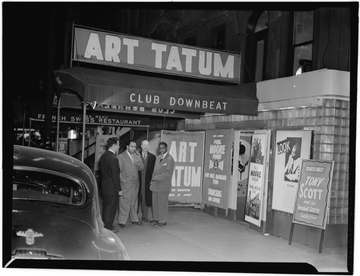
Gottlieb, William P., 1917-, photographer. [Portrait of Art Tatum and Phil Moore, Downbeat, New York, N.Y., be...
Public domain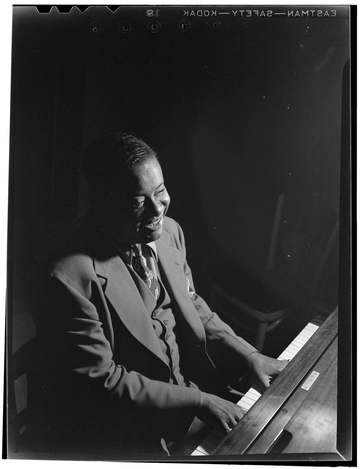
Gottlieb, William P., 1917-, photographer. [Portrait of Art Tatum, Rochester, N.Y.(?), ca. May 1946] 1 negativ...
Public domain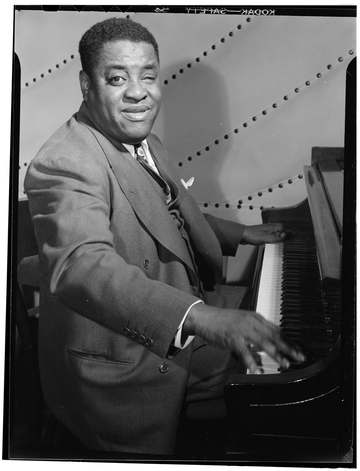
Portrait of Art Tatum, Vogue Room, New York, N.Y., between 1946 and 1948. Photography by William P. Gottlieb
Public domain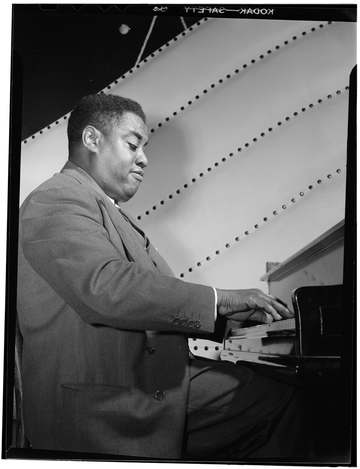
Gottlieb, William P., 1917-, photographer. [Portrait of Art Tatum, Vogue Room, New York, N.Y., between 1946 an...
Public domain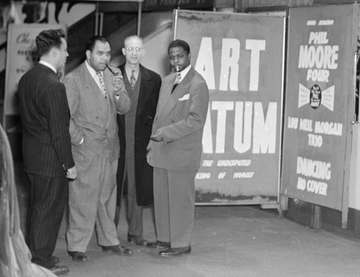
Art Tatum (right) and Phil Moore (left), Downbeat, New York, N.Y., between 1946 and 1948 (Photograph by Willia...
Public domain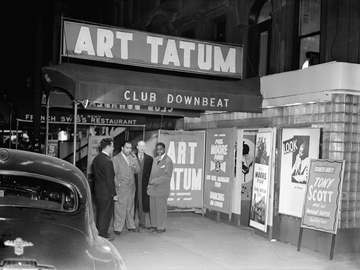
Art Tatum (right) and Phil Moore (left), Downbeat, New York, N.Y., between 1946 and 1948 (Photograph by Willia...
Public domain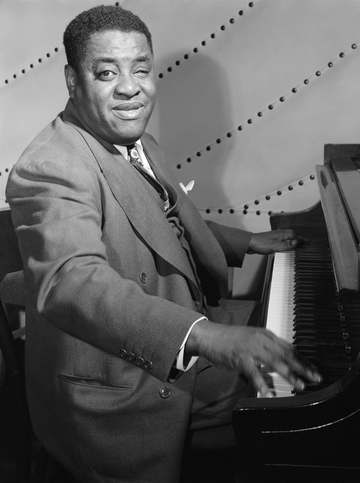
Portrait of Art Tatum, Vogue Room, New York, N.Y., between 1946 and 1948. Photography by William P. Gottlieb
Public domain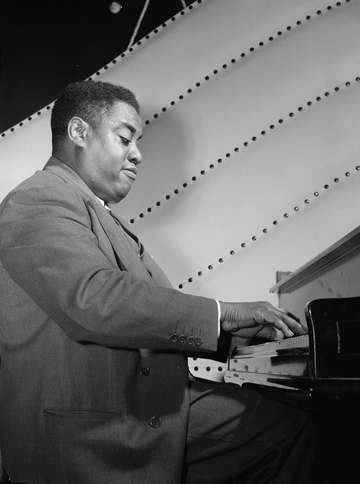
Portrait of Art Tatum, Vogue Room, New York, N.Y., between 1946 and 1948
Public domain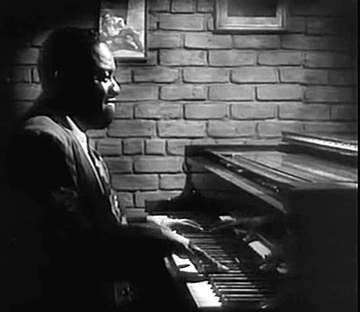
Public domain 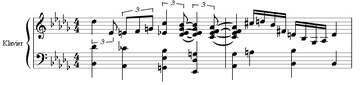
Walking Bass in Tenths in the Stride Piano style of Art Tatums title "Ain`t misbehavin`"
Public domain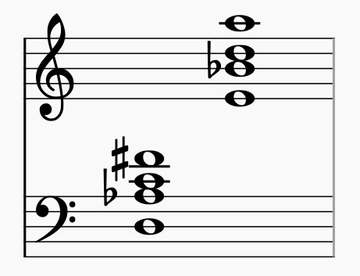
Two examples of chords, played by pianist Art Tatum, that "were easy for him to reach", as reported by Gunther...
Public domain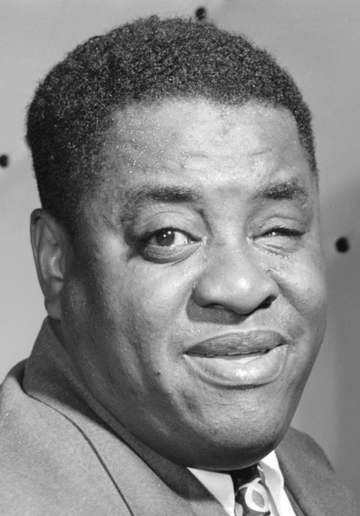
Portrait of Art Tatum, Vogue Room, New York, N.Y., between 1946 and 1948. Photography by William P. Gottlieb
Public domain

,_ca._May_1946)_(LOC)_(5148796890).jpg)


Sources
Confidence. High: the main facts were confirmed in sources we opened.
- https://en.wikipedia.org/wiki/Art_Tatum
- https://en.wikipedia.org/wiki/Toledo_Lucas_County_Public_Library
- https://en.wikipedia.org/wiki/Ohio_State_School_for_the_Blind
- https://en.wikipedia.org/wiki/Angelus-Rosedale_Cemetery
- http://toledocitypaper.com/the-city/remembering-art-tatum/
- https://toledocitypaper.com/music/portraits-of-tatum-remembering-the-toledo-born-jazz-legend/
- https://www.toledoblade.com/local/2021/02/22/Art-Tatum-Zone-receives-two-grant-awards/stories/20210222099
- http://www.wbgo.org/post/deep-dive-lewis-porter-praise-art-tatum-stealth-radical-jazz-piano-pantheon
- http://downbeat.com/archives/detail/downbeat-hall-of-fame
- https://digital.library.unt.edu/ark:/67531/metadc701825/
- https://commons.wikimedia.org/wiki/File:Art_Tatum,_Vogue_Room_1948_(Gottlieb).jpg
- https://commons.wikimedia.org/wiki/File:Art_Tatum,_ca._May_1946_(William_P._Gottlieb_08311).jpg

Every link goes to the original source. Profile researched 2026-10-15.