Notable people · Poet · Writer
Langston Hughes
Harlem Renaissance poet, playwright and novelist who began writing at Cleveland's Central High School and whose plays were premiered by Karamu House's Gilpin Players in the 1930s.
Born February 1, 1901, Joplin, Missouri
Died May 22, 1967, New York City (Stuyvesant Polyclinic), NY
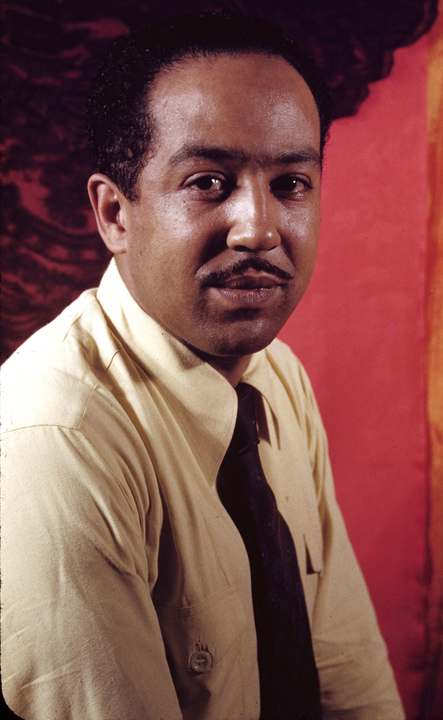
At a glance
- Born
- February 1, 1901, Joplin, Missouri source
- Died
- May 22, 1967, New York City (Stuyvesant Polyclinic), NY source
- Buried
- Ashes beneath a floor medallion in the foyer of the Schomburg Center for Research in Black Culture, Harlem source
- Also known as
- Langston Hughes
- Education
- Central High School, Cleveland, OH, graduated
- Columbia University, New York, NY, 1921-1922, left
- Lincoln University, Pennsylvania, 1926-1929, B.A.
- Known as
- Poet, Writer
- Organizations
- Central High School (Cleveland)
Life story
Langston Hughes was born in Joplin, Missouri, in 1901. His grandmother Mary Patterson Langston strongly shaped him; his great-uncle was John Mercer Langston. He spent much of his childhood in Lawrence, Kansas, then lived in Lincoln, Illinois.
He went on to Cleveland for high school at Central, where his teacher Helen Maria Chesnutt, daughter of Charles Chesnutt, encouraged his writing. The family lived in the Fairfax neighborhood.
He attended Columbia for a year, worked as a crewman on a ship to West Africa in 1923, and published his first poetry book, The Weary Blues, in 1926. He earned his degree at Lincoln University in Pennsylvania in 1929.
He became the central poet of the Harlem Renaissance, writing poems, plays, stories and a long newspaper column for the Chicago Defender (1942-62). He died in New York in 1967; his ashes are in the Schomburg Center in Harlem.
Ohio ties
- Cleveland (Fairfax neighborhood) (1916-1920)
high school years; from 1917 he rented an attic room alone at 2266 East 86th Street after his mother and stepfather moved away Cuyahoga County · source - Cleveland (Central High School) (1916-1920)
student; track team, the Monthly literary magazine, yearbook editor; graduated June 1920 Cuyahoga County · source - Cleveland (Playhouse Settlement / Karamu House) (1916-1920; 1930s)
took classes as a teenager; the Gilpin Players premiered his plays in 1936-1937 Cuyahoga County · source - Oberlin (1857-1869 (family))
family roots: his grandmother Mary Patterson was an Oberlin College graduate whose first husband, Oberlin harness maker Lewis Sheridan Leary, died after the Harpers Ferry raid; she then married Ohio abolitionist Charles Henry Langston Lorain County · source
Timeline
- 1859 Lewis Sheridan Leary, an Oberlin harness maker married to Hughes's future grandmother Mary Patterson, died October 20 of wounds from John Brown's raid on Harpers Ferry. source
- 1869 Mary Patterson Leary married Ohio abolitionist Charles Henry Langston and the family moved to Lawrence, Kansas; their daughter Carrie, born 1872, was Hughes's mother. source
- 1901 Born February 1 in Joplin, Missouri. source
- 1916 His mother and stepfather moved the family to Cleveland, and he entered Central High School. source
- 1917 At 15 he rented an attic room on East 86th Street on his own after his mother and stepfather left Cleveland. source
- 1918 His poem "Our Service Flag" appeared in The Central High School Monthly, vol. 19, no. 6, March 1918. source
- 1919 The Central High School Annual for June 1919 printed four photographs of him. source
- 1920 Graduated from Central High School in June; "The Negro Speaks of Rivers," written that year, was published in The Crisis in 1921. source
- 1931 He and Zora Neale Hurston negotiated with the Jelliffes to stage Mule Bone at Karamu until the two writers fell out; Karamu finally staged it in the 1996-1997 season. source
- 1936 The Gilpin Players premiered When the Jack Hollers and Troubled Island; they produced six of his plays in 1936-1937, the start of what Karamu calls its Hughes Era (1936-1939). source
- 1954 Won Cleveland's Anisfield-Wolf Book Award for fiction for Simple Takes a Wife. source
- 1967 Died May 22 in New York City; his ashes were later placed beneath a floor medallion at the Schomburg Center in Harlem. source
- 1973 Cleveland Public Library renamed its Quincy branch the Langston Hughes Branch; the present branch building opened in 1998. source
- 2010 The city condemned the vacant East 86th Street house on June 4, months after it was nominated as a Cleveland landmark; it was later renovated and sold. source
- 2018 Newspaper research moved his accepted birth year from 1902 to 1901. source
What Langston is known for
- Harlem Renaissance poet
- Cleveland high-school writing and editing
- The Weary Blues (1926)
- Not Without Laughter (1930)
- The Ways of White Folks (1934)
- The Big Sea (1940)
- Montage of a Dream Deferred (1951)
Stories
A boy alone in an attic on East 86th Street
In 1917, when Hughes was 15, his mother and stepfather left Cleveland, and he stayed behind to finish at Central High School, renting an attic room in a house on East 86th Street. At Central he was a star on the track team and published his first short stories in the literary magazine, the Monthly; his English teacher Ethel Weimer pushed his reading. Nearly a century later the house had been stripped of its copper and damaged, and in 2009 a neighborhood group bought it from the city for $100. After about $174,000 in renovation, Fairfax Development Corp. sold it as a three-bedroom home for $85,000 to an aspiring writer, and planned a Langston Hughes reading garden on land from the Cuyahoga County Land Bank.
Karamu's Hughes Era
Russell and Rowena Jelliffe, both Oberlin graduates, opened a settlement house at 2239 East 38th Street in 1915 and began staging plays in 1917; Hughes took classes there as a teenager. In 1931 he and Zora Neale Hurston negotiated with the Jelliffes to produce their comedy Mule Bone, but the two writers fell out and it was not staged. From 1936 to 1939, the theater's Hughes Era, the Gilpin Players premiered his When the Jack Hollers and Troubled Island and also Joy to My Soul. The theater burned in 1939, and the settlement took the name Karamu House in 1941. Mule Bone finally reached Karamu's stage in the 1996-1997 season.
The Oberlin grandmother
Hughes was raised mostly by his grandmother, Mary Patterson Langston, and her story ran through Oberlin. She was an Oberlin College graduate who married Lewis Sheridan Leary, a harness maker who came to Oberlin in 1857 and joined the town's abolitionists. Leary went with John Brown to Harpers Ferry and died of his wounds on October 20, 1859, at 24. Oberlin raised a monument in 1865 to Leary and two other Black raiders, John A. Copeland and Shields Green; it was moved in 1977 to Martin Luther King Jr. Park on Vine Street. In 1869 Mary married Charles Henry Langston and moved to Lawrence, Kansas, where their daughter Carrie, the poet's mother, was born in 1872.
Honors and things named for them
- Spingarn Medal (1960)
- Guggenheim Fellowship (1935)
- Langston Hughes Place, Harlem (1981)
Named for Langston Hughes
- Langston Hughes Branch, Cleveland Public Library (renamed from Quincy Branch in 1973) (Cleveland, Cuyahoga County) source
Family
- great-uncle: John Mercer Langston
- grandmother: Mary Patterson Langston
- grandfather: Charles Henry Langston
- teacher: Helen Maria Chesnutt
Sites to know
Homes, graves, markers, museums and monuments; the numbered ones are on the map.
- 1 Ohio Historical Marker 77-18, James Mercer Langston Hughes, at the Langston Hughes Branch Library
Cleveland, 10200 Superior Avenue at East Boulevard Cuyahoga County · source - 2 Karamu House (National Register 1982; the 1949 building replaced the theater Hughes knew, which burned in 1939)
Cleveland, 2355 East 89th Street Cuyahoga County · source - 3 Ohio Historical Marker 57-18, Karamu House (names Hughes among its alumni)
Cleveland, 2355 East 89th Street Cuyahoga County · source - House where Hughes rented an attic room, 2266 East 86th Street (renovated; private) (private)
Cleveland (Fairfax) Cuyahoga County · source - Site of Central High School's 1878 building, 2201 East 55th Street (razed 1952) (demolished)
Cleveland Cuyahoga County · source - Leary-Copeland-Green monument, honoring his grandmother's first husband, Martin Luther King Jr. Park
Oberlin, Vine Street Lorain County · source
Ohio places
Where Langston Hughes was born, lived, worked and is remembered, with the ZIP code, town and county pages for each.
- School: Cleveland, Cuyahoga County (Central High School and Fairfax neighborhood; ZIP is a neighborhood stand-in) ZIP 44104 (approximate) · Cleveland · Cuyahoga County
Myths and corrections
Things often said about Langston Hughes, and what the record shows.
Often said Langston Hughes was born in 1902.
The record Hughes himself gave 1902, and the Ohio marker at the Langston Hughes Branch and the Encyclopedia of Cleveland History still do, but newspaper research published in 2018 showed he was born February 1, 1901; the Academy of American Poets now uses 1901. source
Documents
Primary records: patents, letters, court and government files, nominations and old county histories, each at the archive that holds it.
- The Central High School Monthly, vol. 19, no. 6 (March 1918), with Hughes's poem "Our Service Flag" (HathiTrust item 1 of 2) 1918, HathiTrust (Emory University copy)
- The Central High School Monthly, vol. 19, no. 6 (March 1918) (HathiTrust item 2 of 2) 1918, HathiTrust (Emory University copy)
- Central High School Annual, June 1919 (four photographs of Hughes) 1919, Cleveland Public Library Digital Gallery
- Central High School Annual, 1920 (Hughes's graduating year), PDF 1920, Cleveland Public Library Digital Gallery
Pictures
Free to use with the credit shown. Select a picture for the original and its license.
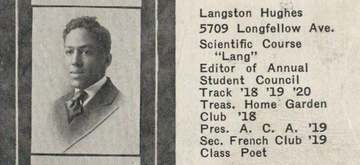
Langston Hughes in the Central High School yearbook
Public domain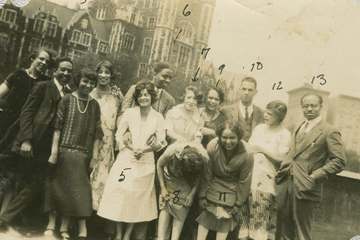
Guests at a 1925 breakfast party for Langston Hughes, hosted by Regina Andrews (then Anderson) and Ethel Nance...
Public domain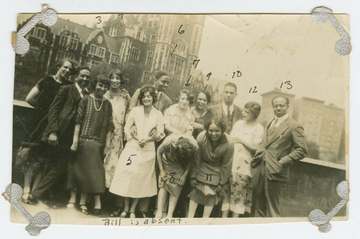
Guests at breakfast party for Langston Hughes hosted by Regina Anderson and Ethel Ray at 580 St. Nicholas Aven...
Public domain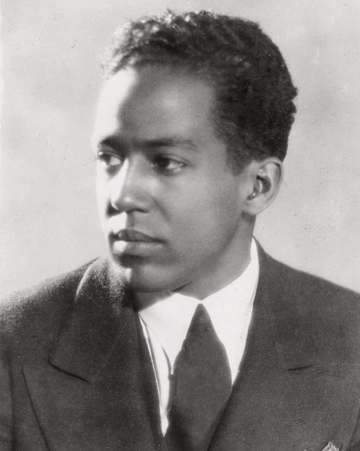
Langston Hughes (1901-1967) portrait
Public domain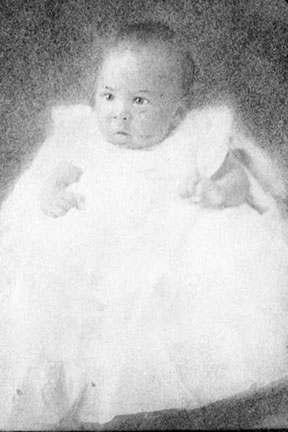
Source: Downloaded from http://www.beinecke.library.yale.edu/dl_crosscollex/ Search:Langston Hughes Courtesy o...
Public domain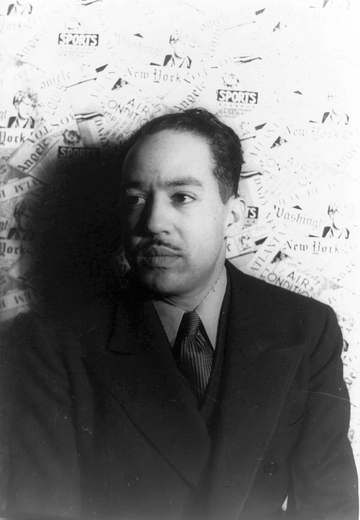
[Portrait of Langston Hughes, 3/4 profile]
Public domain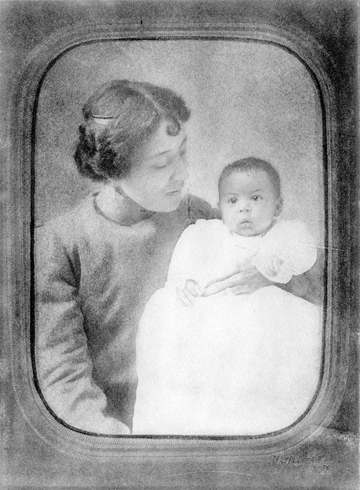
Langston Hughes as a baby, held by his mother Caroline ("Carrie") Mercer Langston.
Public domain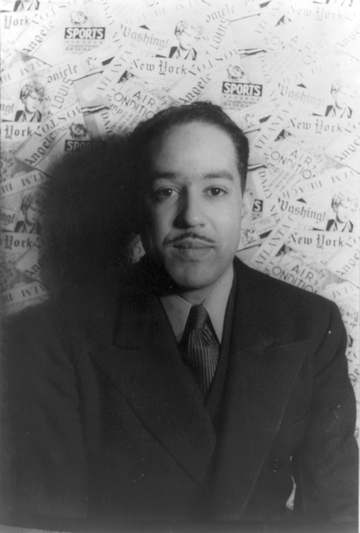
Langston Hughes photographed by Carl Van Vechten, 1936.
Public domain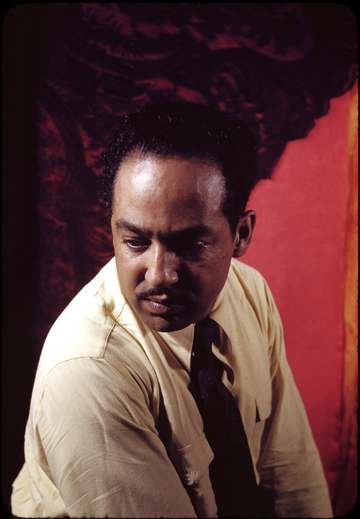
Kodachrome photograph of Langston Hughes by Carl Van Vechten taken on 1942 June 11
Public domain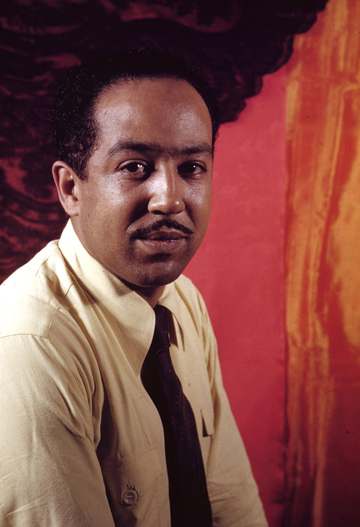
Kodachrome photo of Langston Hughes taken by Carl Van Vechten. Since his photos are in the public domain and t...
Public domain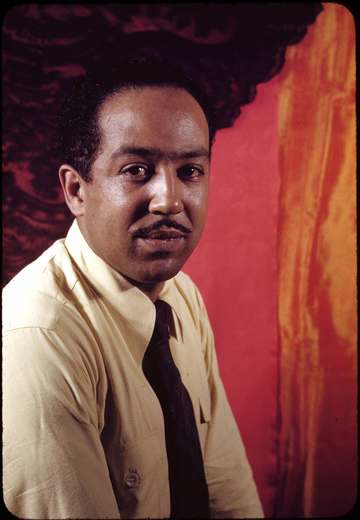
Kodachrome photo of Langston Hughes taken by Carl Van Vechten. Since his photos are in the public domain and t...
Public domain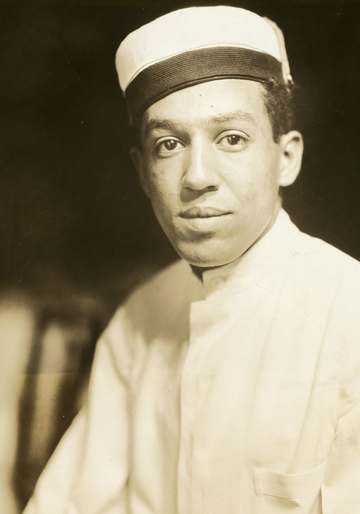
Langston Hughes by Underwood & Underwood, 1925, gelatin silver print, from the National Portrait Gallery, ...
CC0


Further reading
Sources
Confidence. Medium: the main facts were confirmed, but some details (often an address or ZIP code) were not.
- Wikipedia: Langston Hughes born Joplin MO, Cleveland Central High, Langston family ties, death in NYC
- poets.org: langston hughes
- case.edu: hughes james langston
- Wikipedia: Karamu House
- remarkableohio.org
- remarkableohio.org
- Wikipedia: Central High School (Cleveland, Ohio)
- Wikipedia: Lewis Sheridan Leary
- freshwatercleveland.com: langstonhughes021612
- anisfield-wolf.org
- thegrio.com: cleveland home where langston hughes lived condemned
- historynewsnetwork.org
- afar.com: uncovering langston hughes legacy in cleveland ohio
- catalog.hathitrust.org: 101680226.json
- cplorg.contentdm.oclc.org: index
- cplorg.contentdm.oclc.org: index
- npgallery.nps.gov
- Wikimedia Commons: Category:Photographs of Langston Hughes
Every link goes to the original source. Profile researched 2026-10-15.