Notable people · First Lady · Politics · Music · Women
Helen Herron Taft
Cincinnati lawyer's daughter who steered William Howard Taft toward the presidency, founded the Cincinnati Orchestra Association that created the Cincinnati Symphony Orchestra, and as first lady (1909-1913) brought the Japanese cherry trees to Washington.
Born June 2, 1861, Cincinnati
Died May 22, 1943, Washington, D.C.
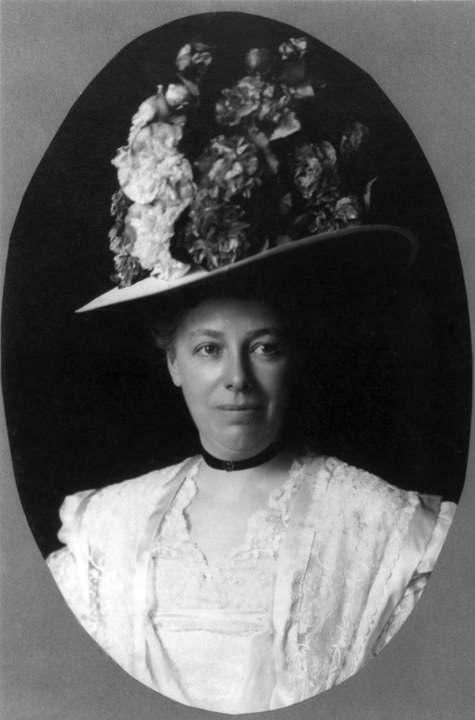
At a glance
- Born
- June 2, 1861, Cincinnati (Hamilton County) source
- Died
- May 22, 1943, Washington, D.C. source
- Buried
- Arlington National Cemetery (Section 30, Site S-14), beside William Howard Taft source
- Also known as
- Helen Taft, Helen Herron Taft, Nellie Taft, Nellie Herron
- Known as
- First Lady, Politics, Music, Women
Life story
Helen 'Nellie' Herron was born in Cincinnati on June 2, 1861, the fourth of eleven children of lawyer John W. Herron, a law partner of Rutherford B. Hayes, and grew up in a brick row house on Pike Street. At 17 she spent a week at the Hayes White House, and she later said it fixed her ambition. She met William Howard Taft at a coasting party in Mount Auburn when she was 18, married him in 1886, and pushed him toward elective office rather than the bench he preferred. While he was a federal judge in Cincinnati in the 1890s she organized the Cincinnati Orchestra Association, which founded the Cincinnati Symphony Orchestra in 1895. After years in the Philippines and Washington she became first lady in 1909, and two months later suffered a stroke that impaired her speech. She recovered enough to host the 1911 silver-anniversary garden party and to plant the first of Tokyo's cherry trees by the Tidal Basin in 1912. In 1914 she published Recollections of Full Years, the first memoir published by a former first lady. She died in Washington in 1943 and is buried at Arlington.
Ohio ties
- Cincinnati (Pike Street) (1861-1886)
born in Cincinnati and raised in a grey brick row house on Pike Street, across from the Anderson house and the Sinton house (now the Taft Museum of Art); educated at Miss Nourse's school Hamilton County · source - Walnut Hills, Cincinnati (1881-1883; 1886-1890)
taught French at a private school; after marriage lived in the house she and Taft built on McMillan Street, where their son Robert was born in 1889 Hamilton County · source - Mount Auburn, Cincinnati (c. 1880; 1886)
met Will Taft at a coasting party on a Mount Auburn hill; the newlyweds spent a month with his parents in their old house there (now the William Howard Taft National Historic Site) Hamilton County · source - Cincinnati (1892-1900)
organized and led the Cincinnati Orchestra Association while Taft was a federal circuit judge Hamilton County · source
Timeline
- 1861 Born June 2 in Cincinnati, the fourth of eleven children of Harriet Collins Herron and John Williamson Herron. source
- c. 1878 At 17 she stayed at the White House as a guest of President and Mrs. Hayes, family friends; her youngest sister had been named Lucy Hayes Herron and christened there. source
- c. 1880 Met Will Taft, then a law student and court reporter, at a winter coasting party on a steep hill in Mount Auburn; he took her down on his bobsled. source
- 1881 Began two years of teaching French at a private school in Walnut Hills. source
- 1884 Started a Sunday-afternoon salon for young Cincinnatians to discuss intellectual topics, inviting Will Taft and his brother Horace. source
- 1886 Married William Howard Taft on June 19 and sailed for a European honeymoon on the City of Chester, the cheapest ship of the Inman line. source
- 1886 Back in Cincinnati, the couple stayed a month with his parents in Mount Auburn until their new house on McMillan Street in Walnut Hills was finished. source
- 1889 Her son Robert A. Taft was born in the McMillan Street house in September. source
- 1890 Moved to Washington when President Benjamin Harrison made Taft Solicitor General, an appointment she had helped him obtain. source
- 1893 Founded the Cincinnati Orchestra Association to put a permanent symphony orchestra back in the city. source
- 1895 The Cincinnati Symphony Orchestra gave its first concerts at Pike's Opera House, later settling on Frank Van der Stucken as conductor. source
- 1900 Went with Taft to the Philippines, where he became civil governor and she became a prominent hostess in Manila. source
- 1908 Taft received notice of his presidential nomination at his brother Charles's house on Pike Street, across from her girlhood home, and accepted it from its portico. source
- 1909 Became first lady on March 4. On April 7 she wrote to Eliza Scidmore that she had been promised cherry trees for the Potomac Speedway. source
- 1909 Suffered a stroke in May that impaired her speech and the use of her right arm and leg; she had to relearn how to speak. source
- 1910 The 2,000 cherry trees given by Tokyo were found infested with insects and nematodes and destroyed in January. source
- 1911 Held an evening garden party for several thousand guests on the couple's silver wedding anniversary, June 19, which she called 'the greatest event' of her White House years. source
- 1912 On March 27 she and Iwa Chinda, wife of the Japanese ambassador, planted the first of Tokyo's second gift of cherry trees by the Tidal Basin; that year she also gave her inaugural gown to the Smithsonian. source
- 1914 Published Recollections of Full Years, the first memoir published by a former first lady. source
- 1930 William Howard Taft died on March 8 with Helen at his side; she stayed in Washington. source
- 1943 Died May 22 at her Washington home and was buried beside her husband at Arlington, one of only two first ladies buried there. source
Stories
A girlhood on Pike Street
Helen Herron grew up in one of a block of grey brick houses on Pike Street, at the east end of Cincinnati, then the city's fashionable neighbourhood. The cobbled street ran steeply down to the river landing, and she remembered the clatter of heavy wagons hauling up the hill. Directly across the street stood the Anderson house, home to ten boys, one of whom married her sister Jennie. Next to it was the low white Sinton house, built about 1820, where her future brother-in-law Charles P. Taft lived after marrying Annie Sinton. Decades later, in 1908, her husband received the news of his presidential nomination at that house and spoke from its front. It is now the Taft Museum of Art.
Down the hill on a bobsled
The Herrons and the Tafts had practised law at the same Cincinnati bar for forty years, and Helen's sister Maria was a schoolmate of Fanny Taft at Miss Nourse's school. Yet Helen did not meet Will Taft until she was eighteen, because the Tafts lived up in Mount Auburn and Will had been away at Yale. They met one winter night at a coasting party on a steep Mount Auburn hill, and after being introduced he took her down on his big bobsled. They then joined a circle of amateur actors, and both took parts in 'A Scrap of Paper', staged in Mrs. Charles Taft's drawing room. They became engaged in 1885. After a cut-rate honeymoon in Europe they settled in a new house on McMillan Street in Walnut Hills, built on an old quarry site with a view of the Ohio River.
Founding a symphony
Cincinnati had been without a good permanent orchestra since Theodore Thomas left. While her husband rode a federal circuit from Lookout Mountain to Marquette in the 1890s, Helen Taft made the Cincinnati Orchestra Association her principal work. Box-office receipts were not enough, so she raised $30,000 a year for six years from backers including Charles and Annie Taft, Charles Krippendorf and J. G. Schmidlapp. The first season had three guest conductors before Frank Van der Stucken was hired as permanent leader; he stayed ten years. She later wrote that what she regretted leaving most, when the family sailed for the Philippines in 1900, was the orchestra.
Whose cherry trees?
The Japanese cherry trees around Washington's Tidal Basin are usually credited to Helen Taft, but the idea was older. Writer Eliza Scidmore had urged the plan since the 1880s, and in 1906 the plant explorer David Fairchild proved that the trees would grow near Washington. In 1909 Scidmore wrote to the new first lady, who answered on April 7 that she had 'taken the matter up'. When the Japanese chemist Jokichi Takamine heard, he offered 2,000 more trees in the name of the City of Tokyo. That first shipment arrived infested and was burned in January 1910. A second gift followed, and on March 27, 1912, Mrs. Taft and Viscountess Chinda planted the first two trees.
Sites to know
Homes, graves, markers, museums and monuments; the numbered ones are on the map.
- 1 Taft Museum of Art (the Sinton/Charles P. Taft house across Pike Street from her girlhood home), 316 Pike Street
Cincinnati Hamilton County · source - Herron family home, Pike Street (her girlhood home) (unknown)
Cincinnati Hamilton County · source - 2 William Howard Taft National Historic Site (the Taft family house in Mount Auburn, where the newlyweds stayed in 1886), 2038 Auburn Avenue
Cincinnati Hamilton County · source - 3 Ohio Historical Marker 43-31, William Howard Taft / Robert Alphonso Taft (her husband's birthplace; her son Robert)
2038 Auburn Avenue, Cincinnati Hamilton County · source - Taft house on McMillan Street, Walnut Hills (her first married home, 1886-1890; birthplace of Robert A. Taft) (unknown)
Cincinnati Hamilton County · source - Grave beside William Howard Taft, Arlington National Cemetery, Section 30, Site S-14
Arlington, Virginia source
Ohio places
Where Helen Herron Taft was born, lived, worked and is remembered, with the ZIP code, town and county pages for each.
- Born: Cincinnati, Hamilton County Cincinnati · Hamilton County
- Connected: Cincinnati, Hamilton County Cincinnati · Hamilton County
- Connected: Walnut Hills, Hamilton County Hamilton County
- Connected: Mount Auburn, Hamilton County Hamilton County
- Connected: Cincinnati, Hamilton County Cincinnati · Hamilton County
Myths and corrections
Things often said about Helen Herron Taft, and what the record shows.
Often said The Washington cherry trees were Helen Taft's idea.
The record The National Park Service credits Eliza Scidmore, who had proposed the plan for decades, and David Fairchild, who tested the trees from 1906. Helen Taft's part was to adopt Scidmore's 1909 proposal, and Jokichi Takamine and the City of Tokyo supplied the gift. The first 2,000 trees were destroyed as diseased in 1910, and she planted the first of the replacement gift on March 27, 1912. source
Documents
Primary records: patents, letters, court and government files, nominations and old county histories, each at the archive that holds it.
- Helen Herron Taft, Recollections of Full Years (Dodd, Mead, 1914) 1914, Internet Archive
- Helen Herron Taft, Recollections of Full Years (1914), Project Gutenberg ebook 71696 with illustrations 1914, Project Gutenberg
Pictures
Free to use with the credit shown. Select a picture for the original and its license.
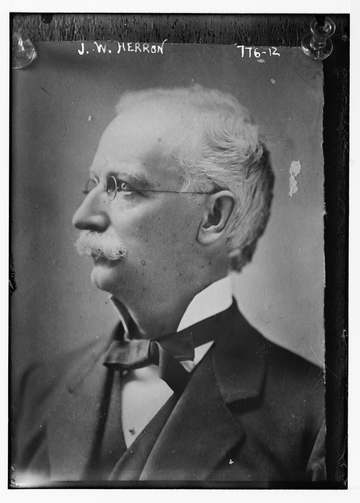
Title: J.W. Herron John Williamson Herron (1827-1912) Judge John W. Herron, District Attorney, of Cincinnati, ...
Public domain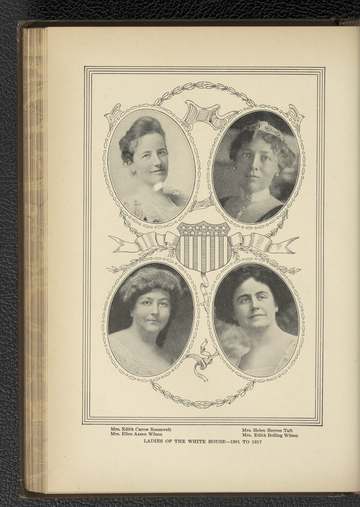
Adres wydawniczy: Cincinnati, Ohio : published by The Jones Brothers Publishing Company, copyright 1918Opis fi...
Public domain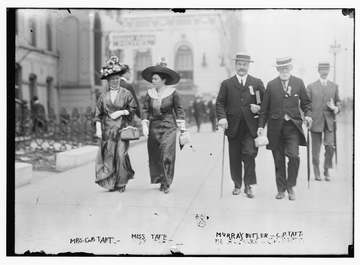
Title: Mrs. G.P. Taft, Miss Taft, and Murray Butler with C.P. Taft Abstract/medium: 1 negative : glass ; 5 x 7...
Public domain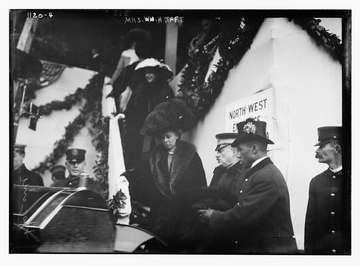
Title: Mrs. Wm. H. Taft with others Abstract/medium: 1 negative : glass ; 5 x 7 in. or smaller.
Public domain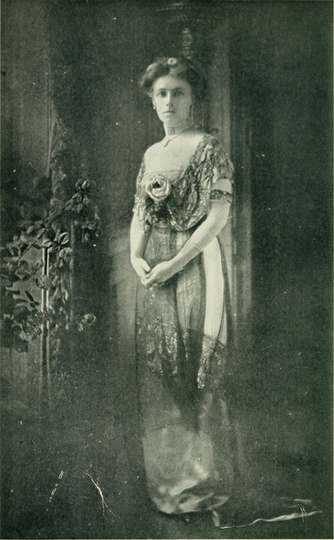
No known restrictions 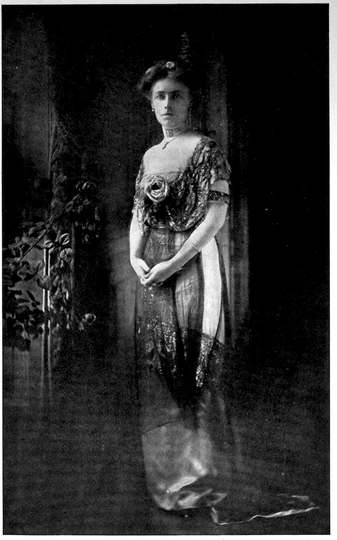
Frontispiece from page Fpiece of Recollections of Full Years.
Public domain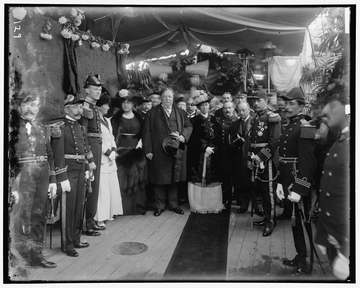
Title: Taft Abstract/medium: Harris & Ewing photograph collection Physical description: 1 negative :
Public domain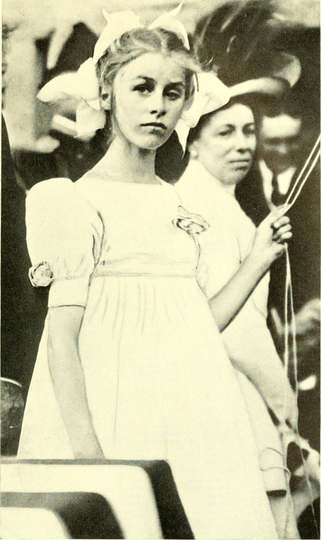
No known restrictions 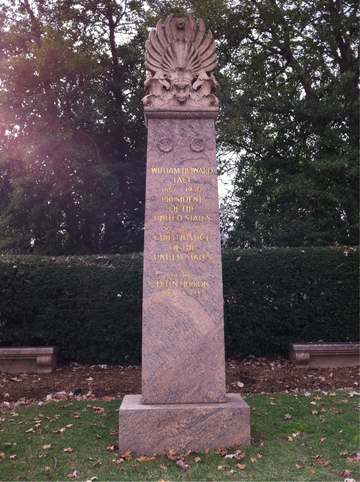
Grave of William Howard Taft at Arlington National Cemetery
Public domain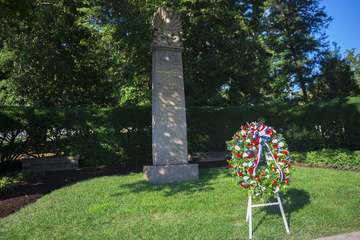
Maj. Gen. Michael Howard, commanding general, U.S. Army Military District of Washington, and Karen Durham-Agui...
Public domain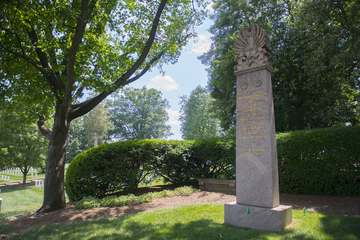
The first day of summer at Arlington National Cemetery, Arlington, Va., June 21, 2017. The cemetery’s 651 acre...
Public domain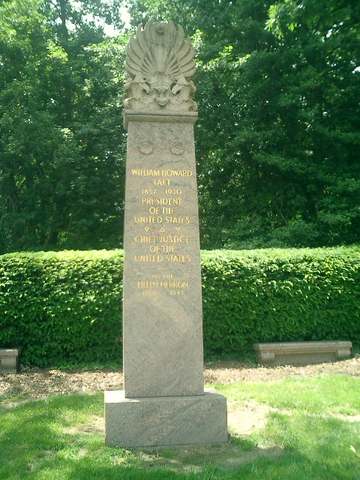
Photograph of the headstone for President William Howard Taft at Arlington National Cemetery, taken by RebelAt...
Public domain


Sources
Confidence. High: the main facts were confirmed in sources we opened.
- https://en.wikipedia.org/wiki/Helen_Herron_Taft
- https://www.whitehousehistory.org/bios/helen-taft
- https://bidenwhitehouse.archives.gov/about-the-white-house/first-families/helen-herron-taft/
- https://www.nps.gov/subjects/cherryblossom/history-of-the-cherry-trees.htm
- https://archive.org/details/recollectionsoff00taft
- https://www.gutenberg.org/files/71696/71696-h/71696-h.htm
- https://en.wikipedia.org/wiki/Cincinnati_Symphony_Orchestra
- https://en.wikipedia.org/wiki/Taft_Museum_of_Art
- https://en.wikipedia.org/wiki/William_Howard_Taft_National_Historic_Site
- https://remarkableohio.org/marker/43-31-william-howard-taft-robert-alphonso-taft/
- https://commons.wikimedia.org/wiki/Category:Helen_Herron_Taft
- https://www.findagrave.com/memorial/7396
Every link goes to the original source. Profile researched 2026-10-15.
