Notable people · Inventor
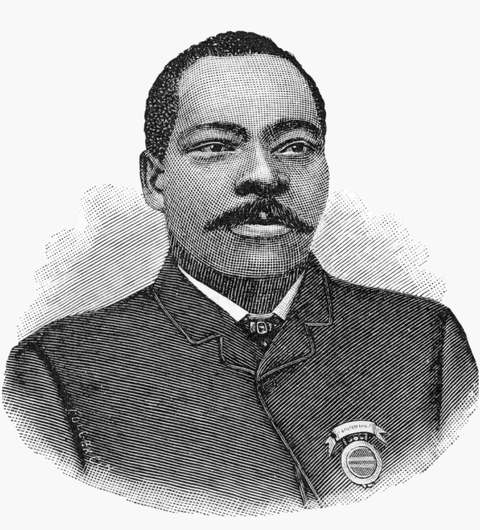
Granville T. Woods
Columbus-born electrical engineer who, working in Cincinnati, patented the Synchronous Multiplex Railway Telegraph that let moving trains communicate with stations.
Born April 23, 1856, Columbus
Died January 30, 1910, Harlem Hospital, New York City
At a glance
- Born
- April 23, 1856, Columbus (Franklin County) source
- Died
- January 30, 1910, Harlem Hospital, New York City source
- Buried
- St. Michael's Cemetery, Elmhurst, Queens (unmarked until 1975) source
- Also known as
- Granville Woods, The Black Edison
- Education
- Columbus schools, Columbus, OH, to age 10
- Known as
- Inventor
- Organizations
- Woods Electric Co.
Life story
Granville Woods was born in Columbus in 1856 and left school at ten because his family was poor. He apprenticed in machine shops as a machinist and blacksmith.
He worked on railroads and steamships, then set up an electrical engineering business in Cincinnati in 1880, later moving his research to New York in 1892.
His best-known invention, the Synchronous Multiplex Railway Telegraph (1887), let moving trains communicate with stations. He held more than 50 patents, selling rights to American Bell and General Electric.
He won patent fights with Thomas Edison, died in Harlem in 1910 with little money, and was in an unmarked grave until 1975.
Ohio ties
- Columbus (1856-c.1866)
birthplace (by his own 1887 account) and schooling until about age 10 Franklin County · source - southwestern Ohio (Dayton and Southwestern Railroad) (c.1878-1880)
locomotive engineer source - Cincinnati (1880-c.1892)
electrical engineering business, later the Woods Electric Co.; most productive inventing years; lectured at the YMCA and Brown Chapel AME in Walnut Hills Hamilton County · source
Timeline
- 1878 Joined the British steamer Ironsides and became its chief engineer within about two years. source
- 1880 Married Sadie Turner in Cincinnati in June, his first known appearance in the city. source
- 1880 Set himself up in Cincinnati as an electrical engineer and inventor. source
- 1884 Received his first patent, for an improved steam boiler furnace. source
- 1885 Patented 'telegraphony', a combined telephone and telegraph, and sold the rights to the American Bell Telephone Company. source
- 1887 Patented the Synchronous Multiplex Railway Telegraph, which allowed messages between stations and moving trains. source
- 1887 Worked with Cincinnati streetcar man George Kerper on an electric streetcar, but the experimental May Street line in Walnut Hills went to a competing inventor. source
- 1891 His wife Ada Woods sued him for divorce in Cincinnati. source
- 1892 Moved his research operations to New York City. source
- 1901 Sold his electric-railway conduit invention to General Electric. source
- 1910 Died penniless at Harlem Hospital, New York, on 30 January and was buried in an unmarked grave in Queens. source
- 1975 A headstone was placed on his grave after historian M. A. Harris helped raise funds. source
- 2013 Inducted as a Great Ohioan, along with Paul Brown and James A. Garfield. source
What Granville is known for
- Synchronous multiplex railway telegraph 1887
- Over 50 US patents
- Won patent contests against Edison over the induction telegraph
- Safety dimmer for theatre lighting 1896
- Steam boiler furnace patent (1884)
- Telegraphony (1885)
- Synchronous Multiplex Railway Telegraph (1887)
- Third-rail patent (1893)
- Safety dimmer (1896)
- Railway air brake (1904)
Stories
The Cincinnati backers who would not build
Woods's most productive decade was in Cincinnati, where city directories place him at a run of downtown-area addresses from 1882 to 1891, including Fulton Avenue near the foot of Kemper Lane. He reorganized his business as the Woods Electric Company with wealthy local partners, but the board, controlled by a man named Gano, held out for more money for his patents. They rarely paid him a salary, declined to manufacture his devices, and failed to make use of a relay he had patented. He gave lectures on electricity and magnetism at the YMCA, at a downtown Black Baptist church and at Brown Chapel AME in Walnut Hills. He also survived a serious bout of smallpox in the city. Concluding that Cincinnati's business community would not back him, he left for New York, where he went on to sell more than 20 patents.
Beating Edison at the Patent Office
Woods's induction telegraph let a moving train and a station exchange messages, which could prevent collisions. Thomas Edison claimed priority for the idea, and the Patent Office ruled for Woods twice. After his second defeat, Edison offered Woods a job, which Woods declined. Lucius Phelps had in fact patented a similar system in 1884, while Woods was ill with smallpox. Woods later sold the patent to Edison interests for a relatively small sum.
Honors and things named for them
- National Inventors Hall of Fame (2006)
- Granville T. Woods Way, Brooklyn (2008)
Family
- father: Cyrus Woods
- mother: Martha J. Brown
Sites to know
Homes, graves, markers, museums and monuments.
- Granville T. Woods grave, St. Michael's Cemetery
Elmhurst, Queens, New York source
Ohio places
Where Granville T. Woods was born, lived, worked and is remembered, with the ZIP code, town and county pages for each.
- Born: Columbus, Franklin County ZIP 43215 · Columbus · Franklin County
- Worked: Cincinnati, Hamilton County ZIP 45202 · Cincinnati · Hamilton County
Myths and corrections
Things often said about Granville T. Woods, and what the record shows.
Often said Woods was born in Australia.
The record Woods made this claim himself. From 1892 in New York he gave his birthplace as Australia, his birth year as 1863 and his ancestry as Malay Indian and Australian Aboriginal, possibly to escape the stigma of enslaved ancestry. His own 1887 Men of Mark biography said Columbus, 1856, and census records list the family at Monroe and Columbus, Ohio. The census records suggest he was actually born around 1850-1851. source
Often said Woods invented the third rail (and the train air brake).
The record He did not invent either. His 1893 electric-railway conduit patent improved earlier third-rail systems by using brushes to contact terminal heads so no wires were exposed, and other inventors were active in the field. George Westinghouse patented the air brake about 40 years before Woods's brake work, which was an improvement. source
Often said Woods had college engineering training (hence 'Professor Woods').
The record Some 19th-century sources said so, but little is known about any formal study. 'Professor' was an honorific used by Black newspapers and does not reflect a college education. source
- He is often called the 'Black Edison'. Wikipedia says Edison twice lost patent claims against him and offered him a job, which he declined.
- Disputed: Wikipedia gives his birthplace as Columbus, Ohio, and states that later in life he called himself an immigrant from Australia, which some older sources repeat.
Pictures
Free to use with the credit shown. Select a picture for the original and its license.
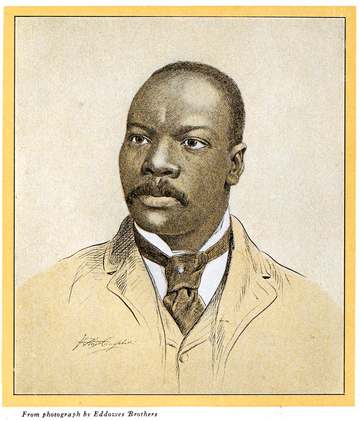
Portrait of Granville T. Woods, from a photograph by Eddowes Brothes
Public domain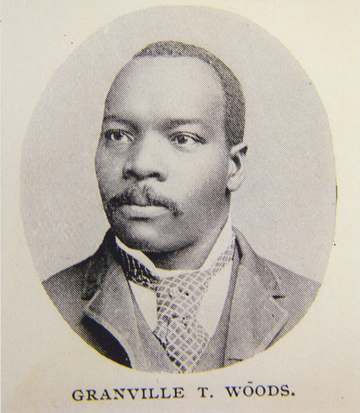
Granville T. Woods (1856–1910), American inventor.
Public domain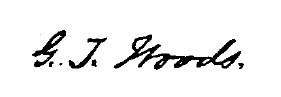
Signature of Granville T. Woods (1856-1910), American inventor and engineer
Public domain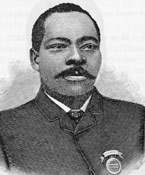
Granville Woods
Public domain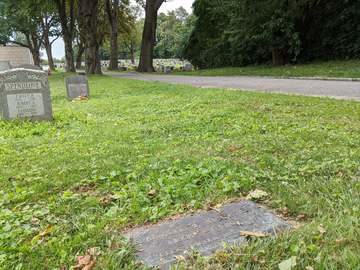
Grave marker in St. Michaels Cemetery
CaptJayRuffins / CC BY-SA 4.0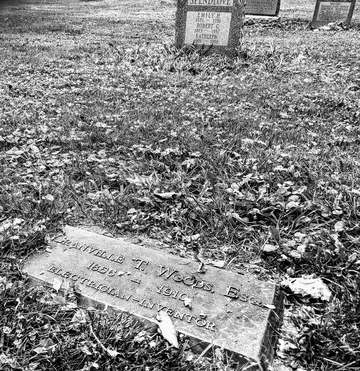
Located in Plot 5, row 3 grave 144, it was donated by some of the companies that depended on his inventions
CaptJayRuffins / CC BY-SA 4.0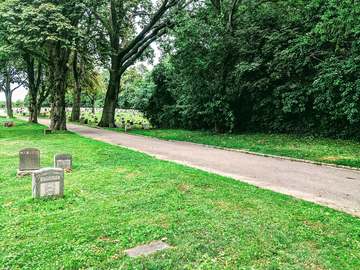
Located in Plot 5, row 3 grave 144, it was donated by some of the companies that depended on his inventions
CaptJayRuffins / CC BY-SA 4.0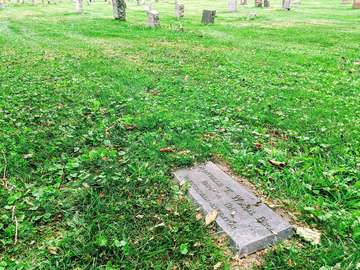
Located in Plot 5, row 3 grave 144, it was donated by some of the companies that depended on his inventions
CaptJayRuffins / CC BY-SA 4.0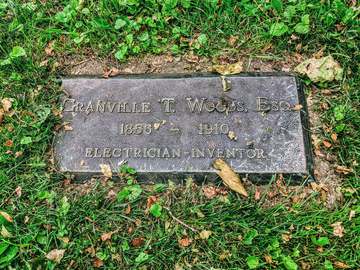
Located in Plot 5, row 3 grave 144, it was donated by some of the companies that depended on his inventions
CaptJayRuffins / CC BY-SA 4.0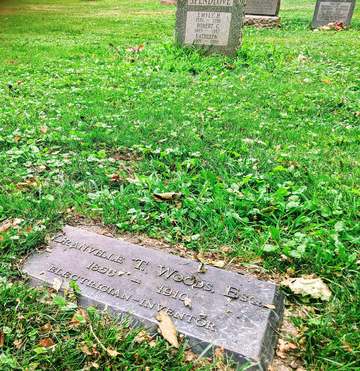
Located in Plot 5, row 3 grave 144, it was donated by some of the companies that depended on his inventions
CaptJayRuffins / CC BY-SA 4.0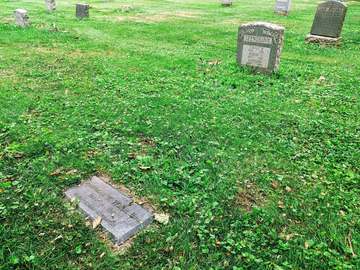
Located in Plot 5, row 3 grave 144, it was donated by some of the companies that depended on his inventions
CaptJayRuffins / CC BY-SA 4.0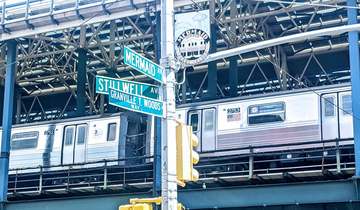
In 2008 the corner of Mermaid ave and Stillwell Ave in Coney Island, Brooklyn, USA was renamed Granville Tailo...
CaptJayRuffins / CC BY-SA 4.0


Further reading
Sources
Confidence. Medium: the main facts were confirmed, but some details (often an address or ZIP code) were not.
- Granville Woods (Wikipedia) Columbus birth, later claimed Australian origin, Cincinnati 1880, Woods Electric Co. until 1893, patents, Edison disputes
- walnuthillsstories.org: granville t woods
- ohcapitolsquarefoundation.org: granville woods
- ohiostatehouse.org: woods granville t woods 138028
- ethw.org: Granville T. Woods
- cincinnati-oh.gov: gcww celebrates black history month
- Wikimedia Commons: Woodsgr

Every link goes to the original source. Profile researched 2026-10-14.