Notable people · Inventor
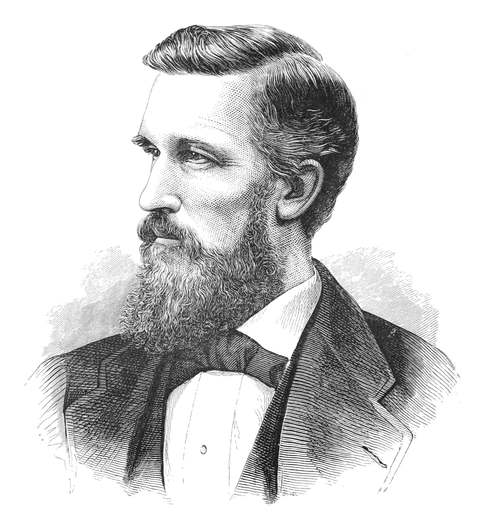
Elisha Gray
Barnesville-born, Oberlin-trained electrician who co-founded the firm that became Western Electric and filed a telephone caveat on 14 February 1876, the same day Alexander Graham Bell filed his telephone patent application.
Born August 2, 1835, Barnesville
Died January 21, 1901, Newtonville, Newton, Massachusetts
At a glance
- Born
- August 2, 1835, Barnesville (Belmont County) source
- Died
- January 21, 1901, Newtonville, Newton, Massachusetts source
- Buried
- Rosehill Cemetery, Chicago (Section R, Plat 261) source
- Also known as
- E. Gray
- Education
- Oberlin College, Oberlin, OH, did not graduate
- Known as
- Inventor
- Organizations
- Western Electric
Life story
Elisha Gray was born in 1835 in Barnesville, Ohio, to a Quaker farm family. He attended Oberlin College without graduating and later taught electricity and science there, building his own laboratory equipment.
He won his first patent in 1867 and in 1869 co-founded Gray & Barton in Cleveland with Enos Barton. After Western Union bought a third of it in 1872 it became Western Electric Manufacturing Company. He held more than 70 patents, including the musical telegraph (demonstrated publicly 29 December 1874) and, in 1888, the telautograph.
On February 14, 1876, he filed a caveat for a telephone transmitter the same day Alexander Graham Bell filed his application. Bell's patent was upheld. He died in Newtonville, Massachusetts, in 1901.
Ohio ties
- Barnesville (1835-1850s)
birthplace and boyhood on a Quaker farm Belmont County · source - Oberlin (1857-1860s)
Oberlin preparatory school (three years) and Oberlin College (about one year); married Delia Shepard of Oberlin in 1862 Lorain County · source - Oberlin (1867)
listed as 'of Oberlin, Ohio' on his first patent, for a telegraph relay Lorain County · source - Cleveland (1869)
bought George Shawk's half of a telegraph-supply shop, forming Gray & Barton with Enos Barton Cuyahoga County · source - Oberlin College (1880-1900)
Professor of Dynamic Electricity Lorain County · source
Timeline
- 1835 Born on 2 August in Barnesville to David and Christiana (Edgerton) Gray, Quaker farmers who had come from Pennsylvania. source
- 1847 Left school at about 12 after his father's sudden death, to work and support his mother. source
- 1850s Apprenticed to a blacksmith for about a year, then served a full apprenticeship as a carpenter, joiner and boat builder. source
- 1857 Entered Oberlin's preparatory school at about 22, paying his way with carpentry and odd jobs including janitor work. source
- 1862 Married Delia M. Shepard of Oberlin. source
- 1867 Received his first patent, No. 69,424, on 1 October for a telegraph relay instrument, as Elisha Gray of Oberlin, Ohio. source
- 1869 Bought George Shawk's half interest in a Cleveland telegraph-supply partnership, forming Gray & Barton with Enos Barton; the firm moved to 162 South Water Street, Chicago, in December. source
- 1872 Western Union bought a third of the company, which was renamed the Western Electric Manufacturing Company. source
- 1874 Left the business for independent research and on 29 December demonstrated electrically transmitted musical tones at the Presbyterian church in Highland Park, Illinois. source
- 1875 Received U.S. Patent 166,095 on 27 July for electric telegraphs for transmitting musical tones. source
- 1876 On 14 February his lawyer filed a caveat describing a liquid transmitter for sending speech, the same day Bell's lawyer filed Bell's telephone application. source
- 1876 Received U.S. Patent 173,618 for an electro-harmonic telegraph on 15 February; Bell's telephone patent, 174,465, was issued on 7 March. source
- 1878 Oberlin audiences heard music sent by telegraph to a loudspeaker in First Church using Gray's Musical Telegraph. source
- 1880 Began twenty years as Professor of Dynamic Electricity at Oberlin College. source
- 1886 Patent examiner Zenas Wilber swore in a new affidavit that he had shown Gray's caveat to Bell's side in 1876, contradicting his earlier testimony. source
- 1888 Received U.S. Patents 386,814 and 386,815 on 31 July for the telautograph, which reproduced the sender's handwriting at a distance. source
- 1893 Showed the telautograph at the World's Columbian Exposition in Chicago, where he chaired the International Congress of Electricians. source
- 1897 Awarded the Elliott Cresson Medal of the Franklin Institute. source
- 1900 Having moved to Boston in 1899, tested an underwater signaling device for ships on 31 December. source
- 1901 Died on 21 January in Newtonville, Massachusetts, and was buried in Rosehill Cemetery, Chicago. source
- 2007 Inducted into the National Inventors Hall of Fame. source
What Elisha is known for
- Musical telegraph demonstrated 29 Dec 1874
- Telautograph patented 1888
- Over 70 patents
- Telephone caveat filed 14 Feb 1876
- Self-adjusting telegraph relay (1865)
- US Patent 69,424 (1867)
- Electro-harmonic telegraph, US 173,618 (1876)
- Telautograph (filed 1888)
- Gray & Barton / Western Electric; Graybar Electric
- Experimental Researches in Electro-Harmonic Telegraphy and Telephony (1878)
Stories
From Barnesville carpenter to Oberlin
Gray's parents were Quaker farmers who had moved to Belmont County from Pennsylvania. When his father died suddenly, Elisha left school at 12. He tried blacksmithing but was too frail for it, and instead served a full apprenticeship as a carpenter and boat builder, working in Brownsville, Pennsylvania. At 22 he enrolled in Oberlin's preparatory school, where classmates remembered him as a 'sleepy' student; he paid his way with carpentry and odd jobs, including janitor work. He spent three years in the preparatory school and about a year in the college before poor health forced him out, but Oberlin let him keep using its electrical apparatus for his experiments.
The singing bathtub
In 1879 Popular Science Monthly told how Gray's telephone work began. In the winter of 1874 he noticed a sound coming from under his hand as he rubbed the zinc lining of a bathtub that was connected to an induction coil. He followed it up with experiments using a violin fitted with a metal plate, and early that year built transmitters and receivers for sending musical tones by wire, with a receiver using a diaphragm of tinned iron. By 1879 he said he could send up to eight messages at once over one wire. When a cam-driven transmitter produced a groan-like sound, he concluded that speech could be sent by copying the vibrations of the air, and a toy 'lovers' telegraph' he saw in Milwaukee convinced him further.
14 February 1876
On the same day in February 1876, Gray's lawyer filed a caveat describing a transmitter in which a needle moving in water varied the resistance of a circuit, and Bell's lawyer filed Bell's telephone application. Bell's fee was entered in the Patent Office cash book earlier in the day, and Gray's caveat reached the examiner the next day. Examiner Zenas Wilber suspended Bell's application for three months so Gray could file a full application, but the patent, No. 174,465, was issued on 7 March. Bell's claim 4, for varying resistance to make a variable current, matched an idea in Gray's caveat that was not in Bell's drawings. In 1886 Wilber swore that he had shown Gray's drawing to Bell's side, though he had sworn the opposite a year earlier and admitted owing money to Bell's lawyer. The courts upheld Bell, and historians still disagree.
Music by wire at Oberlin
Gray returned to Oberlin as Professor of Dynamic Electricity from 1880 to 1900. In 1878 Oberlin townspeople had already heard music made by electricity, sent by telegraph to a loudspeaker in First Church using his Musical Telegraph, an instrument whose steel reeds were set vibrating by electromagnets. The original is now at the Smithsonian. Oberlin College Libraries' exhibit 'Electrifying Music Began Here', in the lower level of the Kohl Building, displays Oberlin-made replicas of his loudspeakers, a violin used as a loudspeaker, and organ pipes fitted for telegraphy.
Honors and things named for them
- American Philosophical Society, 1878
- Elliott Cresson Medal, 1897
Named for Elisha Gray
- Graybar Electric Company (named for Gray and Enos Barton) source
Family
- parents: David Gray and Christiana (Edgerton) Gray
- wife: Delia Minerva Shepard
Sites to know
Homes, graves, markers, museums and monuments.
- Watt Center for History and the Arts (display on Gray)
511 North Chestnut Street, Barnesville Belmont County · source - 'Electrifying Music Began Here' exhibit with replicas of Gray's instruments, Kohl Building, Oberlin College
Oberlin Lorain County · source - Elisha Gray grave, Rosehill Cemetery (Section R, Plat 261)
Chicago, Illinois source
Ohio places
Where Elisha Gray was born, lived, worked and is remembered, with the ZIP code, town and county pages for each.
- Born: Barnesville, Belmont County ZIP 43713 · Barnesville · Belmont County
Myths and corrections
Things often said about Elisha Gray, and what the record shows.
Often said Bell beat Gray to the Patent Office by about two hours, and that is why Bell got the patent.
The record Which filing arrived first is disputed. Bell's fee was entered on the cash receipts blotter earlier in the day and Gray's late that afternoon, and Gray's caveat reached the examiner the next day, which is the origin of the 'two hours' story; Gray himself said his caveat arrived first. Under the 1876 law priority went to the first to invent, not the first to file, so the hour of filing should not have decided anything. The examiner did suspend Bell's application for Gray's caveat before releasing it. source
Often said Elisha Gray founded the Western Electric Company.
The record Enos Barton and George Shawk started the Cleveland telegraph-supply shop. Gray bought Shawk's half in 1869, making it Gray & Barton, and Anson Stager's money moved it to Chicago. It became the Western Electric Manufacturing Company in 1872, when Western Union bought a third of it. Gray was a co-founder of the firm, not its sole founder. source
Often said The Gray code (reflected binary code) is named after Elisha Gray.
The record It is named after Frank Gray, a Bell Labs physicist, not Elisha Gray. source
- Telephone priority: Gray's caveat and Bell's application reached the patent office the same day; Bell's patent (No. 174,465) was upheld, though some authors argue Gray deserves more credit.
Documents
Primary records: patents, letters, court and government files, nominations and old county histories, each at the archive that holds it.
- U.S. Patent 69,424, Improvement in Telegraph Apparatus (relay), Elisha Gray of Oberlin, Ohio 1867, Google Patents
- U.S. Patent 166,095, Electric Telegraphs for Transmitting Musical Tones 1875, Google Patents
- U.S. Patent 173,618, Improvement in Electro-Harmonic Telegraphs 1876, Google Patents
- U.S. Patent 174,465, Alexander Graham Bell, Improvement in Telegraphy (the telephone patent contested by Gray) 1876, Google Patents
- U.S. Patent 386,814, Art of Telegraphy (telautograph method) 1888, Google Patents
- U.S. Patent 386,815, Telautograph 1888, Google Patents
- U.S. Patent 461,470, Telautograph (cited by the National Inventors Hall of Fame) 1891, Google Patents
- Patent drawing, Elisha Gray, Telegraphic Repeater (NARA 161500199), sheet 1 1871, National Archives (RG 241)
- Patent file 174,465, Improvement in Telegraphy, Alexander Graham Bell (NARA 2524936; 145 images) 1876, National Archives
- George B. Prescott, 'Sketch of Elisha Gray', Popular Science Monthly, vol. 14, February 1879 1879, Wikisource
Pictures
Free to use with the credit shown. Select a picture for the original and its license.
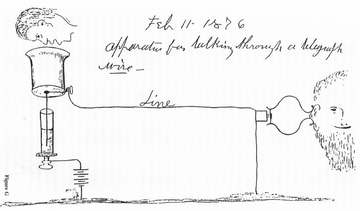
Feb 11, 1876. Elisha Gray's drawing
Public domain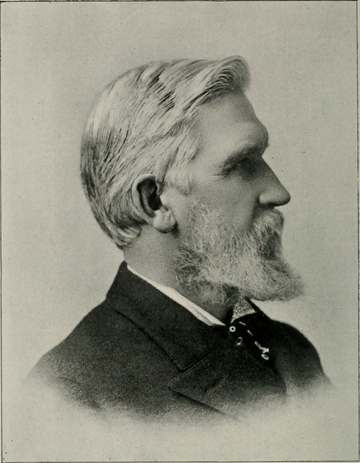
No known restrictions 
No known restrictions 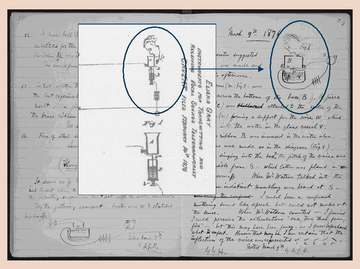
Comparison of the illustration of the telephone in Alexander Graham Bell's diaries and Elisha Gray's patent ap...
Public domain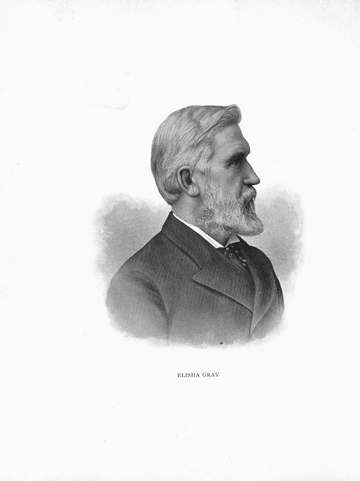
Portrait of Elisha Gray, American electrical engineer
Public domain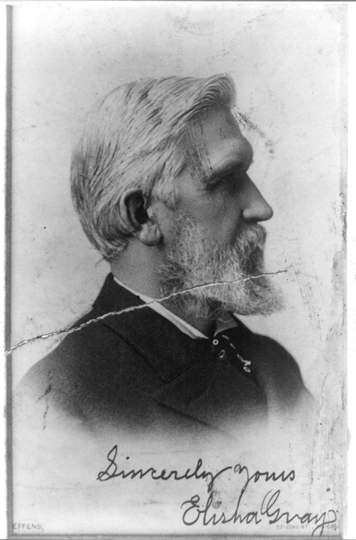
Title: Digital display record: This record exists solely to make the digital image available. You may be able ...
Public domain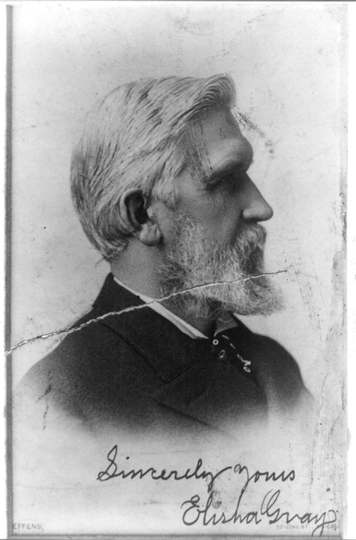
Title: Digital display record: This record exists solely to make the digital image available. You may be able ...
Public domain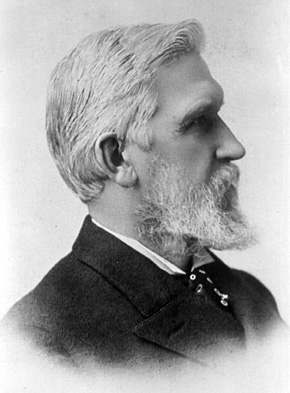
Public domain портрет Elisha Gray
Public domain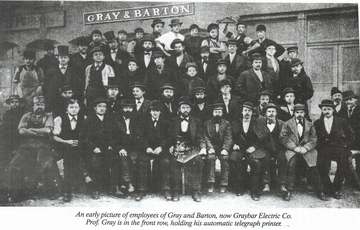
Gray & Barton employees
Public domain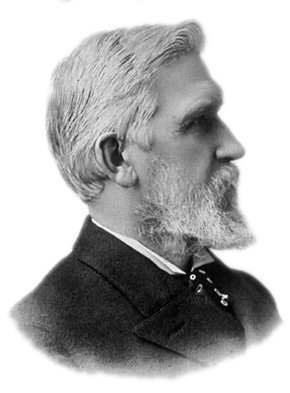
Public domain 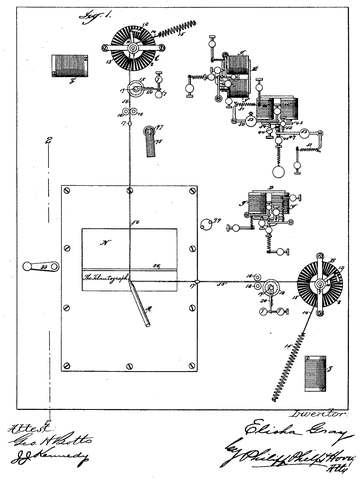
Main schema of the 1888 telautograph
Public domain


Further reading
Sources
Confidence. Medium: the main facts were confirmed, but some details (often an address or ZIP code) were not.
- Elisha Gray (Wikipedia) Barnesville OH, inventions, telephone caveat, death Newtonville MA 1901
- Wikipedia: Elisha Gray and Alexander Bell telephone controversy
- Wikipedia: Western Electric
- en.wikisource.org: Sketch of Elisha Gray
- findagrave.com
- poweringthenewera.com
- poweringthenewera.com: the gray in graybar
- www2.oberlin.edu: ElishaGray
- libraries.oberlin.edu: overview
- highlandparkhistory.libraryhost.com: elisha gray collection
- belmontcountyheritagemuseum.org: people you should know
- barnesvilleohio.com: attractions
- invent.org: elisha gray
- patents.google.com
- patents.google.com
- patents.google.com
- patents.google.com
- patents.google.com
- patents.google.com
- patents.google.com
- catalog.archives.gov
- catalog.archives.gov
- Wikimedia Commons: Category:Elisha Gray
Every link goes to the original source. Profile researched 2026-10-15.