Notable people · Science
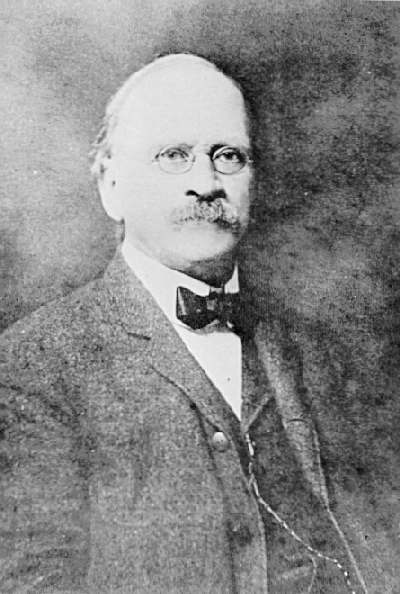
Edward W. Morley
Western Reserve chemistry professor who, with Albert Michelson, ran the 1887 ether-drift experiment in Cleveland, and whose measurement of the atomic weight of oxygen set a world standard.
Born January 29, 1838, Newark, NJ
Died February 24, 1923, Hartford Hospital, Hartford (home in West Hartford)
At a glance
- Born
- January 29, 1838, Newark, NJ source
- Died
- February 24, 1923, Hartford Hospital, Hartford (home in West Hartford) source
- Buried
- Morley family plot, Pittsfield source
- Also known as
- Edward W. Morley, Edward Morley
- Education
- Williams College, Williamstown, MA, 1857-1860, A.B., M.A. 1863
- Andover Theological Seminary, Andover, MA, 1861-1864
- Known as
- Science
- Organizations
- Western Reserve University
Life story
Edward Morley was born in Newark, New Jersey, and grew up in West Hartford, Connecticut. Ill health in childhood meant his minister father taught him at home until he was nineteen.
He took his A.B. at Williams College in 1860 and his master's in 1863, and studied at Andover Theological Seminary in 1861-1864.
In 1868 he became professor of chemistry at Western Reserve College in Hudson, Ohio, later also at Cleveland Medical College. He was known for precise atomic-weight work, including the oxygen ratio he refined in 1895.
In 1887 he worked with Albert Michelson on the light experiments. He retired in 1906 and died in 1923 in Connecticut.
Ohio ties
- Twinsburg (1869)
offered the pastorate of a small church, which he declined for the Hudson professorship Summit County · source - Hudson (Western Reserve College) (1869-1882)
professor of natural history and chemistry; played the organ in the college chapel; made 110 days of air analyses here in 1880 Summit County · source - Cleveland (Medical Department of Western Reserve College) (1873-1888)
professor of chemistry and toxicology, travelling between Hudson and Cleveland Cuyahoga County · source - Cleveland (Adelbert College, Western Reserve University, University Circle) (1882-1906)
professor of chemistry; drew plans for the new college building; Michelson-Morley experiment 1887; oxygen atomic weight work Cuyahoga County · source
Timeline
- 1838 Born January 29 in Newark, New Jersey, son of the Congregational minister Sardis Brewster Morley. source
- 1860 Graduated from Williams College as valedictorian of his class. source
- 1864 Finished his studies at Andover Theological Seminary and spent 1864-65 running the U.S. Sanitary Commission station at Fortress Monroe, Virginia. source
- 1868 Married Isabella Ashley Birdsall of West Winsted, Connecticut, shortly before moving to Ohio; they had no children. source
- 1869 Turned down a pastorate at Twinsburg and became professor of chemistry at Western Reserve College in Hudson. source
- 1873 Became professor of chemistry and toxicology at the college's Medical Department in Cleveland, a post he held until 1888. source
- 1880 Analysed the air at Hudson on 110 consecutive days to test whether cold waves came from descending upper air poorer in oxygen. source
- 1880 Reported to his parents the trustees' 14-2 vote of September 20 to move the college to Cleveland, and that winter drew the plans for its new building for Amasa Stone. source
- 1882 Moved with the college to Cleveland, where it became Adelbert College of Western Reserve University; the new buildings were dedicated October 26. source
- 1887 With Albert A. Michelson of the Case School of Applied Science, made the ether-drift observations between April and July in the basement of Western Reserve's Adelbert Dormitory; the paper appeared in the American Journal of Science that November. source
- 1895 Published his ratio of the atomic weights of oxygen and hydrogen after eleven years' work, and served as president of the American Association for the Advancement of Science. source
- 1895 While he was on leave in Europe in 1895-96, the university dismantled the laboratory he had built up; he found his apparatus damaged beyond repair. source
- 1899 Served as president of the American Chemical Society. source
- 1902 Began further ether-drift experiments in Cleveland with Case physicist Dayton Miller, running to 1904-05, again with a null result. source
- 1906 Retired after 37 years at Western Reserve and built a house and garage laboratory at 26 Westland Avenue, West Hartford, Connecticut. source
- 1907 Received the Davy Medal of the Royal Society of London. source
- 1910 Western Reserve's Morley Chemical Laboratory, designed by Charles F. Schweinfurth and begun June 11, 1908, was completed; the university had bought his journal library for it. source
- 1923 Died February 24 and was buried in the family plot in Pittsfield, Massachusetts. source
- 1973 The Michelson-Morley Fountain, whose moving water stands for ether waves, was built in front of Yost Hall. source
- 1975 His West Hartford house was designated a National Historic Landmark on May 15. source
- 1995 The American Chemical Society named his atomic weight of oxygen research a National Historic Chemical Landmark; the plaque is at Adelbert Hall. source
- 2005 The American Physical Society designated Case Western Reserve a historic physics site for the experiment on November 14. source
What Edward is known for
- Michelson-Morley experiment 1887
- Precise atomic weight of oxygen, ACS landmark 1995
- Atomic-weight determinations (oxygen ratio, 1895)
- Michelson-Morley experiment (1887)
Stories
Letters home about leaving Hudson
Morley was one of the few Western Reserve College professors who went with the school when it left Hudson for Cleveland, and his letters to his parents are a running account of the move. On September 14, 1880 he expected about three-quarters of the trustees to favour it and noted the bitterness in Hudson; on September 20 they voted fourteen to two. That winter he drew the plans for the new college building, which President Carroll Cutler showed to the donor Amasa Stone, and Morley found Stone hard to deal with. When classes opened in Cleveland in September 1882, the dormitory was unfinished and students met in an armory, an empty church, a church lecture room and two YMCA rooms. Morley complained that three of the fume flues in his new chemistry laboratory were damaged, altered or blocked.
A stone slab floating on mercury
Michelson had tried to detect the earth's motion through the 'luminiferous ether' at Potsdam in 1880-81 and failed. In Cleveland he and Morley first measured the speed of light in moving water, then built a larger and more sensitive interferometer. Morley's answer to vibration was to mount it on a large sandstone slab floating in a pool of mercury, so it could be turned smoothly. They observed in concentrated sessions from April to July 1887 in the basement of Western Reserve's Adelbert Dormitory, later Pierce Hall. Again they found no shift of the expected size, a puzzle until Einstein's 1905 theory made the null result look predictable. The dormitory was torn down in 1962, and pieces of the surviving apparatus are shown in the university's physics department.
The laboratory they took apart
Morley spent years building apparatus, much of it designed and made by himself, for his work on the atomic weights of oxygen and hydrogen. In 1895-96 he took a leave to teach in Europe, and while he was away Western Reserve dismantled his laboratory. When he came back he found the instruments damaged beyond repair. The National Park Service's landmark study says this ended his devotion to the school; he stopped doing basic research except with collaborators, though he taught until 1906. He paid for his retirement house in West Hartford with dividends from Dow Chemical stock, which the young company had given him for consulting work when it could not afford to pay cash.
The organist who weighed the air in Hudson
Morley came to Ohio intending to preach: a small church in Twinsburg called him at about the same time Western Reserve College offered him its chair of natural history and chemistry, and science won. At Hudson he taught chemistry, geology and botany, fitted up a small room as a laboratory, and for a while played the organ in the college chapel. In 1880 he analysed the air at Hudson on 110 consecutive days, testing a Yale professor's idea that sudden cold waves were air sinking from high altitudes and so poorer in oxygen. He concluded, cautiously, that the theory fairly well agreed with the facts. That precise gas work led him to his long study of the composition of water.
Honors and things named for them
- Davy Medal (1907)
- Elliott Cresson Medal (1912)
- Willard Gibbs Award (1917)
- President, American Chemical Society (1899)
Named for Edward W. Morley
- Morley Chemical Laboratory / Edward W. Morley Building, Western Reserve University (1910) (Cleveland, Cuyahoga County) source
- Morley Medal, Cleveland Section of the American Chemical Society (Cleveland, Cuyahoga County) source
- Michelson-Morley Fountain (1973) (Cleveland, Cuyahoga County) source
- Morley lunar crater (the Moon) source
Family
- father: Rev. Sardis Brewster Morley
- spouse: Imbella Birdsall Morley
Sites to know
Homes, graves, markers, museums and monuments; the numbered ones are on the map.
- 1 Ohio historical marker 34-18, The Michelson-Morley Experiment
Cleveland, Case Western Reserve University, 2080 Adelbert Road (in front of DeGrace Hall) Cuyahoga County · source - 2 Adelbert Hall (1881-82), home of his laboratory; ACS National Historic Chemical Landmark plaque at the Adelbert Road entrance
Cleveland, Case Western Reserve University Cuyahoga County · source - Site of the 1887 experiment: Adelbert Dormitory, later Pierce Hall (demolished 1962), now part of the Kent Hale Smith building (demolished)
Cleveland, Case Western Reserve University Cuyahoga County · source - Edward W. Morley Building (Morley Chemical Laboratory, 1908-1910) (unknown)
Cleveland, west side of Adelbert Road between Schmitt Auditorium and the Rockefeller Physics Building Cuyahoga County · source - Michelson-Morley Fountain (1973), in front of Yost Hall
Cleveland, Case Western Reserve University Cuyahoga County · source - Busts of Michelson and Morley and interferometer model, Clapp Hall lobby; Morley exhibit case, Schmitt Auditorium lobby (unknown)
Cleveland, Case Western Reserve University Cuyahoga County · source - Michelson-Morley exhibits and interferometer model, Rockefeller Physics Building (APS historic physics site) (unknown)
Cleveland, Case Western Reserve University Cuyahoga County · source - 1952 Michelson-Morley plaque and Newton apple tree graft, Case Quad
Cleveland, Case Western Reserve University Cuyahoga County · source - 3 Former Western Reserve College campus, now Western Reserve Academy (private)
Hudson, 115 College Street Summit County · source - Edward W. Morley House (National Historic Landmark) (private)
West Hartford, Connecticut, 26 Westland Avenue source - Morley family plot (unknown)
Pittsfield, Massachusetts source
Ohio places
Where Edward W. Morley was born, lived, worked and is remembered, with the ZIP code, town and county pages for each.
- Worked: Hudson, Summit County ZIP 44236 · Hudson · Summit County
- Worked: Cleveland, Cuyahoga County ZIP 44106 · Cleveland · Cuyahoga County
Myths and corrections
Things often said about Edward W. Morley, and what the record shows.
Often said Edward Morley is buried under the floor of Noyes Laboratory at the University of Illinois.
The record The 'grave' in basement room 19C, with a covered pit, a cross and a framed Morley portrait, is a campus hoax; a chemistry professor said Morley had nothing to do with the university. He was buried in his family plot in Pittsfield, Massachusetts. source
Often said The Michelson-Morley experiment was done at the Case School of Applied Science.
The record Michelson was at Case, but the 1887 observations were made in the basement of Western Reserve University's Adelbert Dormitory, after a fire damaged the main Case building. Morley was a Western Reserve professor. source
Often said The experiment disproved the ether and led Einstein directly to relativity.
The record The result was null within experimental error and was taken as strong evidence against the ether only later, together with other experiments. Historians disagree about how much it influenced Einstein. source
Documents
Primary records: patents, letters, court and government files, nominations and old county histories, each at the archive that holds it.
- A. A. Michelson and E. W. Morley, 'On the Relative Motion of the Earth and the Luminiferous Ether', American Journal of Science 34 (1887): 333-345 1887, American Institute of Physics (reproduction)
- National Historic Landmark nomination, Edward W. Morley House, West Hartford (James Sheire, NPS, March 1975) 1975, National Park Service (NPGallery)
- Frank Wigglesworth Clarke, 'Biographical Memoir of Edward Williams Morley 1838-1923', National Academy of Sciences Memoirs vol. 21 (read 1924) 1924, National Academy of Sciences
Pictures
Free to use with the credit shown. Select a picture for the original and its license.
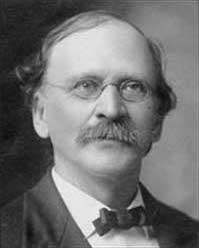
Edward Williams Morley (January 29, 1838 - February 24, 1923)
Public domain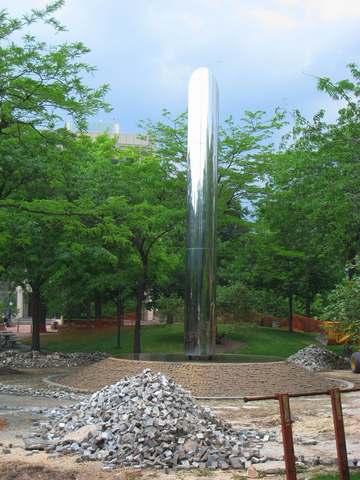
Monument to Albert Michelson & Edward Morley, Case Western Reserve University, Cleveland, Ohio, USA. (Unde...
Public domain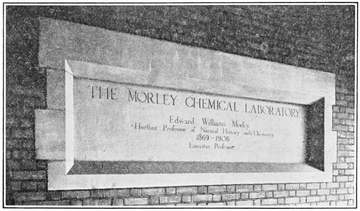
Tablet in the Morley laboratory
Public domain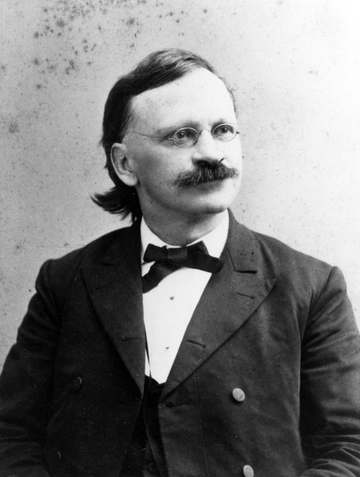
Edward Williams Morely, 1838-1923, was a scientist and professor at Western Reserve University.
Public domain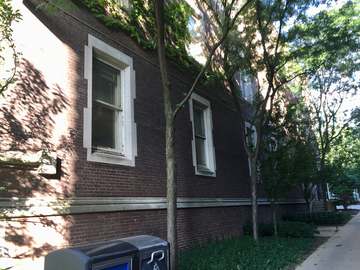
Morley Building, Case Western Reserve University, Cleveland, OH
CC0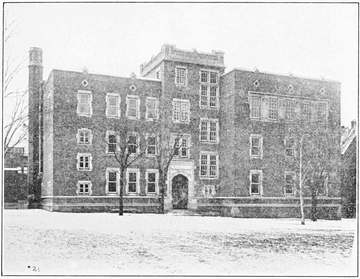
Western Reserve University's Morley Laboratory
Public domain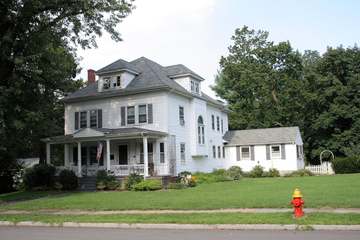
The Edward W. Morley House, 26 Westland Ave., a National Historic Landmark in West Hartford, Connecticut. It w...
Ragesoss / CC BY-SA 3.0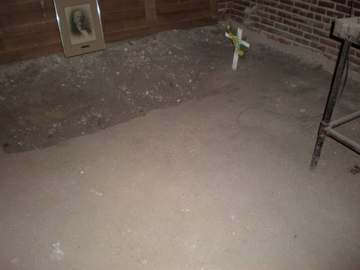
Image of the grave hoax in the basement of Noyes Lab at the University of Illinois--Urbana-Champaign
No machine-readable author provided. Mrtnmcc assumed (based on copyright claims). / CC BY-SA 4.0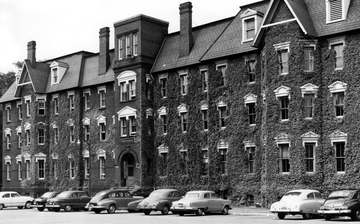
Adelbert Dormitory of WRU, later renamed Pierce Hall, demolished in 1962. Pierce Hall, then Western Reserve Un...
Public domain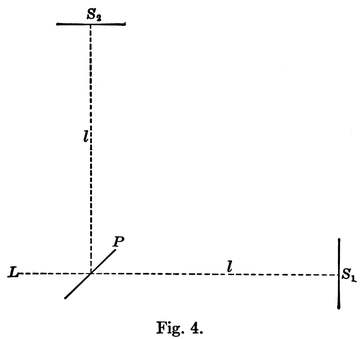
Michelson's experiemnt to measure the motion of the earth relative to the ether.
Public domain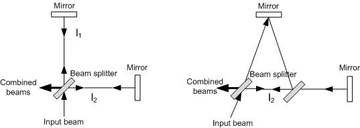
Michaelson_Morley-exp
Public domain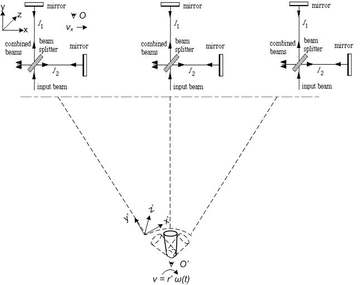
Michaelson-Morely_Circular observation
Public domain


Further reading
Sources
Confidence. Medium: the main facts were confirmed, but some details (often an address or ZIP code) were not.
- Edward W. Morley (Wikipedia) dates, Newark NJ, died West Hartford CT, WRC professor, oxygen weight
- nasonline.org: morley e w
- npgallery.nps.gov: 75002057 text
- case.edu: morley edward williams
- case.edu: michelson morley experiment
- remarkableohio.org: 34 18 the michelson morley experiment
- aps.org: case
- case.edu: walking tour shows campus through accomplishments michelson and morley
- scalar.case.edu: edward w morley
- scalar.case.edu: the removal of western reserve college from hudson to cleveland
- case.edu: morche
- hudsonmemory.org: western reserve college
- clevelandhistorical.org
- Wikipedia: Michelson–Morley experiment
- en.wikisource.org: On the Relative Motion of the Earth and the Luminiferous Ether
- Wikipedia: Adelbert Hall
- Wikipedia: Western Reserve Academy
- Wikipedia: Edward W. Morley House
- dailyillini.com: unlucky day revives urban legends at university 4
- Wikimedia Commons: Morley, Edward 1885 DPLA 14e3c8f7e1c1b3728376637d7c07405e
- Wikimedia Commons: Edward Williams Morley
- Wikimedia Commons: Edward Williams Morley2
- Wikimedia Commons: PSM V82 D107 Western reserve university morley laboratory
- Wikimedia Commons: PSM V82 D107 Tablet in the Morley laboratory
- Wikimedia Commons: Morley Building, Case Western Reserve University, Cleveland, OH (28593870487)
- Wikimedia Commons: Monument to Michelson & Morley, Case Western

Every link goes to the original source. Profile researched 2026-10-15.