Notable people · President · Military
William Henry Harrison
Ninth president of the United States, the first to call Ohio home, who died 32 days into his term.
Born February 9, 1773, Berkeley Plantation, Charles City County
Died April 4, 1841, White House, Washington
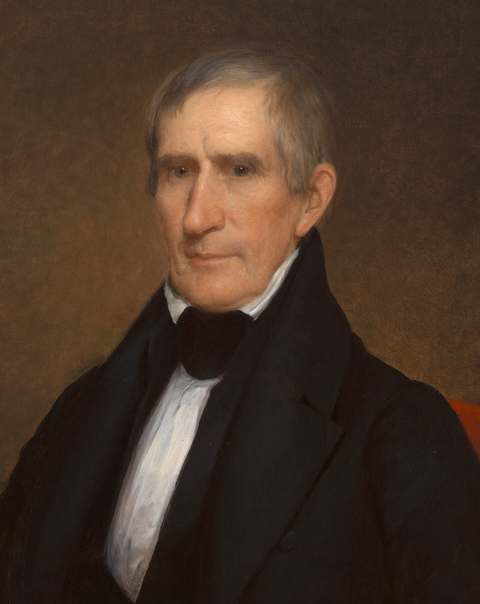
At a glance
- Born
- February 9, 1773, Berkeley Plantation, Charles City County source
- Died
- April 4, 1841, White House, Washington source
- Buried
- William Henry Harrison Tomb State Memorial, Mount Nebo, North Bend (Hamilton County) source
- Also known as
- Old Tippecanoe, Old Tip
- Education
- Hampden-Sydney College, Virginia, three years
- University of Pennsylvania (medicine), Philadelphia, PA, not completed
- Known as
- President, Military
Life story
William Henry Harrison was born in 1773 at Berkeley Plantation in Virginia, the son of a Declaration of Independence signer. He studied at Hampden-Sydney and began medical studies in Philadelphia, but left them to join the Army in 1791.
He was posted to Fort Washington at Cincinnati and fought at Fallen Timbers in 1794. In 1795 he married Anna Symmes, daughter of land developer John Cleves Symmes, after her father refused permission, and settled at North Bend.
He became secretary of the Northwest Territory and its first delegate to Congress in 1799, then governor of Indiana Territory, where he won at Tippecanoe in 1811 and at the Thames in 1813, the battle that killed Tecumseh.
Back in Ohio he served in the US House (1816) and Senate (1825). He won the presidency in 1840, died a month into the term in April 1841, and is buried at North Bend.
Ohio ties
- Fort Washington, Cincinnati (1791-1798)
army officer in the Northwest Territory Hamilton County · source - North Bend (1795-1841)
home and farm; later burial place Hamilton County · source - Franklinton (Columbus) (1813-1814)
Army of the Northwest was sporadically headquartered here during the War of 1812 Franklin County · source - Cincinnati (1817)
founding vestry member of Christ Church Hamilton County · source - Hamilton County (1836-1840)
clerk of courts Hamilton County · source
Timeline
- 1791 Commissioned an ensign and posted to Fort Washington at Cincinnati. source
- 1794 Served at the Battle of Fallen Timbers. source
- 1795 Married Anna Tuthill Symmes on November 25. source
- 1795 Witnessed the Treaty of Greenville. source
- 1798 Resigned from the army and became secretary of the Northwest Territory. source
- 1799 Elected the Northwest Territory's delegate to Congress, where he promoted the Land Act of 1800. source
- 1813 Commanded the Army of the Northwest and defeated British and Native forces at the Battle of the Thames. source
- 1816 Elected to the U.S. House from Ohio's 1st district. source
- 1819 Entered the Ohio Senate for a Hamilton County district (served to 1821). source
- 1820 Lost the election for governor of Ohio. source
- 1825 Took a U.S. Senate seat from Ohio (served to 1828). source
- 1840 Won the presidency over Martin Van Buren in the log cabin and hard cider campaign. source
- 1841 Died April 4 in the White House; buried on Mount Nebo at North Bend on July 7. source
What William is known for
- 9th US president
- Victor at Tippecanoe 1811-11-07 and the Thames 1813-10-05
- US House member for Ohio 1816-19; US senator 1825-28; delegate of the Northwest Territory 1799-1800
Stories
The log cabin that wasn't
In 1840 a Democratic paper sneered that Harrison would be happy to sit in his log cabin drinking hard cider. The Whigs took the insult and made it the theme of their campaign, with log cabin floats and cider at rallies. The image cast Harrison as a humble frontiersman from the Ohio River farm country. In fact he came from a wealthy Virginia family. The campaign worked, and the North Bend farmer beat Van Buren, whom the Whigs called 'Van Ruin' after the Panic of 1837.
The long road home to Mount Nebo
Harrison died in Washington on April 4, 1841, and after a White House funeral his coffin went into the public vault at Congressional Cemetery. In June the body was carried west by train and river barge to North Bend. He was buried on July 7 at the top of Mount Nebo, a hill on the family estate above the Ohio River. In 1871 John Harrison sold most of the estate but kept six acres around the tomb, offering it to the state in return for perpetual care. Ohio finally accepted the property in 1919.
The president's son in the dissecting room
Harrison's son John Scott Harrison, a congressman and the father of President Benjamin Harrison, died at North Bend in 1878 and was buried in the family tomb. Because grave robbing for medical schools was common, the family built a cemented brick vault, packed the grave with heavy stones and hired a watchman. On the day of the funeral they found that a neighbor, Augustus Devin, had been stolen from a nearby grave. When a son and a friend of Devin's searched the Medical College of Ohio in Cincinnati with warrants, they found not Devin but John Scott Harrison's body hanging from a rope in a chute. The scandal helped bring about Ohio's Anatomy Law of 1881, which gave unclaimed bodies to medical schools.
Inventions and firsts
Honors and things named for them
- Congressional Gold Medal for War of 1812 service
- Harrison Tomb State Memorial, North Bend, OH
Family
- wife: Anna Tuthill Symmes Harrison
- father-in-law: John Cleves Symmes
- son: John Scott Harrison
- grandson: Benjamin Harrison
Sites to know
Homes, graves, markers, museums and monuments; the numbered ones are on the map.
- 1 William Henry Harrison Tomb State Memorial
North Bend Hamilton County · source - 2 Ohio Historical Marker 47-31, William Henry Harrison / Benjamin Harrison
North Bend Hamilton County · source - Gen. William Henry Harrison Headquarters (Harrison House), 570 West Broad Street
Columbus (Franklinton) Franklin County · source
Places in Ohio to see
- Harrison Tomb State Memorial (grave)
41 Cliff Rd, North Bend, Hamilton County ZIP 45052 · North Bend · Hamilton County
Ohio places
Where William Henry Harrison was born, lived, worked and is remembered, with the ZIP code, town and county pages for each.
- Lived: North Bend, Hamilton County ZIP 45052 · North Bend · Hamilton County
- Buried: North Bend, Hamilton County (Harrison Tomb State Memorial, 41 Cliff Rd) ZIP 45052 · North Bend · Hamilton County
Myths and corrections
Things often said about William Henry Harrison, and what the record shows.
Often said Harrison died of pneumonia caught by giving his long inaugural address in the cold rain without hat or coat (the story told on Ohio marker 47-31 and in many textbooks).
The record That was the prevailing theory in 1841, but a 2014 review of his physician Thomas Miller's records by Jane McHugh and Philip Mackowiak noted the White House water supply lay downstream of public sewage and concluded he most likely died of septic shock from enteric (typhoid or paratyphoid) fever. He fell ill weeks after the inauguration. source
Often said The Harrison House at 570 West Broad Street in Franklinton was Harrison's War of 1812 headquarters.
The record The link rests on tradition. The building dates to 1807 and the army was only sporadically based at Franklinton; the Columbus Historical Society presents the headquarters use as tradition rather than documented fact. source
- Disputed: Ohio counts seven presidents born in the state, or eight if Harrison is included. Harrison was born in Virginia and lived in Ohio, so the count depends on whether residence is counted.
Pictures
Free to use with the credit shown. Select a picture for the original and its license.
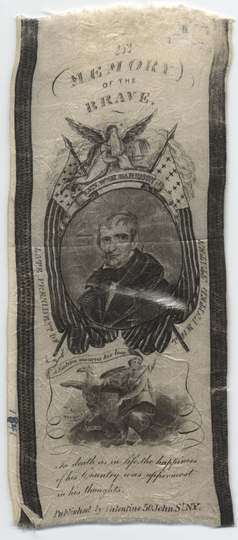
Collection: Cornell University Collection of Political Americana, Cornell University Library Repository: Susan...
No known restrictions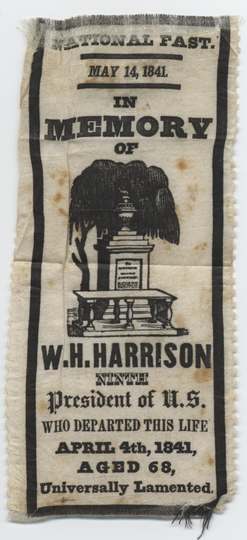
Collection: Cornell University Collection of Political Americana, Cornell University Library Repository: Susan...
No known restrictions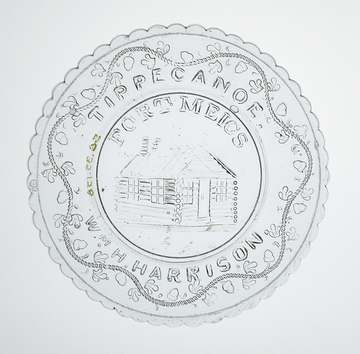
United States, probably Midwest, circa 1840 Furnishings; Serviceware Pressed clear glass Gift of the Reverend ...
Public domain
'The Would-be Ninon' The print relates to a story of the same name published in the literary album 'Friendship...
Public domain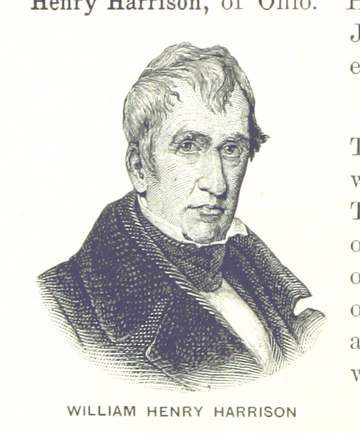
This file is from the Mechanical Curator collection, a set of over 1 million images scanned from out-of-copyri...
No known restrictions
No known restrictions 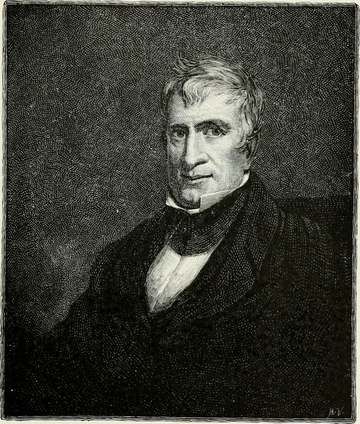
No known restrictions 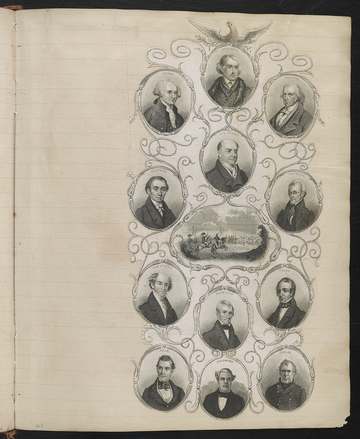
Title: Battle scene surrounded by portraits of American presidents Abstract/medium: 1 print : engraving ; irre...
Public domain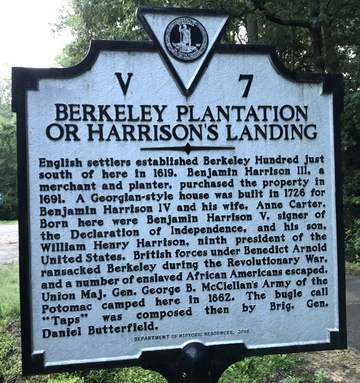
Berkeley Plantation or Harrison's Landing Marker English settlers established Berkeley Hundred just south of t...
CC0
One of a series of my pictures taken of the temporary American Eagle Exhibit at Taylor University of works pub...
Public domain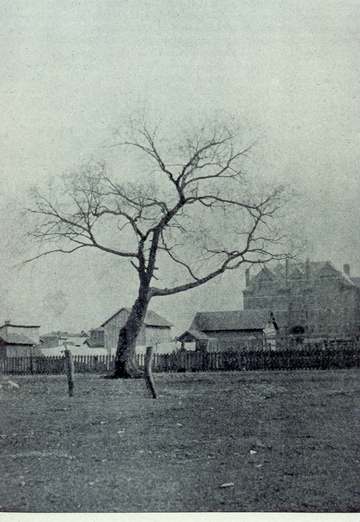
Building in Columbus, Ohio. "Harrison Elm and former Hawkes Hospital, Franklinton. The Kentucky troops under G...
Public domain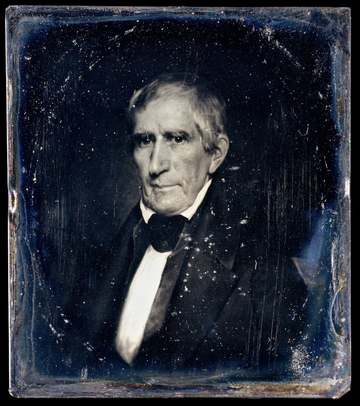
Daguerreotype of William Henry Harrison housed in the Metropolitan Museum of Art
Public domain


Further reading
Sources
Confidence. Medium: the main facts were confirmed, but some details (often an address or ZIP code) were not.
- Wikipedia: William Henry Harrison birth, Ohio service, battles, death, tomb
- Wikipedia: Harrison Tomb State Memorial Mount Nebo on SR 128, North Bend, Hamilton County
- Wikipedia: William Henry Harrison Tomb State Memorial
- Wikipedia: Gen. William Henry Harrison Headquarters
- Wikipedia: John Scott Harrison
- millercenter.org: william harrison
- remarkableohio.org: 47 31 william henry harrison benjamin harrison
- Wikimedia Commons: api
- Wikimedia Commons: api
- Wikimedia Commons: api


Every link goes to the original source. Profile researched 2026-10-14.