Notable people · Abolitionist · Businessman
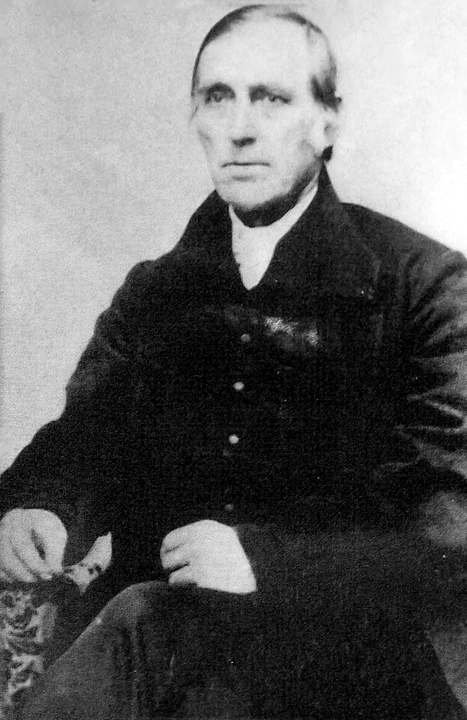
Levi Coffin
Quaker merchant, called the 'President of the Underground Railroad', who ran Cincinnati's free-labor goods depository from 1847 and with his wife Catharine sheltered freedom seekers there for nearly two decades.
Born October 28, 1798, Guilford County (New Garden), North Carolina
Died September 16, 1877, Avondale, Cincinnati
At a glance
- Born
- October 28, 1798, Guilford County (New Garden), North Carolina source
- Died
- September 16, 1877, Avondale, Cincinnati (Hamilton County) source
- Buried
- Spring Grove Cemetery, Cincinnati (Section 101, Lot 343) (Hamilton County) source
- Also known as
- Levi Coffin Jr., President of the Underground Railroad
- Education
- Home schooling, Guilford County, NC
- Known as
- Abolitionist, Businessman
Life story
Levi Coffin was born in 1798 in Guilford County, North Carolina, to Quaker parents, and had little schooling. In 1824 he married Catherine White.
In 1826 he moved to Newport, Indiana, where he sheltered people fleeing slavery. His 1838 brick house there came to be called the Grand Central Station of the Underground Railroad.
Quakers expelled him in 1843 for his activities. In 1847 he moved to Cincinnati to run a warehouse selling goods made without slave labor; it struggled, and he sold it in 1857.
During and after the Civil War he worked for freedmen's aid societies and attended an antislavery conference in Paris in 1867. His autobiography appeared in 1876. He died in Avondale in 1877.
Ohio ties
- Cincinnati (downtown; corner of Sixth and Elm streets) (1847-1857)
manager of the Western free-labor goods depository; home and Underground Railroad station Hamilton County · source - Over-the-Rhine, Cincinnati (southwest corner of Franklin and Broadway) (by 1853)
leased house run as a boarding house and Underground Railroad stop Hamilton County · source - College Hill (1853)
destination of the 'Escape of the 28' decoy funeral procession, at Rev. Jonathan Cable's Hamilton County · source - Avondale, Cincinnati (3131 Wehrman Avenue) (1863-1877)
last home; land behind it given in 1866 for the Colored Orphan Asylum; died here Hamilton County · source - Spring Grove Cemetery, Cincinnati (1877 onward)
grave and 1902 memorial; Network to Freedom listing Hamilton County · source
Timeline
- 1798 Born on 28 October on a farm in Guilford County, North Carolina, to Quaker parents of the New Garden meeting. source
- 1826 Moved with his wife Catharine White and their infant son to Newport (now Fountain City), Wayne County, Indiana. source
- 1846 A free-labor convention at Salem, Indiana, voted a $3,000 interest-free loan for a free-labor wholesale depository in Cincinnati and chose Coffin to run it. source
- 1847 Moved to Cincinnati on 22 April, intending to stay five years, and opened the store selling only goods produced without slave labor. source
- 1853 On 2 April, 28 freedom seekers from Boone County, Kentucky, crossed the Ohio. Coffin proposed moving them out of Cincinnati as a mock funeral procession to College Hill. source
- 1854 Travelled to Canada to visit communities of people who had escaped slavery. source
- 1857 Sold the free-labor business after deciding it could never be made profitable. source
- 1863 Moved in May to a house at 3131 Wehrman Avenue in Avondale. source
- 1863 Became an agent of the Western Freedmen's Aid Society, which aided people freed during the war. source
- 1864 Went to Britain to raise money for freedpeople and wrote that he had helped 'over three thousand' fugitives escape over more than 30 years. source
- 1866 Admitted to membership of Cincinnati Friends Meeting, eight years after first applying. source
- 1866 The Coffins gave land behind their Avondale home for a new building for the Colored Orphan Asylum, fronting on Van Buren Avenue. source
- 1867 Served as a delegate to the International Anti-Slavery Conference in Paris. source
- 1870 At Cincinnati's Black community celebration of the Fifteenth Amendment he publicly 'resigned' as President of the Underground Railroad. source
- 1874 Celebrated his golden wedding anniversary and 76th birthday at the Friends meetinghouse at Eighth and Mound streets. source
- 1876 Published Reminiscences of Levi Coffin in Cincinnati. source
- 1877 Died on 16 September at his Avondale home. Four of his eight pallbearers were Black men who had worked with him on the Underground Railroad. source
- 1902 A six-foot granite monument paid for by Black Cincinnatians was unveiled on the Coffins' unmarked graves in Spring Grove Cemetery. source
- 2015 The National Park Service named the Wesleyan Cemetery decoy site and the 'Escape of the 28' corridor in Cincinnati to the Underground Railroad Network to Freedom. source
What Levi is known for
- Underground Railroad organizer
- Free-labor goods warehouse in Cincinnati
- Reminiscences of Levi Coffin (1876)
Stories
A funeral with no corpse
On a rainy night in April 1853, a white guide named John Fairfield brought 28 freedom seekers from Boone County, Kentucky, across the Ohio in stolen skiffs. One boat sank near the Ohio bank, and the party reached Cincinnati's western edge at dawn, wet, muddy and some without shoes. Fairfield hid them in ravines below Mill Creek and went to John Hatfield, a Black deacon of Zion Baptist Church, who sent for Coffin. Coffin suggested hiring two coaches from a German livery stable and forming a slow procession of coaches and buggies, as if going to a funeral, along the road to Cumminsville. The procession passed the burying ground and went on to College Hill, where the Rev. Jonathan Cable and local Black families took them in. The 28 later reached Canada.
The rag baby
A young woman brought to Cincinnati as a servant by a visiting Southern couple ran away to Thomas and Jane Dorum, Black abolitionists on Elm Street. Catharine Coffin brought her to the Coffins' house at Sixth and Elm. With the search for her growing, Catharine dressed herself as a fashionable lady in a plaid shawl and a trimmed straw bonnet. She dressed the young woman as a nursemaid and gave her a bundle of rolled-up clothes, veiled like a baby. The pair walked across the canal to the English abolitionist William Fuller. From there William Beard of Indiana carried the young woman out of the city in his covered market wagon, and on to Canada.
A tribute from the colored people of Cincinnati
The Coffins were buried in plain, unmarked Quaker graves. A group of Black Cincinnati ministers, orphanage trustees and Republicans, among them Dr. Jared Carey and the Rev. Isaac Nelson Ross of Allen Temple, raised $500 for a granite marker, partly through a nine-hour lawn fete in 1901. They took no money from white donors. Cincinnati Friends hesitated, because of the Quaker tradition of simple grave markers, but allowed it on their Spring Grove lot. The six-foot stone, unveiled in 1902, reads 'Noble benefactors aiding thousands to gain freedom. A tribute from the colored people of Cincinnati.'
Honors and things named for them
- Levi Coffin House, Fountain City, Indiana: National Historic Landmark (1966)
- Informally called 'President of the Underground Railroad'
Family
- wife: Catherine White Coffin
- son: Jesse Coffin
Sites to know
Homes, graves, markers, museums and monuments; the numbered ones are on the map.
- 1 Levi and Catharine Coffin grave and 1902 monument, Spring Grove Cemetery (Section 101, Lot 343)
Spring Grove Cemetery, 4521 Spring Grove Avenue, Cincinnati Hamilton County · source - 2 Site of the Levi Coffin homestead, where he died (unknown)
3131 Wehrman Avenue, Avondale, Cincinnati Hamilton County · source - Coffin home and Underground Railroad station, corner of Sixth and Elm streets (unknown)
Sixth and Elm streets, downtown Cincinnati Hamilton County · source - Coffin boarding house, southwest corner of Franklin and Broadway (unknown)
Over-the-Rhine, Cincinnati Hamilton County · source - Wesleyan Cemetery, decoy stop of the 'Escape of the 28' (Network to Freedom, 2015)
4000 Colerain Avenue, Northside, Cincinnati Hamilton County · source - Levi Coffin House (National Historic Landmark), his Indiana home 1838-1847
Fountain City, Indiana source
Places in Ohio to see
- Spring Grove Cemetery (burial, 1902 monument) (grave)
4521 Spring Grove Ave, Cincinnati, Hamilton County ZIP 45232 · Cincinnati · Hamilton County · official page
Ohio places
Where Levi Coffin was born, lived, worked and is remembered, with the ZIP code, town and county pages for each.
- Lived: Cincinnati, Hamilton County ZIP 45202 · Cincinnati · Hamilton County
- Buried: Cincinnati, Hamilton County (4521 Spring Grove Ave) ZIP 45232 · Cincinnati · Hamilton County
Myths and corrections
Things often said about Levi Coffin, and what the record shows.
Often said Coffin gave himself the title 'President of the Underground Railroad' (Clio calls him 'self-proclaimed').
The record Coffin wrote that Kentucky slave hunters who lost track of fugitives near his Newport, Indiana, house started saying there must be an underground railroad 'of which I was president'. He accepted the joke and kept the title for more than 30 years, then formally 'resigned' it at Cincinnati's 1870 Fifteenth Amendment celebration. source
Often said The Coffins were the real Simeon and Rachel Halliday of Uncle Tom's Cabin, and Eliza Harris was sheltered at their Cincinnati home.
The record Coffin's own account places the woman he called Eliza Harris at his house in Newport, Indiana, years before he moved to Cincinnati, after she crossed the ice near Ripley. He says only that it was 'generally believed' that he and his wife were the Hallidays. Stowe based Eliza on several accounts, so this identification is a local tradition, not a documented fact. source
Often said After the war Coffin raised 'more than $1,000 in one year' for the Western Freedmen's Aid Society (as Wikipedia states).
The record The Indiana Historical Society, Clio and Cincinnati Preservation all say he raised more than $100,000. The Indiana Historical Society says he raised it in one year, working in England and Europe. source
Often said Coffin personally helped 3,000 freedom seekers.
The record This is Coffin's own round estimate, made in an 1864 letter ('over three thousand', over more than 30 years). He kept no records, and most of those people passed through his Indiana house before 1847. Wikipedia cites historians' split of about 2,000 in Indiana and 1,300 in Cincinnati, but no list exists. source
Documents
Primary records: patents, letters, court and government files, nominations and old county histories, each at the archive that holds it.
- Reminiscences of Levi Coffin, the Reputed President of the Underground Railroad (first edition, Western Tract Society; Wellesley College Library copy) 1876, Internet Archive
- Reminiscences of Levi Coffin, second edition with appendix (Robert Clarke & Co.), full electronic text 1880, Documenting the American South, University of North Carolina at Chapel Hill
- Betty Ann Smiddy and Diana Porter, 'The Escape of the 28' (booklet citing the Louisville Daily Courier, 11 April 1853, and Siebert collection letters) 2013, Hamilton Avenue Road to Freedom
- Indiana Historical Society staff essay, Levi and Catharine Coffin Indiana Historical Society
Pictures
Free to use with the credit shown. Select a picture for the original and its license.
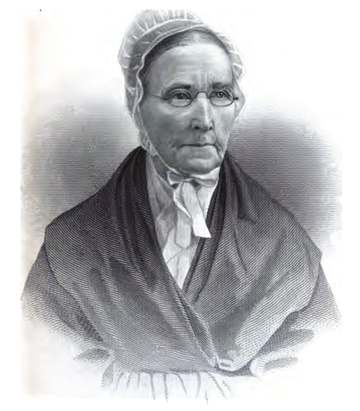
Catherine White Coffin, the wife of Levi Coffin, and a member of the abolitionist movement and underground rai...
Public domain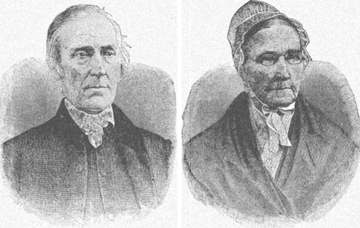
No known restrictions 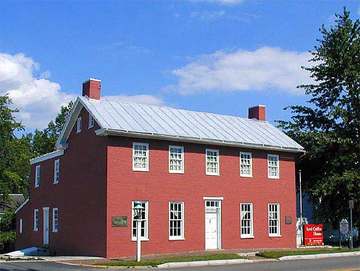
Levi Coffin's home in Fountain City, Indiana, formerly Newport. Used to hide slaves in the Underground Railroa...
Public domain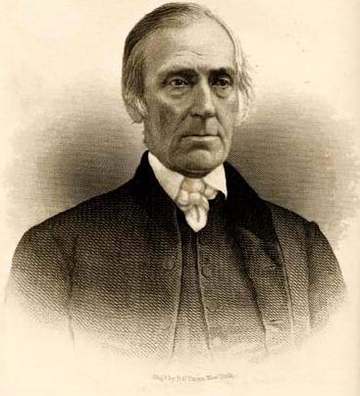
Public domain 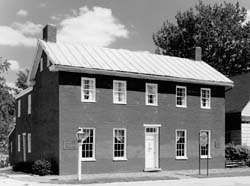
Home of Quaker abolitionist Levi Coffin (1798-1877) in Fountain City. The home was an important stop on the Un...
Public domain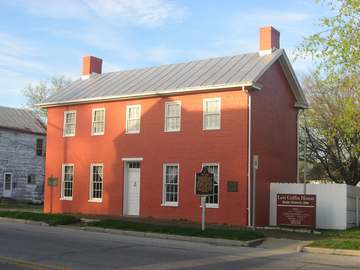
Front and southern side of the Levi Coffin House, located at 115 N. Main Street (U.S. Route 127) in Fountain C...
Public domain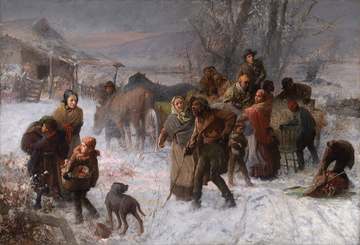
Public domain 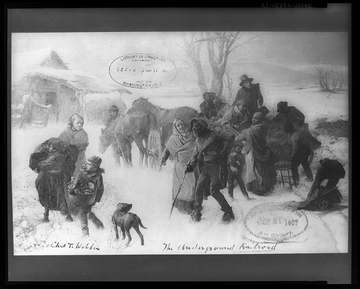
Title: The underground railroad / Chas. T. Webber. Abstract/medium: 1 photographic print : albumen.
Public domain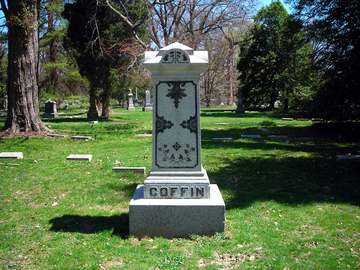
The monument was erected in 1902, using funds raised exclusively among Cincinnati's "Colored Citizens." They w...
Hasker Nelson Jr. / CC BY-SA 3.0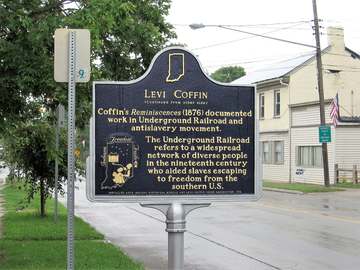
Levi Coffin Historic home sign
Sgerbic / CC BY-SA 4.0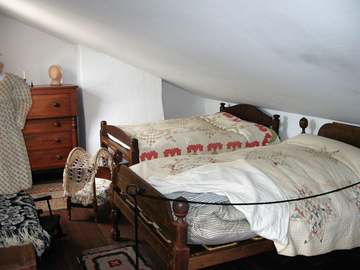
Levi Coffin Home beds
Sgerbic / CC BY-SA 4.0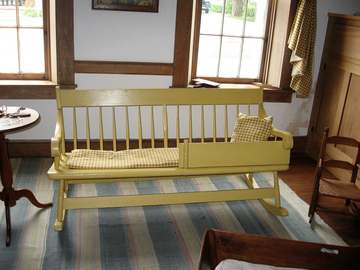
Levi Coffin Home bench - this allows for half to be used as a crib
Sgerbic / CC BY-SA 4.0


Further reading
Sources
Confidence. Medium: the main facts were confirmed, but some details (often an address or ZIP code) were not.
- Wikipedia: Levi Coffin dates, Cincinnati 1847, burial at Spring Grove (Wikipedia, opened; pointer-level source)
- Wikipedia: Levi Coffin House
- docsouth.unc.edu: coffin
- archive.org: reminiscencesof00coff
- cincinnatifriends.org: levi coffin
- stories.cincinnatipreservation.org
- theclio.com
- hamiltonavenueroadtofreedom.org
- hamiltonavenueroadtofreedom.org
- hamiltonavenueroadtofreedom.org
- hamiltonavenueroadtofreedom.org: Escape of the 28
- findagrave.com: levi coffin
- indianahistory.org: Levi and Catharine Coffin Essay
- Wikimedia Commons: Levi coffin
- Wikimedia Commons: Levi Coffin photograph c 1865
- Wikimedia Commons: Catherine White Coffin c. 1879
- Wikimedia Commons: The underground railroad Chas. T. Webber. LCCN98510370
- Wikimedia Commons: Charles T. Webber The Underground Railroad Google Art Project
- Wikimedia Commons: Levi Coffin Monument Story 02

Every link goes to the original source. Profile researched 2026-10-15.