Notable people · Reformer
Jane Edna Hunter
South Carolina-born nurse and lawyer who in 1911 founded Cleveland's Phillis Wheatley Association, which became the country's largest residence for single Black women.
Born December 13, 1882, Woodburn Farm, near Pendleton
Died January 1971, Cleveland
At a glance
- Born
- December 13, 1882, Woodburn Farm, near Pendleton source
- Died
- January 1971, Cleveland (Cuyahoga County) (sources give January 13, 17 or 19) source
- Buried
- Lake View Cemetery, Cleveland (Cuyahoga County) source
- Also known as
- Jane Edna Harris, Jane Edna Harris Hunter, Jane E. Hunter
- Education
- Ferguson and Williams Academy, Abbeville, SC, to 1900
- Cannon Street Hospital and Training School for Nurses, Charleston, SC, nursing
- Hampton Institute, Hampton, VA, 1904, nursing training
- Cleveland State University College of Law, Cleveland, OH, to 1925, law degree
- Known as
- Reformer
- Organizations
- Phillis Wheatley Association
Life story
Jane Edna Harris was born in 1882 on a plantation near Pendleton, South Carolina, to sharecropper parents. Her father died in 1892 and she began working as a domestic.
She finished at a South Carolina academy, trained as a nurse in Charleston and at Hampton Institute, and moved to Cleveland in 1905.
Seeing how few safe places Black women had to live and find work, she founded the Working Girls Association in 1911. It was renamed the Phillis Wheatley Association in 1912.
She completed an eleven-story residence in 1927, earned a law degree from Cleveland State in 1925, and won the NAACP Spingarn Medal in 1937. She retired in 1947, wrote A Nickel and a Prayer (1940), and died in Cleveland in 1971.
Ohio ties
- Cleveland (1905-1971)
nurse, social worker, lawyer; founder and general secretary of the Phillis Wheatley Association Cuyahoga County · source - Cleveland, 2265 East 40th Street and East 40th at Central Avenue (1911-1927)
first homes of the Working Girls' Home Association / Phillis Wheatley Association Cuyahoga County · source - Cleveland, 4450 Cedar Avenue (1927-c. 1947)
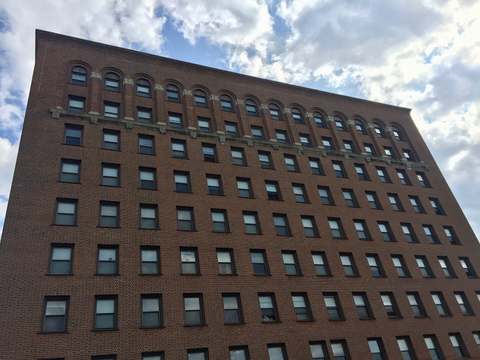
nine-storey Phillis Wheatley Association building she raised the money for Cuyahoga County · source
Timeline
- 1882 Born Jane Edna Harris on 13 December on Woodburn Farm near Pendleton, South Carolina, to sharecropper Edward Harris and Harriet Millner. source
- 1892 Her father died when she was about ten, and she went to work as a live-in servant. source
- 1900 Graduated from the Ferguson and Williams Academy in Abbeville, South Carolina. source
- 1905 Finished nurse training at Hampton Institute, Virginia, and moved to Cleveland, where she was one of only two Black professional nurses. source
- 1911 In September founded the Working Girls' Home Association with seven friends, with dues of a nickel a week, opening a boarding home on East 40th Street north of Central Avenue. source
- 1913 The association was incorporated in March as the Phillis Wheatley Association, named for the 18th-century poet, with both Black and white trustees. source
- 1917 The association bought a three-storey building for 75 residents at the northwest corner of East 40th and Central. source
- 1922 Wrote to Charles W. Chesnutt on 3 October thanking him for a $100 gift to the building fund. source
- 1925 Passed the Ohio bar examination after four years at Baldwin-Wallace Law School. source
- 1927 The Phillis Wheatley Association opened its nine-storey building at 4450 Cedar Avenue, with 135 dormitory rooms on the top six floors. source
- 1928 Robert R. Moton of Tuskegee Institute gave the keynote at the dedication of the new building. source
- 1930 Became chairman of the National Association of Colored Women's new Phillis Wheatley Department; by 1939 there were ten Phillis Wheatley houses, including Toledo, Oberlin, Canton and Steubenville. source
- 1940 Published her autobiography, A Nickel and a Prayer, probably at her own expense under the imprint Elli Kani. source
- 1943 Founded the Women's Civic League of Cleveland. source
- 1947 Reached mandatory retirement age and reluctantly resigned as general secretary, turning to the Phillis Wheatley Foundation's college scholarships. source
- 1970 The top six residence floors of the Cedar Avenue building closed on 31 October; they reopened in 1972 as subsidized housing for older people. source
- 1971 Died in Cleveland in January, leaving most of her assets to the Phillis Wheatley Foundation scholarship fund. source
- 2011 Rhondda Robinson Thomas of Clemson University published an annotated edition of A Nickel and a Prayer. source
What Jane is known for
- Founded Working Girls Association (later Phillis Wheatley Association) 1911
- Eleven-story residence completed 1927
- A Nickel and a Prayer (1940)
- Phillis Wheatley Association (founder)
Stories
The first door was a brothel
When Hunter arrived in Cleveland in 1905 with friends, the first house they knocked on for lodging turned out to be a brothel. As a Black woman she found it very hard to find safe housing, nursing work or decent places to spend free time; the YWCA did not take Black migrants. Her luck turned through a church connection with the office secretary of John D. Rockefeller's physician, which led to nursing jobs and patrons. The experience of how exposed young Black women were on arrival is what she built the Phillis Wheatley Association to fix.
A 'Jim Crow YWCA'
Hunter's plan split Black Cleveland. Established Black clubwomen, who were pushing for integration, called the home a 'Jim Crow YWCA' and argued that southern migrants like Hunter were importing segregation. She had to win both them and white donors. Henry Sherwin of Sherwin-Williams gave money only on condition that prominent white women sit on the board. Hunter answered critics by pointing out that the YWCA would not admit more than a handful of Black women anyway, and she described her job as uniting 'the purposes and desires of my people and the policies of the white friends whose material support we sought.'
Chapter 11: 'Starlight' Boyd
Hunter saw her work as a fight against organized vice and the politics that protected it. In A Nickel and a Prayer she named a whole chapter after Albert 'Starlight' Boyd, a Republican businessman she called the 'Great Mogul' of vice in Cleveland, whose Starlight Cafe on Canal Road was tavern, barbershop, pool room and political hub. She describes standing at the deathbed of his first wife, Osie, whom she said he had drawn into prostitution and then divorced. Later scholars such as Hazel Carby have criticized how closely Hunter policed her residents' private lives.
Honors and things named for them
- NAACP Spingarn Medal (1937)
- Ohio Women's Hall of Fame (1978)
- Jane Edna Hunter Social Services Center, Cuyahoga County
- Jane Edna Hunter Museum at the Phillis Wheatley Center
Named for Jane Edna Hunter
- Jane Edna Hunter Social Services Center, Cuyahoga County Department of Children and Family Services (Cleveland, Cuyahoga County) source
- Jane Edna Hunter Scholarship Fund, Phillis Wheatley Foundation (Cleveland, Cuyahoga County) source
Family
- father: Edward Harris
- mother: Harriet Milner
- husband: Edward Hunter
Sites to know
Homes, graves, markers, museums and monuments; the numbered ones are on the map.
- 1 Phillis Wheatley Association building (Emeritus House), built 1927
4450 Cedar Avenue, Cleveland Cuyahoga County · source - First Phillis Wheatley home, 2265 East 40th Street (unknown)
Cleveland Cuyahoga County · source - 2 Lake View Cemetery (coordinates are for the cemetery)
12316 Euclid Avenue, Cleveland Cuyahoga County · source
Places in Ohio to see
- Lake View Cemetery (burial) (grave)
12316 Euclid Ave, Cleveland, Cuyahoga County ZIP 44106 · Cleveland · Cuyahoga County
Ohio places
Where Jane Edna Hunter was born, lived, worked and is remembered, with the ZIP code, town and county pages for each.
- Worked: Cleveland, Cuyahoga County ZIP 44106 · Cleveland · Cuyahoga County
- Buried: Cleveland, Cuyahoga County (Lake View Cemetery) ZIP 44106 · Cleveland · Cuyahoga County
Myths and corrections
Things often said about Jane Edna Hunter, and what the record shows.
Often said Hunter received the NAACP's Spingarn Medal (Wikipedia says both 1937 and, as the first Black woman, 1928).
The record The NAACP's list of Spingarn medallists does not include her. The 1928 medal went to Charles W. Chesnutt, the 1937 medal to Walter White, and the first woman honoured was Mary B. Talbert in 1922. source
Often said She founded the 'Phillis Wheatley Association' in 1911.
The record She founded the Working Girls' Home Association in September 1911; the Phillis Wheatley name came with incorporation in March 1913 according to the NPS profile (the Encyclopedia of Cleveland History says the name changed later in 1911). source
Documents
Primary records: patents, letters, court and government files, nominations and old county histories, each at the archive that holds it.
- Letter, Jane E. Hunter to Charles W. Chesnutt, 3 October 1922 (thanks for $100 to the building fund), Chesnutt Papers, Western Reserve Historical Society 1922, Western Reserve Historical Society; transcription by the Charles W. Chesnutt Archive
- Letter, George W. Brown to Charles W. Chesnutt, 19 April 1932, on Association for the Study of Negro Life and History letterhead listing Jane E. Hunter and headquartered at the Phillis Wheatley Association 1932, Western Reserve Historical Society; Charles W. Chesnutt Archive
- Jane Edna Hunter, NPS people profile (Cuyahoga Valley National Park), drawing on the 2011 annotated A Nickel and a Prayer National Park Service
Pictures
Free to use with the credit shown. Select a picture for the original and its license.
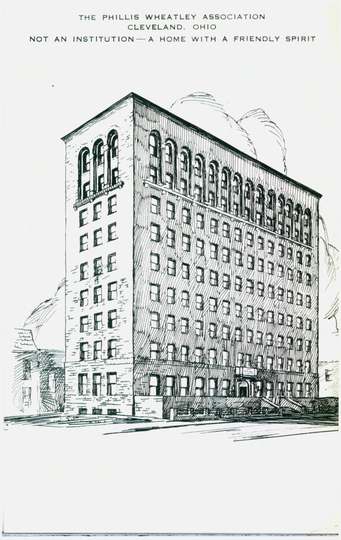
The Phyllis Wheatley Association building.
Public domain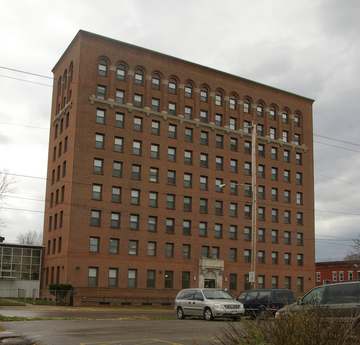
A view of the Phillis Wheatley Association at 4450 Cedar Avenue, in Cleveland, Ohio. The structure, built in 1...
Christopher Busta-Peck / CC BY-SA 1.0


Further reading
Sources
Confidence. Medium: the main facts were confirmed, but some details (often an address or ZIP code) were not.
- Wikipedia: Jane Edna Hunter dates, 1911 founding, burial
- nps.gov: jane edna hunter
- case.edu: hunter jane edna harris
- case.edu: phillis wheatley association
- socialwelfare.library.vcu.edu: hunter jane edna
- clevelandhistorical.org
- clevelandhistorical.org
- chesnuttarchive.org: ccda.corr01623
- chesnuttarchive.org: ccda.corr01874
- Wikipedia: Spingarn Medal
- Wikipedia: Phillis Wheatley Club
- Wikipedia: Lake View Cemetery
- Wikimedia Commons: The Phillis Wheatley Association, Cleveland, Ohio. Not an institution a home wit
- Wikimedia Commons: Phillis Wheatley Association Cleveland Ohio
- Wikimedia Commons: Cleveland, Central, 2018 Phillis Wheatley Association, Central, Cleveland, OH (2
Every link goes to the original source. Profile researched 2026-10-15.

