Notable people · Lawyer
Clarence Darrow
Kinsman-raised lawyer who began practice in Andover and Ashtabula and became America's best-known defence attorney, from Eugene Debs to Leopold and Loeb and the 1925 Scopes 'monkey trial'.
Born April 18, 1857, Farmdale, Kinsman Township
Died March 13, 1938, Chicago, Illinois
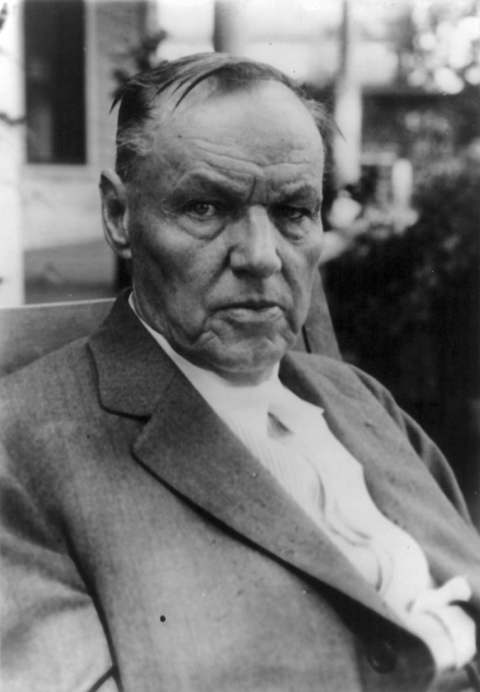
At a glance
- Born
- April 18, 1857, Farmdale, Kinsman Township (Trumbull County) source
- Died
- March 13, 1938, Chicago, Illinois source
- Buried
- Cremated; ashes scattered in Jackson Park, Chicago (behind the Museum of Science and Industry) source
- Also known as
- Clarence Darrow, Clarence S. Darrow
- Education
- Allegheny College, Meadville, PA, 1 year
- University of Michigan Law School, Ann Arbor, MI, 1 year
- Known as
- Lawyer
Life story
Clarence Darrow was born in Farmdale and grew up in Kinsman, the fifth son of an abolitionist freethinker and a women's-rights supporter. He spent a year at Allegheny College and a year at Michigan law school, then read law and joined the Ohio bar in 1878.
He moved to Chicago in 1888 and became the country's best-known defence lawyer: Eugene Debs (1894), the McNamara brothers (1911), Leopold and Loeb (1924), and John Scopes (1925).
He also took civil-rights cases, such as the 1925 defence of Ossian Sweet in Detroit.
He died in Chicago in 1938. His boyhood home in Kinsman is preserved with a memorial.
Ohio ties
- Farmdale, Kinsman Township (1857-1864)
birthplace Trumbull County · source - Kinsman (octagon house on State Routes 5/7) (1864-c. 1873)
childhood home bought by his father in 1864; he returned for a last visit in 1936 Trumbull County · source - Youngstown (1878)
examined by a committee of the bar here and admitted to practise in Ohio Mahoning County · source - Andover (c. 1878-1884)
first law office, in a flat over a shoe store; gave the Memorial Day address in 1883 and 1884 Ashtabula County · source - Ashtabula (c. 1884-1887)
lawyer and city solicitor; Democratic Party worker Ashtabula County · source - Columbus (1929)
gave the speech later published as 'Why I Am an Agnostic' at a public symposium on belief Franklin County · source
Timeline
- 1857 Born on 18 April in Farmdale, Trumbull County, the fifth son of Amirus and Emily (Eddy) Darrow. source
- 1864 His father, a cabinetmaker, bought the octagon house in Kinsman, built about 1854, where Clarence lived until about 1873. source
- 1873 Left Allegheny College in Meadville, Pennsylvania, after one year when the Panic of 1873 struck, and taught district school for three winters. source
- 1878 After a year at the University of Michigan law school and reading law in an office, passed before a bar committee in Youngstown and was admitted to the Ohio bar. source
- 1880 Married Jessie Ohl, daughter of a prosperous Kinsman-area family. source
- 1883 Gave Andover's Memorial Day address, and again in 1884. source
- 1884 On 3 October debated Grover Cleveland's free-trade policy against Republican protectionism before a packed house at Smith's Opera House in Ashtabula. source
- 1885 Ran unsuccessfully for the Ohio Senate, and in 1886 for Ashtabula County prosecutor. source
- 1887 Left Ashtabula, where he had been city solicitor, for Chicago. source
- 1894 Gave up his post with the Chicago and North-Western Railway to defend Eugene V. Debs after the Pullman strike. source
- 1894 Came back from Chicago to win his small-town harness case, Brockway v. Jewell, 52 Ohio St. 187, in the Ohio Supreme Court. source
- 1904 Published Farmington, a novel of a small-town childhood. source
- 1911 Arranged guilty pleas for the McNamara brothers in the Los Angeles Times bombing case and was then charged with jury bribery; one trial ended in acquittal and the other in a hung jury. source
- 1924 Saved Nathan Leopold and Richard Loeb from the death penalty in Chicago. source
- 1925 Defended John T. Scopes in the 'monkey trial' over teaching evolution in Dayton, Tennessee. source
- 1929 Gave the speech later titled 'Why I Am an Agnostic' at a public symposium on belief in Columbus. source
- 1936 Made his last visit to the Kinsman octagon house. source
- 1938 Died in Chicago on 13 March; his ashes were scattered in Jackson Park. source
- 1971 The Clarence Darrow Octagon House was listed on the National Register of Historic Places on 10 September, solely for its association with him. source
- 2000 Ohio Historical Marker 12-78 was placed in front of the octagon house. source
What Clarence is known for
- Defended Scopes, Tennessee 1925
- Crime: Its Cause and Treatment (1922)
- Why I Am an Agnostic (1929)
- The Story of My Life (1932)
Stories
A $25 harness and eight years of appeals
Darrow's best-known Ohio case began as a Justice of the Peace suit over a harness with gilt trimmings worth about $25. His client was a boy who had nursed the alcoholic son of a prosperous family, and the son had promised him the harness but never paid. Darrow lost before the justice, won a jury trial in Common Pleas, saw it reversed, lost again before the justice and won a second jury trial. By the time Brockway v. Jewell reached the Ohio Supreme Court, eight years after the first hearing, Darrow had moved to Chicago, but he came back to argue it and won (52 Ohio St. 187, 1894). The Ashtabula County Bar Association's account says he had been paid $5 and covered the costs of the later trials himself.
Starting out in Andover
Admitted to the bar in 1878 after an examination in Youngstown, Darrow thought that city of 20,000 too big and opened an office in Andover, a farming village about 15 miles from Kinsman. He and his wife Jessie lived in a small apartment over a shoe store that doubled as his office, and he earned less than he had as a schoolteacher. His cases were horse trades, boundary lines and the occasional farmer charged with selling hard cider or watering his milk. An early partner, James Roberts, ran off with his law books. Later, in Ashtabula, a dentist's wife refused to sell him a $3,500 house, doubting he would ever earn enough to pay for it. He said he did not want the house anyway because he was moving away, and in 1887 he left for Chicago.
The eight-sided house
The house Amirus Darrow bought in Kinsman in 1864 was one of the octagon houses promoted by the phrenologist Orson S. Fowler in his 1848 book A Home for All, which argued that the shape made efficient use of space and air. It was built about 1854 with chestnut beams between layers of concrete. Clarence lived there from the age of seven until about 1873, years he remembered as his most important, when he was already staging mock trials with friends. More than thirty octagon houses are known to have been built in Ohio. The Darrow house was placed on the National Register in 1971 for its famous resident rather than its architecture, and Darrow paid it a last visit in 1936.
Honors and things named for them
- Posthumous Trial Lawyer Hall of Fame
- Statue at Rhea County Courthouse, Dayton, Tennessee (2017)
- Clarence Darrow Memorial Bridge, Chicago
Family
- spouse: Jessie Ohl
- spouse: Ruby Hammerstrom
- son: Paul Darrow
Sites to know
Homes, graves, markers, museums and monuments; the numbered ones are on the map.
- 1 Clarence Darrow Octagon House (c. 1854; NRHP 71001025) (unknown)
State Routes 5 and 7, Kinsman Trumbull County · source - 2 Ohio Historical Marker 12-78, Darrow Octagon House / Clarence Darrow (1857-1938)
Kinsman Trumbull County · source - 3 Ohio Historical Marker 10-78, Kinsman (names Darrow among the township's notable citizens)
Kinsman Trumbull County · source - Birthplace, Farmdale (unknown)
Farmdale, Kinsman Township Trumbull County · source - First law office, over a shoe store, Andover (unknown)
Andover Ashtabula County · source
Places in Ohio to see
- Clarence Darrow Octagon House (home)
State Routes 5 and 7, Kinsman, Trumbull County Trumbull County · official page
Ohio places
Where Clarence Darrow was born, lived, worked and is remembered, with the ZIP code, town and county pages for each.
- Born: Kinsman, Trumbull County ZIP 44428 · Trumbull County
- Worked: Andover, Ashtabula County ZIP 44003 · Andover · Ashtabula County
Myths and corrections
Things often said about Clarence Darrow, and what the record shows.
Often said Darrow was born in Kinsman.
The record He was born in Farmdale, a nearby community in Trumbull County, and moved to Kinsman at seven when his father bought the octagon house in 1864. The Ashtabula County Bar Association's biography says Kinsman; the state marker and Wikipedia say Farmdale. source
Often said Darrow lost only one client to the gallows, Patrick Prendergast.
The record Prendergast, the assassin of Chicago mayor Carter Harrison, was the only one of about fifty murder defendants Darrow represented who was executed, but Darrow joined the case only after Prendergast had been convicted, to try to spare him the noose. source
Often said Darrow was cleared of jury bribery in Los Angeles.
The record He was acquitted in the first trial, the second ended in a hung jury, and the district attorney dropped a retrial in exchange for his promise not to practise in California again. Later biographers Geoffrey Cowan and John A. Farrell concluded from newer evidence that he was almost certainly involved. source
Documents
Primary records: patents, letters, court and government files, nominations and old county histories, each at the archive that holds it.
- Clarence Darrow, Farmington (Chicago: A. C. McClurg, 1904), a novel of a small-town childhood 1904, University of California Libraries (Internet Archive)
- Argument of Clarence S. Darrow in the Wood-Workers Conspiracy Case (Oshkosh, 1898) 1899, University of Michigan (Internet Archive)
- Plea of Clarence Darrow in his own defense to the jury that exonerated him of the charge of bribery at Los Angeles, August 1912 1912, University of Michigan (Internet Archive)
- Ashtabula County Bar Association, 'Famous Attorneys: Clarence Darrow' (archived 2001) 2001, Wayback Machine
Pictures
Free to use with the credit shown. Select a picture for the original and its license.
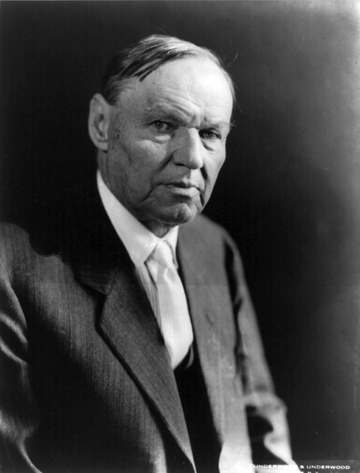
Clarence Darrow, American lawyer famous for the Scopes Trial
Public domain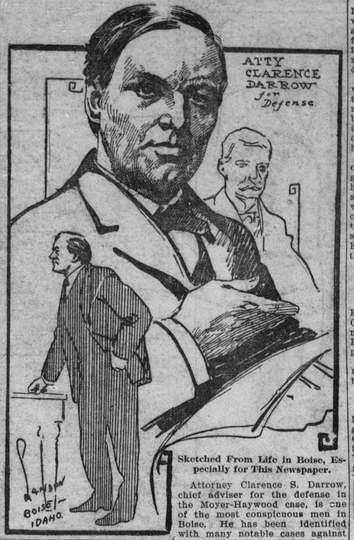
Courtroom illustrations of Clarence Darrow, advising the defense in the Moyer-Haywood case in Boise, Idaho.
Public domain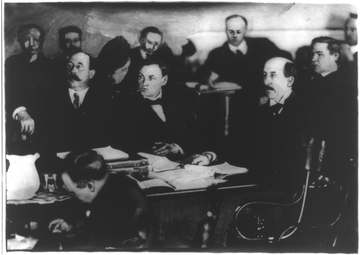
Title: Bill Haywood & defense counsels, Clarence Darrow, Wilson & Richardson Abstract/medium: 1 photog...
Public domain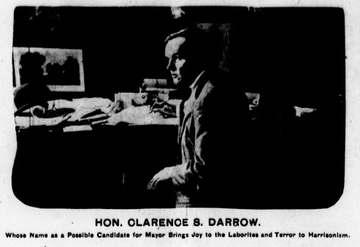
Clarence Darrow
Public domain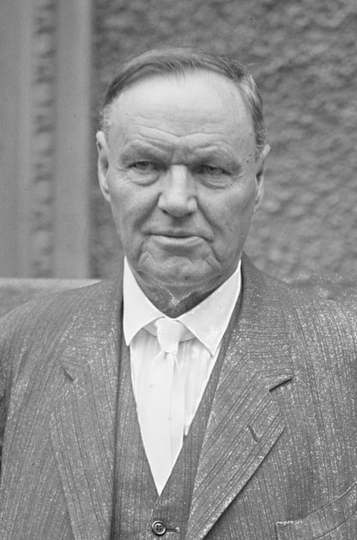
Title: Clarence Darrow at Cosmos Club, [Washington, D.C.], 3/14/25 Abstract/medium: 1 negative : glass ; 5 x 7...
Public domain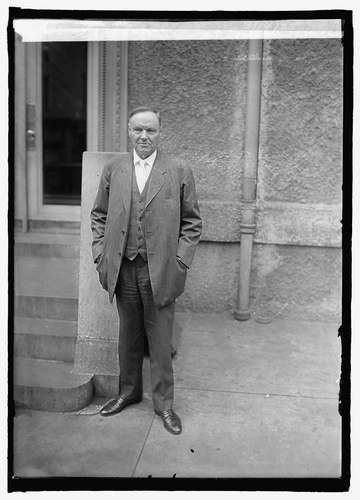
Title: Clarence Darrow at Cosmos Club, [Washington, D.C.], 3/14/25 Abstract/medium: 1 negative : glass ; 5 x 7...
Public domain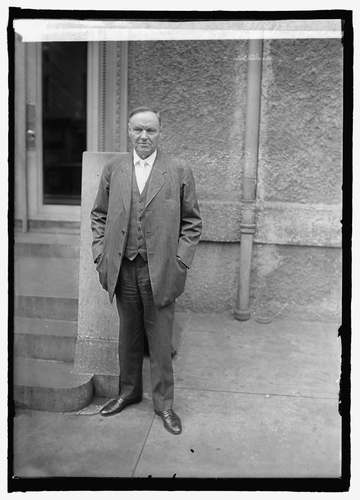
Title: Clarence Darrow at Cosmos Club, [Washington, D.C.], 3/14/25 Abstract/medium: 1 negative : glass ; 5 x 7...
Public domain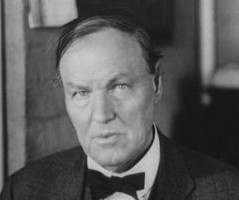
Clarence Darrow - detail, 1922
Public domain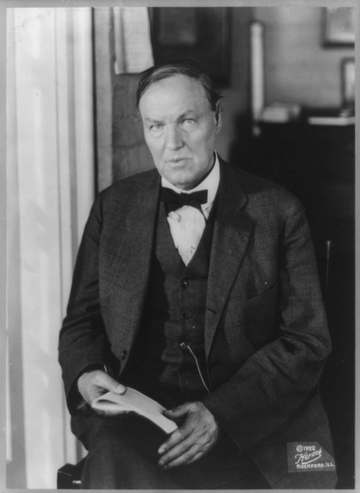
Title: Clarence Darrow, 1857-1938 Abstract/medium: 1 photographic print.
Public domain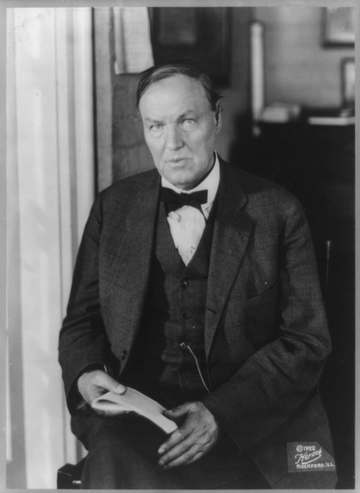
Title: Clarence Darrow, 1857-1938 Abstract/medium: 1 photographic print.
Public domain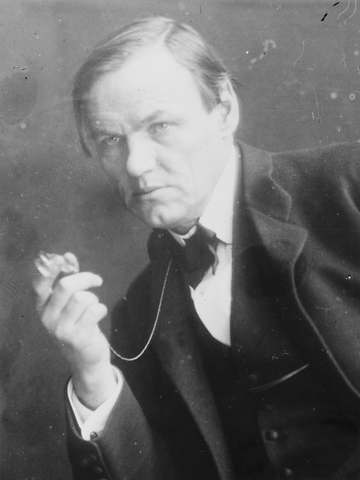
Title: Clarence Darrow, 3/4 standing, one leg raised Abstract/medium: 1 negative : glass ; 5 x 7 in. or smalle...
Public domain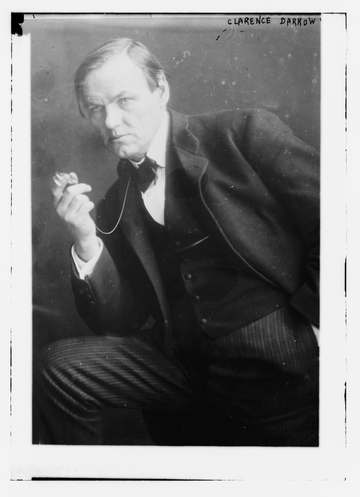
Title: Clarence Darrow, 3/4 standing, one leg raised Abstract/medium: 1 negative : glass ; 5 x 7 in. or smalle...
Public domain


Further reading
Sources
Confidence. Medium: the main facts were confirmed, but some details (often an address or ZIP code) were not.
- Wikipedia: Clarence Darrow dates, Farmdale/Kinsman birth, Ohio practice
- Wikipedia: Clarence Darrow Octagon House
- Wikipedia: National Register of Historic Places listings in Trumbull County, Ohio
- npgallery.nps.gov
- remarkableohio.org: 12 78 darrow octagon house clarence darrow 1857 1938
- remarkableohio.org: 10 78 kinsman
- web.archive.org: famous attorneys
- findagrave.com: clarence darrow
- archive.org: farmington00darrrich
- archive.org: 2917184.0001.001.umich.edu
- archive.org: 2917193.0001.001.umich.edu
- Wikimedia Commons: Category:Clarence Darrow
- Wikimedia Commons: Category:Clarence Darrow Octagon House
- Wikimedia Commons: Clarence Darrow Octagon House
- Wikimedia Commons: Clarence Darrow, 3 4 standing, one leg raised LCCN2014686460
- Wikimedia Commons: Clarence Darrow cph.3b31130
- Wikimedia Commons: Clarence Darrow, 1857 1938 LCCN2004671917
- Wikimedia Commons: Clarence Darrow during Scopes Trial cph.3a44036


Every link goes to the original source. Profile researched 2026-10-15.