Notable people · Native History · Oratory · Military
Chief Logan
Cayuga-born war leader among the Ohio Mingo whose family was killed at Yellow Creek in 1774 and whose message to Lord Dunmore, 'Logan's Lament', became one of the most reprinted Native speeches in American history.
Born c. 1723, Unknown; probably Pennsylvania (a marker at Danby, New York calls that a 'possible birthplace')
Died 1780, Near Lake Erie, killed in a quarrel, reportedly by a nephew
At a glance
- Born
- c. 1723, Unknown; probably Pennsylvania (a marker at Danby, New York calls that a 'possible birthplace') source
- Died
- 1780, Near Lake Erie, killed in a quarrel, reportedly by a nephew source
- Also known as
- Logan the Orator, Chief Logan, James Logan, John Logan
- Known as
- Native History, Oratory, Military
Life story
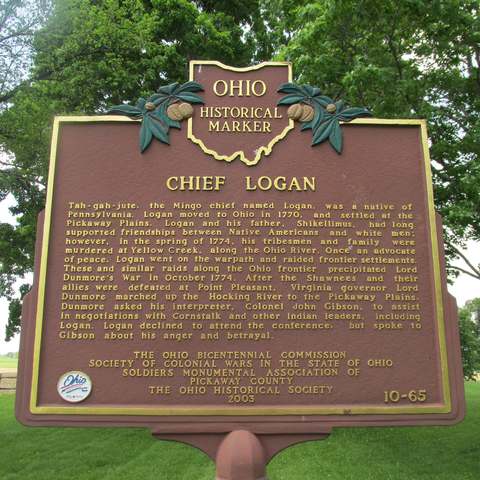
Logan was a son of the Oneida leader Shikellamy and a Cayuga through his mother, who moved to the Ohio country in the 1760s, settled on the Pickaway Plains about 1770, and became associated with the Mingo. On April 30, 1774, a party of Virginians led by Daniel and Jacob Greathouse lured Mingo people across the Ohio from the mouth of Yellow Creek to Joshua Baker's cabin and killed about nine to thirteen of them, including Logan's brother John Petty and his sister Koonay. Logan answered with raids on the frontier that helped bring on Dunmore's War. When Dunmore's army reached the Pickaway Plains that autumn, Logan refused to attend the talks at Camp Charlotte but gave the interpreter John Gibson, Koonay's husband, a message that was printed in 1775 and later in Jefferson's Notes on the State of Virginia. Tradition places that moment under the Logan Elm south of Circleville, now a state memorial; Logan himself was killed near Lake Erie in 1780.
Ohio ties
- Pickaway Plains (1770-1774)
settled there after moving to Ohio in 1770; gave his message to John Gibson there in 1774 Pickaway County · source - Logan Elm State Memorial (1774; memorial since the 20th century)
traditional site where he spoke to John Gibson; the Chief Logan monument carries the speech Pickaway County · source - Logan (city) (1816)
town laid out by Thomas Worthington and named by residents for Chief Logan Hocking County · source - Indianola Junior High School, Columbus (1929)
building with a sculpture captioned TAHGAHJUTE, one of his popular names Franklin County · source
Timeline
- 1723 Born about this year, a son of the Oneida leader Shikellamy; which son is disputed. source
- 1770 Moved to Ohio and settled at the Pickaway Plains. source
- 1774 On April 30 Virginians led by Daniel and Jacob Greathouse killed about nine to thirteen Mingo at Joshua Baker's cabin across the Ohio from the mouth of Yellow Creek, including Logan's brother John Petty and his sister Koonay; Logan was away hunting. source
- 1774 Raided frontier settlements in revenge, including the Spicer killings in Greene County, Pennsylvania; Cornstalk, White Eyes and Guyasuta tried to keep the peace. source
- 1774 A letter attributed to 'Captain John Logan' asked Captain Michael Cresap why he had killed Logan's people. source
- 1774 Did not fight at Point Pleasant on October 10; afterwards refused to attend the talks at Camp Charlotte but spoke to the interpreter Col. John Gibson, who carried his words to Lord Dunmore. source
- 1775 The speech was printed in newspapers in Williamsburg, Philadelphia and New York. source
- 1780 Killed near Lake Erie, reportedly by a nephew urged on by Mingo worried about his behaviour, who said he did it 'because he was too great a man to live'. source
- 1780s Jefferson's Notes on the State of Virginia printed the speech, challenging 'the whole orations of Demosthenes and Cicero' to match it, and wrongly blamed Col. Cresap for the killings. source
- 1800 Jefferson corrected the account of the killings in an appendix to a new edition of the Notes. source
- 1816 Thomas Worthington laid out the village of Logan on the Hocking, named by its residents for the Mingo leader. source
- 1851 Brantz Mayer's book popularized the name 'Tah-gah-jute' for Logan; the historian Francis Jennings later rejected it. source
- 1964 The Logan Elm, 65 feet tall with a 180-foot crown, died after Dutch elm disease and storm damage. source
Stories
The message that reached Dunmore
After the battle at Point Pleasant in October 1774, Dunmore's army marched up the Hocking to the Pickaway Plains and camped at Camp Charlotte to make peace with Cornstalk and the other leaders. Logan would not come. Instead he spoke to Dunmore's interpreter, Col. John Gibson, about his anger and betrayal, and Gibson carried his words back to the camp. Gibson had his own loss: his Mingo wife Koonay, Logan's sister, was among those killed at Yellow Creek, and only their two-month-old daughter survived. The speech appeared in newspapers in Williamsburg, Philadelphia and New York in 1775, and the version on the Chief Logan monument follows the wording Jefferson later printed. Tradition says Logan spoke under a great elm on the plains; Jefferson wrote only that he 'sent by a messenger' the speech.
Yellow Creek, April 30, 1774
The killings that turned Logan to war happened on the upper Ohio across from the mouth of Yellow Creek, near the present Mountaineer racetrack in West Virginia. Mingo people from the Ohio side were invited to the cabin of Joshua Baker, a rum seller, with a promise of drink and sport, and a party led by Daniel and Jacob Greathouse killed them. Among the dead were Logan's brother Taylaynee (John Petty), Taylaynee's son, and Logan's sister Koonay, wife of the trader John Gibson. Counts run from nine (Parkinson) to thirteen (Calloway), and other accounts add six more Mingo killed when they came looking for the first group. Michael Cresap, whose men had attacked Native people in the days before, could not talk the Greathouse party out of it, but it was Cresap whom Logan, and then Jefferson, blamed.
The Logan Elm
The elm associated with Logan's speech stood about five miles south of Circleville, near Scippo Creek and the old Shawnee towns. It grew to 65 feet tall, with a trunk 24 feet around and a crown spread of 180 feet, and was once thought to be one of the largest elms in the United States. Dutch elm disease and storms killed it in 1964. Through the Ohio History Day Association the site became Logan Elm Park, and it is now the Logan Elm State Memorial owned by the Ohio History Connection. Besides the Logan monument, which bears the speech, the grounds hold monuments to Cornstalk, to his sister Nonhelema, to Michael Cresap, and a Boggs monument that says Dunmore concluded a treaty under the elm.
Named for Chief Logan
- Logan (city) (Logan, Hocking County) source
- Logan Elm and Logan Elm State Memorial (near Circleville, Pickaway County) source
- Logan Elm High School (near Circleville, Pickaway County) source
Sites to know
Homes, graves, markers, museums and monuments; the numbered ones are on the map.
- 1 Logan Elm State Memorial
State Route 361, 5 miles south of Circleville Pickaway County · source - 2 Ohio Historical Marker 10-65, Chief Logan
Logan Elm State Memorial, Route 361 Pickaway County · source - 3 Indianola Junior High School (NRHP 80003000), sculpture captioned TAHGAHJUTE (unknown)
420 East 19th Avenue, Columbus Franklin County · source - Chief Logan monument, Fort Hill Cemetery
Auburn, New York source
Ohio places
Where Chief Logan was born, lived, worked and is remembered, with the ZIP code, town and county pages for each.
- Connected: Pickaway Plains, Pickaway County Pickaway County
- Connected: Logan Elm State Memorial, Pickaway County Pickaway County
- Connected: Logan, Hocking County Logan · Hocking County
- Connected: Indianola Junior High School, Franklin County Franklin County
Myths and corrections
Things often said about Chief Logan, and what the record shows.
Often said Col. Michael Cresap murdered Logan's family, as the Lament and Jefferson's Notes say.
The record The killers were a party led by Daniel and Jacob Greathouse at Joshua Baker's cabin across from Yellow Creek. Jefferson's first version even moved the killings to a canoe on the Kanawha. Cresap's men had attacked Native people days earlier, but he had tried to talk the Greathouse party out of their plan, and Jefferson corrected his account in an appendix to the 1800 edition. source
Often said Logan delivered his famous speech to Lord Dunmore's council under the Logan Elm.
The record Logan refused to attend the Camp Charlotte talks. He spoke to the interpreter John Gibson, who carried the words to Dunmore; Jefferson wrote that Logan 'sent by a messenger' the speech. The elm is the place where he was 'said to have' spoken, a tradition rather than a recorded fact, and scholars still dispute how faithfully the printed wording records what Logan said. source
Often said Logan's name was Tah-gah-jute (as on the Ohio marker and the Columbus school).
The record That name was popularized by Brantz Mayer's 1851 book. Francis Jennings rejected it and identified him as James Logan, and Jennings treats Tachnechdorus as Logan's older brother. Which son of Shikellamy he was is still disputed. source
Often said Logan was a Mingo chief.
The record Richard White writes that Logan 'was not a chief' but a war leader; the Mingo chiefs were Kayashuta and White Mingo. He was Cayuga through his mother and became associated with the Mingo after moving to Ohio. source
Often said Logan County, Ohio, is named after Chief Logan.
The record Logan County (formed 1818) is named for Benjamin Logan, the Kentucky militia leader whose 1786 raid burned Shawnee towns there, including Blue Jacket's. The Hocking County seat of Logan is the Ohio place named for the Mingo leader. source
Documents
Primary records: patents, letters, court and government files, nominations and old county histories, each at the archive that holds it.
- Thomas Jefferson, Notes on the State of Virginia (Query VI, with Logan's speech) 1780s, Avalon Project, Yale Law School
Pictures
Free to use with the credit shown. Select a picture for the original and its license.
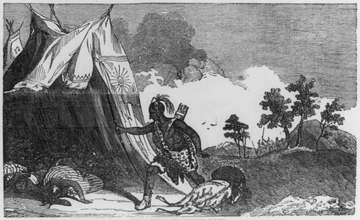
Title: Logan finding his murdered family Abstract/medium: 1 print : wood engraving.
Public domain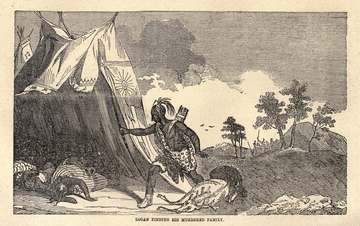
Title: Logan finding his murdered family Abstract/medium: 1 print : wood engraving.
Public domain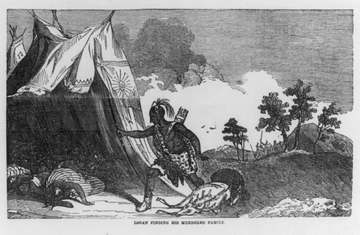
Title: Logan finding his murdered family Abstract/medium: 1 print : wood engraving.
Public domain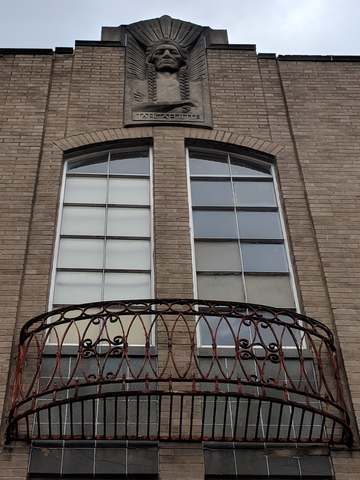
Indianola Junior High School listed on the National Register of Historic Places (#80003000)
Hamaxides / CC BY-SA 4.0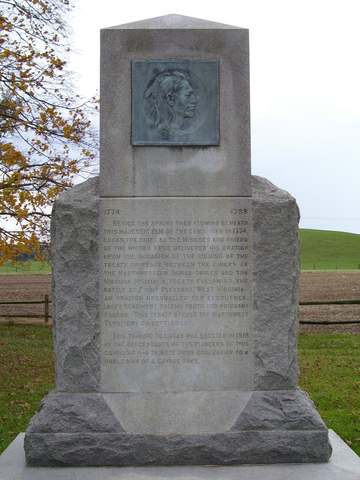
Monument to w:Chief Logan at Logan Elm State Memorial in Ohio
User:Kevin Myers / CC BY-SA 3.0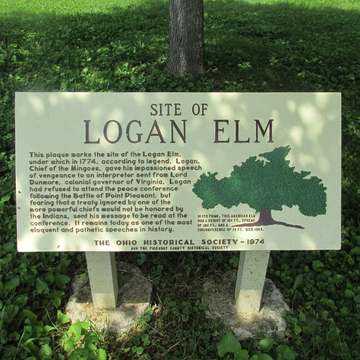
Logan Elm State Memorial in Pickaway County, Ohio.
Aesopposea / CC BY-SA 3.0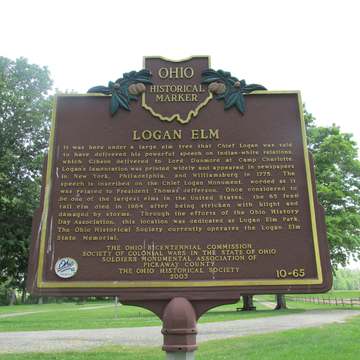
Logan Elm State Memorial in Pickaway County, Ohio.
Aesopposea / CC BY-SA 3.0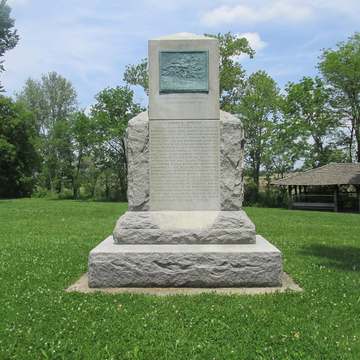
Logan Elm State Memorial in Pickaway County, Ohio.
Aesopposea / CC BY-SA 3.0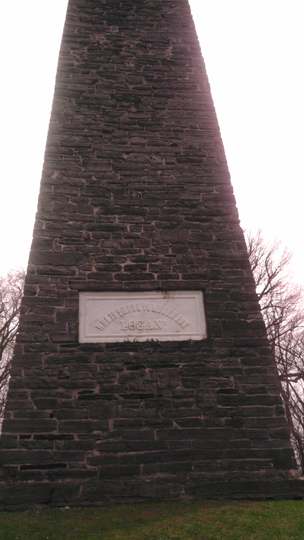
Monument to Chief Logan, taken at Fort Hill Cemetery, Auburn, NY (28 April 2013)
User:L. A. Davenport / CC BY-SA 3.0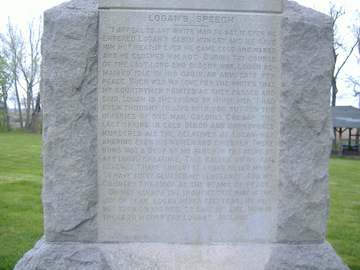
Logan monument (Logan's Lament speech)
Aesopposea / CC BY-SA 3.0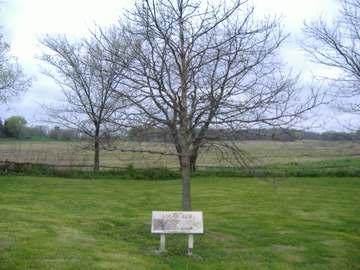
Site of Logan's Elm
Aesopposea / CC BY-SA 3.0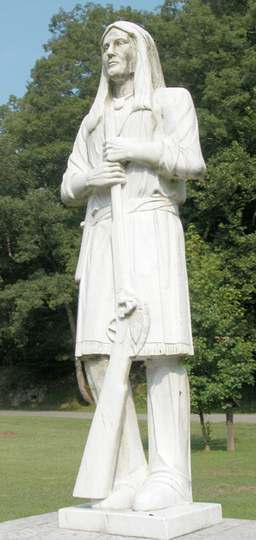
Chief Logan, statue at Chief Logan State Park, West Virginia, USA. Image copyleft: Image taken by me, released...
The original uploader was Pollinator at English Wikipedia. / CC BY-SA 3.0


Sources
Confidence. High: the main facts were confirmed in sources we opened.
- https://en.wikipedia.org/wiki/Logan_(Iroquois_leader)
- https://en.wikipedia.org/wiki/Yellow_Creek_massacre
- https://remarkableohio.org/marker/10-65-chief-logan/
- https://remarkableohio.org/marker/6-65-treaty-of-camp-charlotte/
- https://remarkableohio.org/marker/1-37-thomas-worthington-founder-of-logan/
- https://en.wikipedia.org/wiki/Logan_Elm
- https://en.wikipedia.org/wiki/Logan,_Ohio
- https://en.wikipedia.org/wiki/Logan_County,_Ohio
- https://en.wikipedia.org/wiki/Bellefontaine,_Ohio
- https://en.wikipedia.org/wiki/Indianola_Junior_High_School
- https://avalon.law.yale.edu/18th_century/jeffvir.asp
- https://commons.wikimedia.org/wiki/File:Logan_finding_his_murdered_family_LCCN2005683513.jpg
- https://commons.wikimedia.org/wiki/File:Monument_to_Chief_Logan,_taken_at_Fort_Hill_Cemetery,_Auburn,_NY_(28_April_2013)_2013-04-30_10-50.jpg
- https://commons.wikimedia.org/wiki/Category:Logan_the_Orator
Every link goes to the original source. Profile researched 2026-10-15.