Notable people · Baseball · Civil Rights Pioneer
Lawrence Eugene 'Larry' Doby
Center fielder whom Bill Veeck's Cleveland Indians brought from the Newark Eagles in July 1947, making him the first Black player in the American League and a cornerstone of Cleveland's 1948 champions.
Born December 13, 1923, Camden, SC
Died June 18, 2003, Montclair, NJ
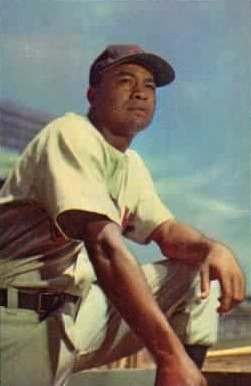
At a glance
- Born
- December 13, 1923, Camden, SC source
- Died
- June 18, 2003, Montclair, NJ source
- Buried
- Cremated source
- Also known as
- Larry Doby
- Education
- Paterson Eastside High School, Paterson, NJ
- Virginia Union University, Richmond, VA, transferred after signing with Newark
- Known as
- Baseball, Civil Rights Pioneer
- Organizations
- Cleveland Indians
Life story
Larry Doby was born in Camden, South Carolina, in 1923. His father died when he was young, and at fourteen he moved to Paterson, New Jersey, to live with his mother. He starred in several sports at Paterson Eastside High School.
He joined the Newark Eagles at seventeen, served in the Navy in 1943-44, and married Helyn Curvy in 1946.
On July 5, 1947, he debuted for the Cleveland Indians, the first Black player in the American League. In October 1948 he hit the first home run by a Black player in a World Series.
He managed the White Sox in 1978, was elected to the Hall of Fame in 1998 and died in New Jersey in 2003.
Ohio ties
- Cleveland (1947-1955, 1958)
outfielder for the Cleveland Indians; 1948 World Series champion; 1954 American League pennant Cuyahoga County · source - Cleveland (1974)
Indians coach, passed over when the club hired Frank Robinson as manager in 1975 Cuyahoga County · source - Jacobs Field (now Progressive Field), Cleveland (1997)
threw the ceremonial first pitch at the All-Star Game, 50 years after his debut Cuyahoga County · source - Progressive Field, Cleveland (2012-present)
Larry Doby Way (2012) and bronze statue (2015) Cuyahoga County · source
Timeline
- 1923 Born December 13 in Camden, South Carolina; moved to Paterson, New Jersey, in 1938. source
- 1946 After Navy service, hit .348 for the Newark Eagles, who won the Negro League World Series. source
- 1947 Cleveland owner Bill Veeck bought his contract from the Newark Eagles for $10,000, with $5,000 more if he stayed 30 days. source
- 1947 Debuted as a pinch-hitter at Comiskey Park in Chicago on July 5, the first Black player in the American League. source
- 1948 Hit .301 as a full-time center fielder and hit the first home run by a Black player in World Series history in Game 4 against Boston on October 9; Cleveland won the Series in six games. source
- 1949 Named to the first of seven straight All-Star teams with Cleveland. source
- 1952 Led the American League with 32 home runs, the first Black player to lead either league. source
- 1954 Led the league with 32 home runs and 126 RBI as Cleveland won 111 games and the pennant; finished second in MVP voting. source
- 1955 Traded to the Chicago White Sox after the season for Chico Carrasquel and Jim Busby. source
- 1958 Traded back to Cleveland on April 1 and hit 13 home runs in 89 games. source
- 1966 Inducted into the Cleveland Indians Hall of Fame in August. source
- 1974 Hired as an Indians coach. source
- 1978 Became manager of the Chicago White Sox on June 30, the second Black manager in the majors. source
- 1997 Threw out the first pitch at the All-Star Game at Jacobs Field in Cleveland, 50 years and three days after his debut. source
- 1998 Elected to the Baseball Hall of Fame by the Veterans Committee. source
- 2003 Died of cancer at his home in Montclair, New Jersey, on June 18; President Bush noted he had helped Cleveland win its last World Series in 1948. source
- 2012 Eagle Avenue beside Progressive Field was renamed Larry Doby Way in July. source
- 2015 The Indians unveiled a bronze statue of Doby finishing his swing outside Progressive Field on July 25. source
What Lawrence is known for
- First Black player in the American League, Cleveland, 1947
Stories
Eleven weeks after Robinson, with no warning
Bill Veeck had sent Louis Jones to prepare Cleveland's Black community and scout Bill Killefer to look at Negro league players. Unlike Branch Rickey, who signed Jackie Robinson a full season early and sent him to the minors, Veeck left Doby with Newark until July 1947 and then brought him straight to the majors. Jones met Doby after the first game of a July 4 doubleheader in Newark and took him by train to Chicago. On July 5, walking down the line to meet his new teammates, Doby later said, very few hands came back; four players refused to shake, and two turned their backs. Only second baseman Joe Gordon asked him to play catch. After the game Jones took him not to the team hotel but to the DuSable Hotel on Chicago's Black South Side, a pattern of segregated lodging that followed him for years.
The hug on the front page
In Game 4 of the 1948 World Series against the Boston Braves, Doby hit a home run in the third inning, the first by a Black player in Series history, and Cleveland won 2-1 to take a three-games-to-one lead. After the game, white pitcher Steve Gromek, who had thrown a complete game, embraced Doby, and the photograph ran on the front page of the next day's Plain Dealer. The New York Times later called it a signature moment in the integration of baseball. Doby said the picture meant more to him than the home run. Cleveland won the Series in six games, its last championship, and Doby led the team with a .318 Series average.
Cleveland remembers the second man
For decades Doby was overshadowed by Robinson; he said in 1978 that the abuse he took was just as bad, but nobody promised to be nice to the second Black player. Cleveland's recognition came in stages: the Indians Hall of Fame in 1966, the first pitch at the 1997 All-Star Game at Jacobs Field, a team-wide tribute on Larry Doby Day in 2007 when every Indian wore No. 14, and the renaming of Eagle Avenue as Larry Doby Way in 2012. On July 25, 2015, his son Larry Doby Jr. unveiled a bronze statue of his father completing a swing outside Progressive Field, alongside statues of Bob Feller and Jim Thome. Doby's former roommate Jim 'Mudcat' Grant and former Cleveland Buckeyes player Ted Toles were among those present.
Inventions and firsts
Honors and things named for them
- Baseball Hall of Fame (1998)
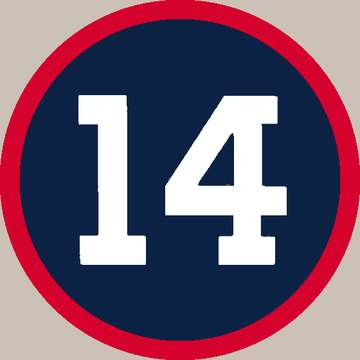
- Indians number 14 retired (1994)
- Congressional Gold Medal (2023, posthumous)
- U.S. postal stamp (2012)
- Bronze statue at Progressive Field (2015)
- Larry Doby Way, Cleveland
Named for Lawrence Eugene 'Larry' Doby
- Larry Doby Way (Cleveland, Cuyahoga County) source
Family
- wife: Helyn Curvy
- father: David Doby
- mother: Etta Brooks
- owner who signed him: Bill Veeck
Sites to know
Homes, graves, markers, museums and monuments; the numbered ones are on the map.
- 1 Larry Doby statue, Progressive Field (ballpark coordinates)
Cleveland Cuyahoga County · source - Larry Doby Way (formerly Eagle Avenue), beside Progressive Field
Cleveland Cuyahoga County · source - 2 Cleveland Stadium (Indians home field during Doby's career) (demolished)
Cleveland Cuyahoga County · source
Places in Ohio to see
- Larry Doby statue, Progressive Field (statue)
2401 Ontario St, Cleveland, Cuyahoga County ZIP 44115 (approximate) · Cleveland · Cuyahoga County · official page
Ohio places
Where Lawrence Eugene 'Larry' Doby was born, lived, worked and is remembered, with the ZIP code, town and county pages for each.
- Worked: Cleveland, Cuyahoga County (Cleveland Municipal Stadium) ZIP 44114 · Cleveland · Cuyahoga County
Myths and corrections
Things often said about Lawrence Eugene 'Larry' Doby, and what the record shows.
Often said Joe Gordon struck out on three deliberate swings right after Doby's first at-bat to spare his new teammate embarrassment.
The record Veeck told this story in the 1949 film The Kid from Cleveland, but the Associated Press and Chicago Tribune reported that Doby struck out on five pitches, one of them a foul, and Gordon was standing on third base during Doby's at-bat. Gordon's real kindness was asking Doby to play catch when other players ignored him. source
Often said Jackie Robinson integrated all of major league baseball in 1947.
The record Robinson integrated the National League in April 1947; Doby integrated the American League with Cleveland on July 5, 1947, and played in American League parks where Robinson never appeared. source
- Disputed: Wikipedia lists his years with Cleveland as 1947 to 1955 and 1958, while the Encyclopedia of Cleveland History says through 1956.
Documents
Primary records: patents, letters, court and government files, nominations and old county histories, each at the archive that holds it.
- Tribute to Baseball Legend and Civil Rights Pioneer, Larry Doby (Congressional Record, July 8, 1997, E1365-E1366) 1997, U.S. Government Publishing Office (govinfo)
- H. Con. Res. 235 (108th Congress), Celebrating the life and achievements of Lawrence Eugene Larry Doby, June 26, 2003 2003, U.S. Government Publishing Office (govinfo)
- Statement by the President on the death of Larry Doby, June 20, 2003 2003, George W. Bush White House archives (NARA)
Pictures
Free to use with the credit shown. Select a picture for the original and its license.
CC0 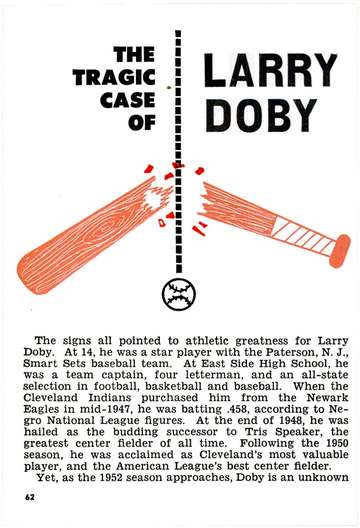
Jet magazine
Public domain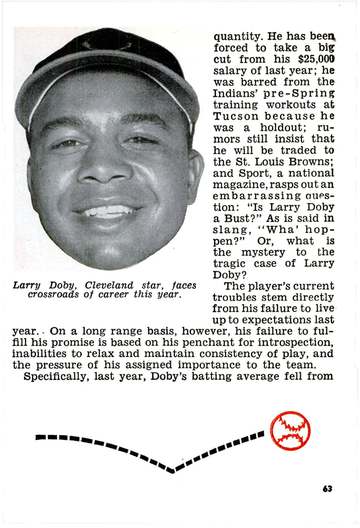
Jet magazine
Public domain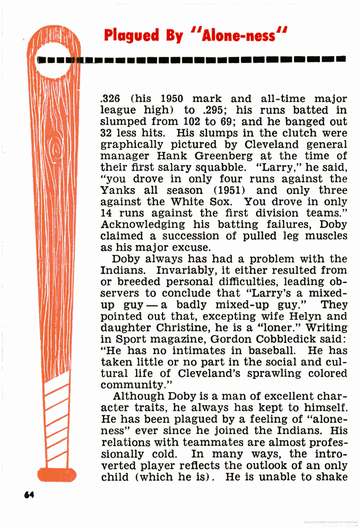
Jet magazine
Public domain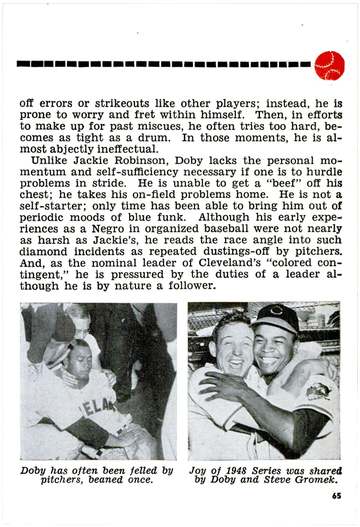
Jet magazine
Public domain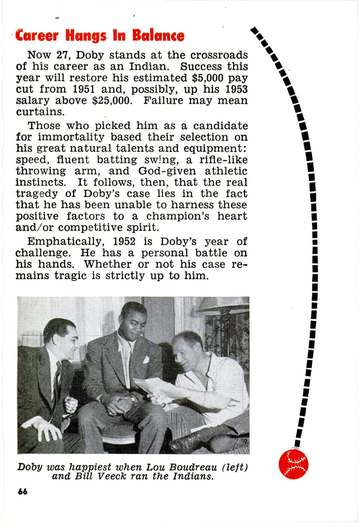
Jet magazine
Public domain
Jet magazine
Public domain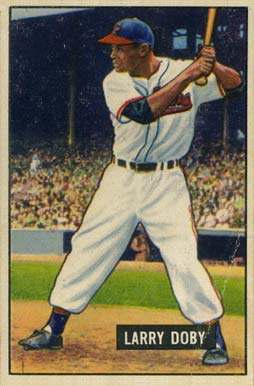
Cleveland Indians centerfielder Larry Doby in 1951
Public domain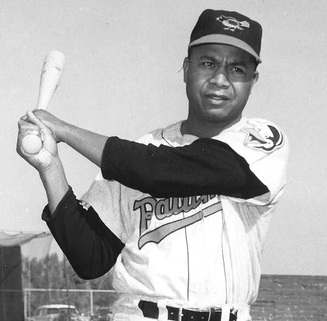
American baseball player Larry Doby in a Baltimore Orioles uniform during spring training in 1958. Doby never ...
Public domain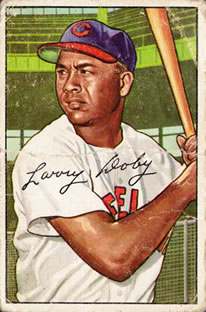
Baseball player, Larry Doby
Public domain
I made this picture on MSPaint to serve as a retired number on the Cleveland Indians page.
User:Silent Wind of Doom / CC BY-SA 3.0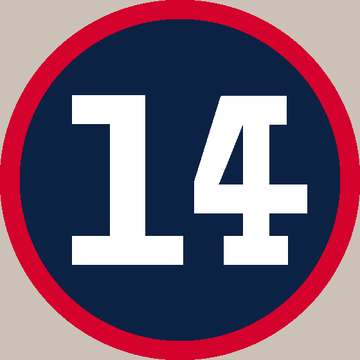
Player: Larry Doby. A recreation of how it looks at Progressive Field, in which the background is beige on a b...
Wikidude10000 / CC BY-SA 4.0


Further reading
Sources
Confidence. High: the main facts were confirmed in sources we opened.
- Larry Doby (Wikipedia) life, honors, statue
- sabr.org: larry doby
- case.edu: doby lawrence larry e
- baseballhall.org: doby larry
- espn.com: indians honor larry doby unveiling bronze statue progressive field
- govinfo.gov: CREC 1997 07 08 pt1 PgE1365 2
- govinfo.gov: BILLS 108hconres235ih
- georgewbush-whitehouse.archives.gov: 20030620 1
- Wikipedia: 1948 World Series
- Wikipedia: Progressive Field
- Wikipedia: Cleveland Stadium
- Wikimedia Commons: Larry Doby CLE
- Wikimedia Commons: Larry Doby 1953
- Wikimedia Commons: Larry Doby 1958
- Wikimedia Commons: Larry Doby Statue Ceremony (19826135120)
- Wikimedia Commons: Larry Doby Statue Ceremony (19987645126)


Every link goes to the original source. Profile researched 2026-10-15.